E-Paper



Why Kiran Bedi wants air purifiers banned in govt offices: Her anti-pollution plan after plea to PM Modi
Bedi argued that government officers must experience the impact of air pollution directly if they are to understand the urgency of the problem

 Prefer HTon Google


Former IPS officer Kiran Bedi on Saturday called for a ban on the installation of air purifiers in government offices and official residences. She argued that government officers must experience the impact of air pollution directly if they are to understand the urgency of the problem.
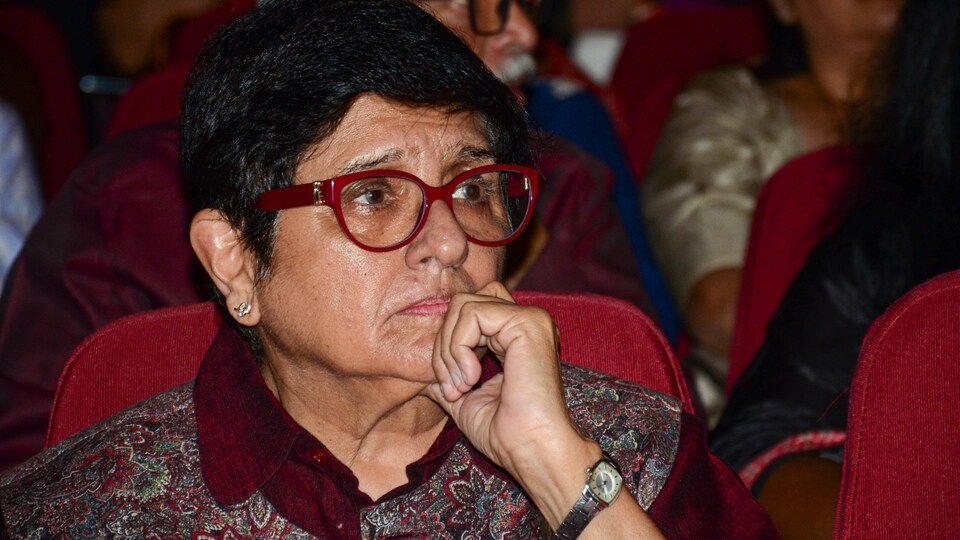
In a post shared on X, Bedi wrote, “How about installation of air purifiers in government offices and residences at government cost being banned?”
“How will they breathe polluted air to know what happens? Further, it inhibits their going to the field and checking hot spots. We need solutions please, not to hurt anyone,” she further wrote on X.
In a separate post on X, Bedi also questioned how government officials can truly understand the severity of toxic air when they remain shielded by purifiers at every step.
Bedi said such insulation prevents officials from sensing the real conditions outside, even as citizens suffer.
“While many are suffering from chest congestion, running noses, sneezing and coughing.And even fever.. feeling low on energy. All need healthy air. It’s a right,” the post read.
Also read| Delhi marks second-longest streak of ‘very poor’ air days amid pollution woes
Kiran Bedi, who was the BJP’s chief ministerial face in Delhi during the 2015 assembly elections, described the capital’s worsening air as a “public-health emergency”.
She added on X, “Governance can’t be remote-controlled… It must stand in the dust, breathe the same air, and act with urgency.”
Her remarks come a day after she made a public appeal to Prime Minister Narendra Modi to personally intervene and direct efforts towards reducing air pollution. In her message to the PM, Bedi recalled his leadership style during her tenure in Puducherry as Lieutenant Governor.
Also read| After pleading with PM Modi, Kiran Bedi shares an anti-pollution plan for Delhi
Delhi air pollution
The national capital recorded an AQI in the “poor” category on Saturday at 5 pm, according to data from the Central Pollution Control Board (CPCB). The CPCB classifies air as ‘good’ when AQI is 50 or lower; ‘satisfactory’ between 51 and 100; ‘moderate’ between 101 and 200; ‘poor’ between 201 and 300; ‘very poor’ between 301 and 400; and ‘severe’ when it exceeds 400.
The air quality is expected to remain in the 'very poor' zone for the next few days. With wind speeds likely to remain on the higher side, the Air Quality Index (AQI) may not slip into the 'severe' category for at least the next two days, Mahesh Palawat, Vice President (Meteorology and Climate Change) at Skymet Weather, said.
Delhi weather
The India Meteorological Department (IMD, has forecast shallow fog for Delhi on Sunday. The maximum temperature will be around 24 degrees Celsius and minimum will settle at 9 degrees Celsius.
Mumbai air pollution
Meanwhile, in Mumbai, the Bombay High Court said that tackling the city’s poor air quality would require time, but noted that pollution caused by construction activities could be controlled if existing guidelines were strictly implemented.
A bench comprising Chief Justice Shree Chandrashekhar and Justice Gautam Ankhad set up an independent five-member committee to inspect construction sites. The panel includes officials from the Brihanmumbai Municipal Corporation (BMC), the Maharashtra Pollution Control Board (MPCB), and the state government’s public health department. Their task is to verify whether construction projects are following pollution-control measures, according to news agency PTI.
The court was hearing several petitions highlighting the worsening Air Quality Index (AQI) in Mumbai, which petitioners’ lawyers said has been deteriorating steadily since 2023. The court directed the BMC and MPCB to submit a report by 15 December detailing the actions taken in the previous year to control air pollution.
(With PTI Inputs)