
 E-Paper



E20 fuel earns praise from PM Modi amid oil crunch due to West Asia war. Here's how he drew a link
Ethanol-blended petrol has led to controversies over the years, as a number of motorists have claimed it leads to engines getting damaged and mileage falling

 Prefer HTon Google


Listing out measures that have helped India during the energy crisis caused by the ongoing war in West Asia, PM Narendra Modi specifically mentioned E20 petrol. He drew the link that because of 20% ethanol blending in petrol, India has had to import less oil.
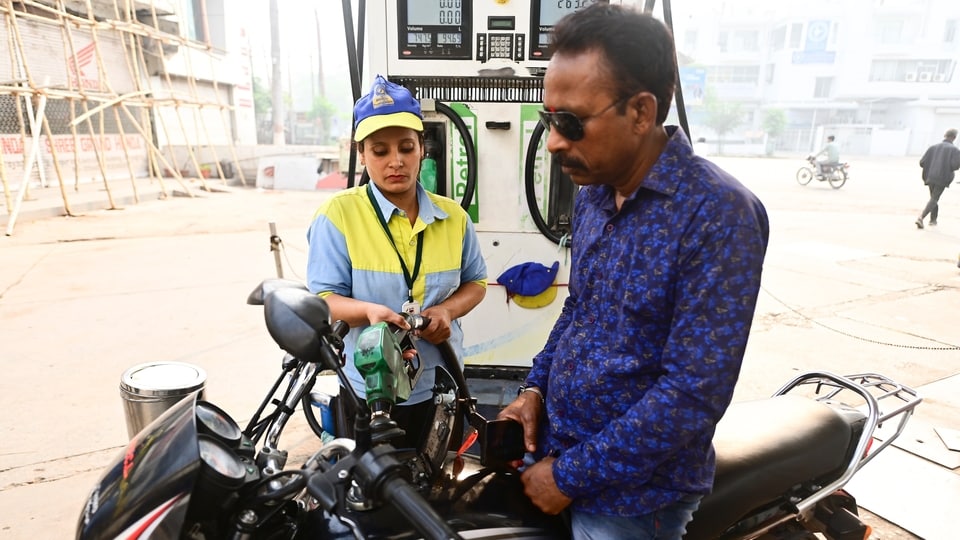
For oil, India is dependent largely on the Gulf region, which has been engulfed by the ever-widening war triggered by the US-Israeli attack on Iran on February 28. “In this time of crisis, another preparation of the country is proving very useful: in the last 10-11 years, unprecedented work has been done on ethanol production and blending” the PM told the Lower House of Parliament in a speech that lasted about 20 minutes.
“A decade ago, the country had a capacity of only 1% ethanol blending. Today, we are close to achieving 20% ethanol blending in petrol. Due to this, in the last year, we have had to import about 4.5 crore barrels less oil,” he added.
The stated idea behind E20 fuel — 80% petrol and 20% ethanol — is to cut oil import bills, reduce carbon emissions, and support sugarcane farmers who are providing the ethanol for the blend.
But uniform supply of E20, which India achieved last year, has also led to controversies over the years, as a number of motorists have claimed it leads to engines getting damaged and mileage falling, particularly in older vehicles.
Road minister Nitin Gadkari and oil minister Hardeep Singh Puri have repeatedly denied this, and cautioned against misinformation on the issue.
The All India Distillers' Association (AIDA), meanwhile, has offered to supply ethanol blends exceeding 20% to mitigate the war's effects. It has demanded that the government raise the ethanol blending mandate gradually to 30%.
In a letter to Nitin Gadkari, AIDA deputy director general Bharati Balaji said on Sunday: “Now with the Middle East [or West Asia] entangled in a war and oil prices having started increasing, we as an ethanol industry are ready to offer ethanol more than 20 per cent which will reduce proportionally the import of crude.” India achieved its E20 ethanol blending target ahead of schedule, in 2025, a goal set under PM Modi's administration to cut fuel import bills and emissions.
Also, the AIDA has called for introduction of flex-fuel vehicles capable of running on 100% ethanol on the lines of Brazil; promotion of ethanol-based cook stoves for domestic and commercial use; and exploration of ethanol blending in diesel too.
India's ethanol sector now has a cumulative production capacity of around 2,000 crore litres, with more than 380 dedicated distilleries operational and a further 33 in the pipeline, news agency PTI reported on Sunday.
Why a row over E20?
Reports of of mileage reduction and engine damage continue, though.
The government has been gradually rolling out E20 since 2023, when other blends like E5 and E10, seen as compatible with older cars, were also offered. However, those blends are now completely removed from nearly all of India’s 90,000 fuel stations.
However, cars and two-wheelers manufactured only after April 2023 are E20-compatible. Older vehicles, if they use E20 fuel, may suffer from engine knocking, corrosion, reduced fuel efficiency and degradation of rubber hoses and plastic pipes, multiple reports have shown.
Some manufacturers are offering special parts to make older vehicles capable of using E20 without damage.
Vehicle owners have complained of about 6-8% lower mileage. Meaning, they will end up spending more per km, even if ethanol itself is cheaper. Ideally, since ethanol itself is cheaper than petrol, it should make blended fuel more affordable. In practice, however, E20 is priced almost the same as regular petrol if not higher in case of more features.
According to industry body Society of Indian Automobile Manufacturers, E20 does reduce mileage but it’s not a safety risk. “Millions of vehicles are plying on E20 for quite some time now. Not a single vehicle breakdown has been reported or vehicle failure has been reported,” SIAM Executive Director PK Banerjee said at an event in New Delhi in August 2025, HT reported.
Claims of a 50% drop in mileage are unfounded and misinformed, Banerjee said.
SC dismissed plea, what Gadkari said
The issue even reached the Supreme Court last year, but it dismissed the public interest litigation (PIL) challenging the Centre's Ethanol Blending Programme, which mandates the sale of E20.
The petitioner referred to a 2021 NITI Aayog Report, which he said raised concerns about older vehicles that are not compliant with E20. Senior Advocate Shadan Farasat argued that the petitioner was not against ethanol-blending, but was merely seeking an option of ethanol-free petrol for vehicles manufactured before 2023.
But Attorney General for India R Venkataramani said the petitioner was only a "name-lender", adding that there was a huge lobby behind the opposition to E20.
Gadkari too has spoken against the alleged lobby at some events over the past two years.
In the SC, the government's lawyer said the E20 policy was benefiting the nation's sugarcane farmers and saving foreign exchange.
After hearing the submission, the CJI Gavai dismissed the PIL.
The oil ministry has insisted that E20 gives "better acceleration and better ride quality", and benefits farmers; besides lowering carbon emissions by approximately 30% as compared to E10 fuel.
Gadkari has said, "This is not even a discussion. I don't know if I should say this, politically — it appears the petroleum lobby is manipulating it.”


