E-Paper



Widespread coral bleaching recorded in Lakshadweep Sea: CMFRI report
Marine heatwaves are rare extreme weather events that involve prolonged periods of abnormally high ocean temperatures

 Prefer HTon Google


Owing to heatwaves this year, widespread bleaching event is being recorded in the Lakshadweep Sea, the ICAR-Central Marine Fisheries Research Institute (CMFRI) said in a statement on Monday.
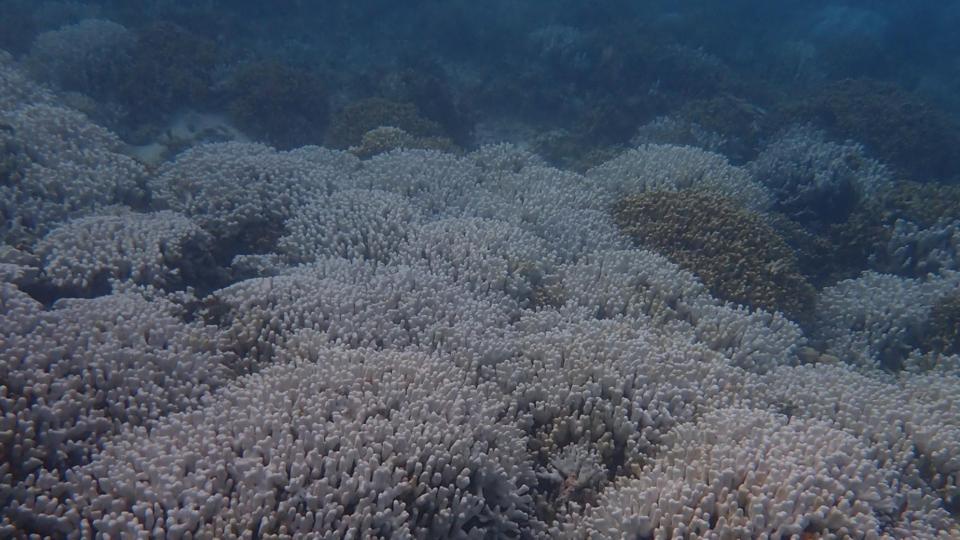
Survey results from various Lakshadweep Islands revealed that a considerable percentage of the hard coral species have undergone severe bleaching, primarily due to a prolonged period of marine heat waves affecting the region since late October 2023.
“Marine heatwaves are rare extreme weather events that involve prolonged periods of abnormally high ocean temperatures. These temperatures often exceed the 90th percentile of typical regional ocean temperatures based on historical data. In Lakshadweep, the Degree Heating Week (DHW) indicator, which measures accumulated heat stress, has surged above 4°C-weeks. According to the National Oceanic and Atmospheric Administration (NOAA), this level of DHW poses a substantial risk of coral bleaching, threatening the region’s diverse marine ecosystems,” the statement said.
“Such heat stress levels signify a severe threat to coral health, leading to extensive bleaching where corals lose the symbiotic algae (zooxanthellae), compromising their survival by depriving them of essential nutrients. If the DHW continues to rise, reaching beyond 12°C-weeks, it could precipitate an unprecedented biodiversity crisis due to multispecies mortality”, said K R Sreenath, senior scientist of CMFRI.
Also Read: Data Munching | We can’t turn a blind eye to climate change when sea surface temperatures rise
“The primary cause of these marine heatwaves are excessive heat atmospheric transfer coupled with shifts in ocean currents, leading to unusually high-water temperatures. Since October 27, 2023, the Lakshadweep Sea, spanning from 80.0 to 12.0 N latitude and 71.0 to 75.0 E longitude, has been experiencing these conditions, with temperatures consistently registering rises greater than 1°C above the norm,” said Shelton Padua, Senior Scientist at CMFRI.
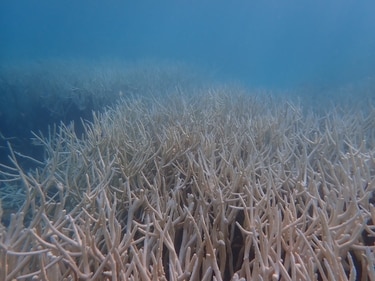
According to Pacific Island Ocean Observing System, DHW shows how much heat stress has accumulated in an area over the past 12 weeks (3 months) by adding up any temperature exceeding the bleaching threshold during that time period. When DHW reaches 4°C-weeks (7.2°F-weeks), significant coral bleaching is likely, especially in more sensitive species. When DHW is 8°C-weeks (14.4°F-weeks) or higher, widespread bleaching and mortality from thermal stress may occur.
HT reported on November 2 last year that ocean and land temperatures continued their record-breaking spree in October. Sea surface and land temperatures have been at record highs for seven and five months respectively, data maintained by University of Maine’s Climate Reanalyzer shows.
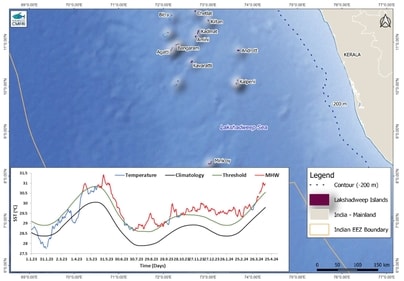
The latest data on Climate Reanalyzer also shows daily sea surface temperatures have been far higher this year also since January, than temperatures ever recorded.
HT reported on April 28, The Indian Ocean basin, the fastest warming basin in the world, will see accelerated warming at a rate of 1.7°C-3.8°C per century during 2020-2100, a new research paper has projected, warning that this will lead to an increase in severe weather events, prolonged marine heatwaves and extreme Indian Ocean Dipole events that will influence the monsoon and cyclone development.