E-Paper



'Will never allow interference in domestic politics': Nepalese foreign minister
Gyawali said his country has “excellent” ties with India and China and seeks to improve connectivity and economic ties with both.

 Prefer HTon Google


Nepal will never allow external meddling in its politics as its leadership is capable of handling problems, Nepalese foreign minister Pradeep Gyawali said on Saturday amid apprehensions in India about China’s role in the political turmoil in the neighbouring country.
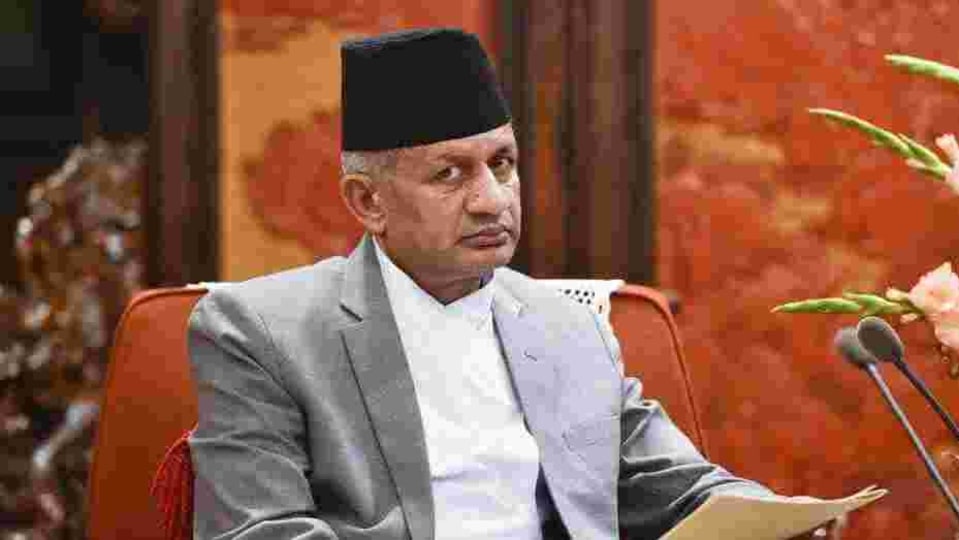
Gyawali, in India to co-chair a meeting of the bilateral joint commission, said his country has “excellent” ties with India and China and seeks to improve connectivity and economic ties with both.
“Nepal’s relations with both neighbours are excellent. We never compare our relations with each other and we never accept interference in our domestic politics or internal affairs,” he told a group of reporters at the Nepalese embassy.
“We are able to settle our problems ourselves. As a close neighbour, there may be some concerns or questions but we never accept interference,” he said, replying to a question about China’s efforts to resolve differences between factions of the ruling Nepal Communist Party (NCP).
Also read: AIIMS worker, 34, is first in India to get Covid-19 vaccine
Gyawali skirted a question about remarks by NCP leader Pushpa Kamal Dahal “Prachanda” that Prime Minister KP Sharma Oli had split the ruling party and dissolved Parliament on the “direction of India”, and said he also represented Prachanda and it wouldn’t be appropriate for him to comment.
He defended Oli’s decision to dissolve the House of Representatives and call early elections by saying this was the outcome of long-standing “internal problems”.
Gyawali added, “In a parliamentary system, if the prime minister feels the time has come to seek a fresh mandate, it is the universally accepted practice that the government can dissolve Parliament and seek a fresh mandate. By and large, democracy is a system where the public has the final authority to decide the fate of the government and the country.”
Nepal was plunged into political uncertainty by Oli's decision to dissolve Parliament after problems within the NCP increased over the past few months. Amid the turmoil, China sent Guo Yezhou, the vice minister of the international department of the Communist Party of China, to Nepal to broker an understanding between the two factions of the NCP.
Guo’s visit was preceded by the Chinese ambassador’s unsuccessful efforts for a patch-up between Oli and Prachanda. Guo’s efforts too didn’t yield any result.
Against the backdrop of the military standoff along the Line of Actual Control (LAC), India has kept a wary eye on China’s role in Nepal while maintaining a hands-off approach.