
 E-Paper



With 10-yr-old girl’s death, human-elephant conflict in Odisha worsens
Odisha’s chief wildlife warden HS Upadhyay admitted the situation has turned critical in the state in the last few years due to deterioration of elephant habitats.


A 10-year-old girl was killed by an elephant in Odisha’s Keonjhar district on Friday night, taking the number of deaths in the raging conflict between humans and animals to a record high in the state.
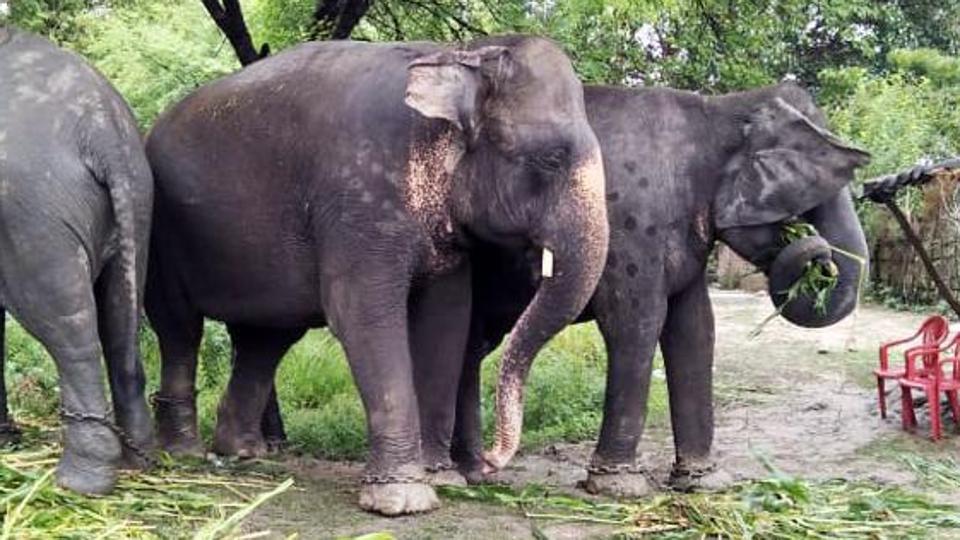
Odisha forest and wildlife officials said the girl in Hariharpur village under Patna forest range of Keonjhar was trampled to death on Friday evening by a tusker while she was playing outside her home.
With her death, the total number of human casualties from April last year till date has reached an all-time high of 93 deaths after 92 people were killed by tuskers in 2018-19.
Official data shows November 2019 was a particularly bad month for humans living in elephant corridors when 17 people were killed in the state. In August, 15 were killed and 14 in April.
The districts of Dhenkanal and Angul proved to be the most dangerous for humans as each reported 19 deaths followed by Sundargarh and Mayurbhanj that accounted for 11 deaths each.
There have also been a staggering 162 cases of man-elephant conflict in which 92 people were injured.
Since April 2014, more than 500 people have been killed by elephants in the state.
At the same time, 57 elephants have also been killed from poaching, road and train accidents and electrocution as unplanned development and encroachments have led to the loss of habitat in the same period.
Odisha’s chief wildlife warden HS Upadhyay admitted the situation has turned critical in the state in the last few years due to deterioration of elephant habitats.
“The elephants are under a lot of pressure as their movements paths crisscross through railway tracks, highways and electric lines. We are trying to improve their habitats so that the conflict is reduced,” said Upadhyay.
“We are sending some of our senior officials to West Bengal, which has been successful in bringing down the incidents of human-elephant conflicts. We are using elephant trackers, solar fencing and solar lights to chase away the elephants from human habitations, but have not been entirely successful,” he added.
But on the ground, activists allege, there has been little proof of the effort as more and more humans are getting killed by elephants. They also say that the rising human-elephant conflict would soon wipe away the animals’ stock in the state.
“Man-elephant conflict would quickly go down if elephant corridors are officially identified allowing the pachyderms easy access,” leading wildlife conservationist Biswajit Mohanty said.
Mohanty pointed out that 14 elephant corridors were officially identified by the Odisha government in January 2010 covering over 870 sq km covering 420.8km and including three inter-state corridors with West Bengal, Chhattisgarh and Jharkhand.
“These corridors are not yet notified under Environment (Protection) Act 1986 since 9 years as Ecologically Sensitive Zones (ESZ) under pressure from mining lobby,” Mohanty said.
Mohanty said the state government’s failure in officially notifying the South Odisha Elephant Reserve (4216 sq km) and Baitarani Elephant Reserve (10,516 sq km) has lead to the rise in human-elephant conflict.
Mohanty said underpasses on state and national highways and railway lines passing through forests would also have allowed the elephants safe passage.
“Since the underpasses are yet to become a reality, the elephants are straying into human habitations. In villages, the patience for elephants is fast disappearing as angry villagers are running pillar to post for compensation for crop loss or ex-gratia for the death of people. So villagers are resorting to retaliation that is worsening the man-elephant conflict,” he added.
Recently, the state forest and environment minister Bikram Arukh told the assembly that more than 32,000 acres of crop area have been damaged in the conflict in the last three years.
Wildlife conservationist Belinda Wright of Wildlife Protection Society of India said a holistic approach was the need of the hour to reduce the man-elephant conflict.
“We have brilliant elephant behavioural scientists and if the government does a brainstorming session with them some solution can be found. There is no doubt that the habitats of elephants have been disturbed. One has to be fair to people as well as elephants while resolving the man-elephant conflict,” said Wright.
Another conservationist Aditya Panda pointed out that any of the measures adopted by the wildlife department such as elephant trackers, using chilli bombs, solar fencing or trenches would not work.
“Elephants are the smartest animals and they invariably find a way out to dodge. The department needs to focus on improving the quality of elephant habitats and ensure contiguous habitats giving the long-ranging animals easy access. That’s the only solution,” said Panda.
Chief wildlife warden Upadhyay admitted that most of the human casualties have happened during evenings and nights and the elephant trackers employed by the department have not been very successful.
“One particular method would not work to reduce the conflict. So we are trying various methods. We have tied up with Indian Institute of Science to tag marauding elephants with radio collars that would help us track their movement easily and take necessary action to drive them out of human habitations,” Upadhyay said.
“We have started a pilot scheme called Gaja Bandhu (friends of elephants) in Athagarh and Dhenkanal forest divisions, two of the most critical areas where local volunteers would ensure safety and security of pachyderms,” he said.
The chief warden said the local Van Suraksha Samitis would engage a local as Gaja Bandhu, who would keep a 24-hour tab on the movement of the elephants in his locality to allow them safe passage.
“We have also decided to install CCTV cameras, speed breakers, rumblers at selected elephant movement zones in designated corridors. As many as 65 such sensitive spots have been identified,” he added.


