
 E-Paper



With aggressive posturing along LAC, China turning bilateral relationship back to 1990s, says India
Short of saying that Xi Jinping, who is also commander in chief of the PLA, had literally torn the 1993 peace and tranquility agreement to shreds, the Modi government has served a diplomatic ultimatum on him with serious consequences on the bilateral ties.

 Prefer HTon Google


India has accused China of turning the bilateral relationship clock back to 1990s by trying to foist a war-like situation along the 3,488-kilometre-long Line of Actual Control (LAC) through its aggressive military posture in East Ladakh.
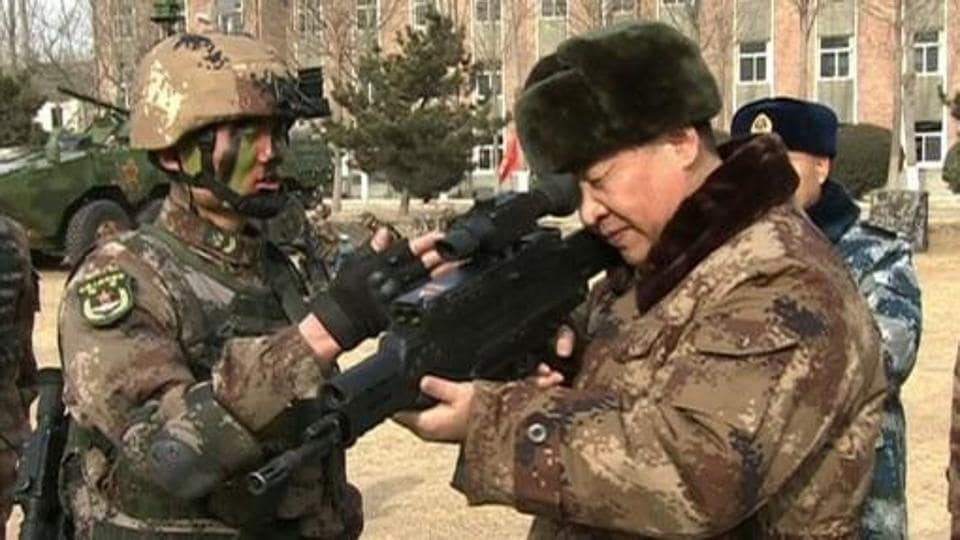
Short of saying that Xi Jinping, who is also commander in chief of the PLA, had literally torn the 1993 peace and tranquility agreement to shreds, the Modi government has served a diplomatic ultimatum on him with serious consequences on the bilateral ties. The 1993 agreement signed during Narasimha Rao-Jiang Zemin era makes it amply clear that the military forces have to be kept to a “minimum level” along the LAC.
Also Read: China’s dragon act on LAC to be decoded by General Naravane in high-level meet today
The Indian statement on Thursday carries a sting in the very last line by conveying that all gains made in the bilateral relationship in the past three decades will be lost if China does not de-escalate and disengage the PLA forces from the LAC. “India is quite capable of handling the military to military posture on the LAC but the entire economic relationship will go for a toss if PLA does not de-escalate. It cannot be business as usual for China if this situation continues. It is this call that General Secretary Xi Jinping has to take,” said a senior official.
Also Watch | ‘Ban Chinese companies from India’s 5G trial’: Former envoy to China
Even though there has not been any military flying by the Chinese Air Force in the past three days, PLA has amassed troops all along the LAC with artillery and missile support. Its posture along the 1,597 km LAC in Ladakh is threatening with troops ready for the red flag to go up. Its military air bases at Kashgar, Hotan, Yarkand, Korla and Gor Gunsa are battle ready.
However, the PLA is rather unhappy at the change of military attitude showed by the 16 Bihar Indian Army unit at the June 15 Galwan flare-up and the Indian posture at Daulet Beg Oldi. With the Darbuk-Shyok-DBO road complete, India has made game changing military posture near the Karakoram pass with the deployment of T-90 tanks, Russian BMP amphibious infantry fighting vehicles and American M-777 155mm howitzers.
Also Read: At 4-hr long India-China border talks, focus on de-escalation and disengagement
With the Indian deployment of state-of-the-art weaponry at the highest DBO post and all advance landing grounds, including Nyoma active, the PLA will suffer heavy casualties in case it tries to bully across the LAC.
The DSDBO road has been the turning point for India as the strategic axis had put paid to all Chinese plans to occupy Ladakh by linking up to Siachen Glacier and virtually make Indian defences untenable in Kashmir. Had the Indian governments in the past agreed to so-called peaceniks who wanted Indian Army to demilitarize Siachen or turn it into a park, the Chinese plan would have become a reality.
While the Chinese posture on LAC continues to be aggressive, the clock is ticking on the bilateral relationship as India has made up its mind that it will slam the economic door on Beijing if dis-engagement does not take place within weeks.


