
 E-Paper



With Omicron fuelling Covid-19 cases, will 2022 be different?
Many governments and healthcare experts have warned that there is no room for complacency. The coronavirus disease has wreaked havoc across the world for two years, and casts a shadow on 2022 also.

 Prefer HTon Google


When the coronavirus disease (Covid-19) pandemic struck in 2019, it changed the way people “normally” live their lives. In 2020, it led to lockdowns and other severe curbs, and a desperate search for a vaccine.
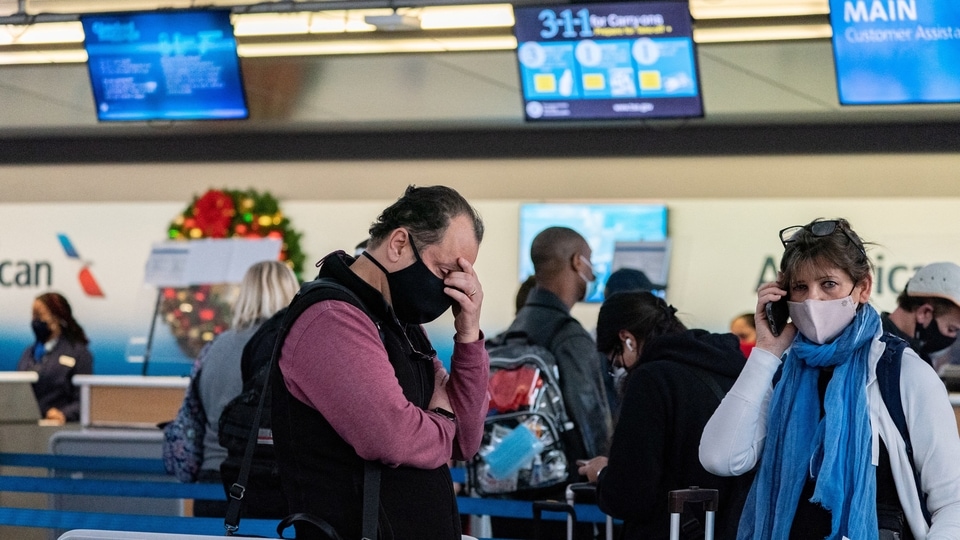
In 2021, as the Sars-CoV-2 virus mutated further, it caused the devastating second wave of infection which affected millions and killed hundreds of thousands. The United States, and now Europe, are the worst affected, with the former recording the highest number of fatalities in the world. In Europe, daily infection tally has been breaking records daily.
Also Read | Indian govt rings Omicron alarm, asks states to impose district-level curbs as needed
This fresh surge in infection is led by the Omicron variant, which was detected in South Africa on November 24 but has spread in more than 100 countries now. It has once again brought the fears of lockdown and other stricter curbs to the fore.
So, how is it going to be in 2022? Will there be more variants? What steps the governments will take? Here’s a look based on the facts that have emerged in the last few weeks.
Is Omicron the last variant of coronavirus?
No. Many health experts have said that the world will see more such mutations of the coronavirus, and urged the governments to speed up the vaccination coverage.
Since its emergence in 2019, coronavirus has undergone several mutations - each one deadlier than the previous one. The World Health Organization (WHO) has already categorised Alpha, Beta, Gamma, Delta and Omicron as ‘variants of concern’.
But Dr Julian Tang, professor of Respiratory Sciences at Leicester University, has said that the Sars-CoV-2 virus will evolve itself out of the pandemic strain very soon. “It will become milder, more transmissible to the point where you may only need to think about vaccinating the more vulnerable members of the population,” said Dr Tang.
‘70% vaccination by mid-2022’
The WHO has said that achievement of 70 per cent coverage with Covid-19 vaccines in all countries is imperative. The statement is based on the recommendation of Independent Allocation of Vaccines Group (IAVG).
India has already given both doses to more than 60 per cent of the country’s eligible 944 million adults, while 90 per cent have received one dose, as announced by the Union health ministry last week. But health experts have warned that there is no room for complacency.
"Vaccination, some improvements in health infrastructure, partial but continued use of masking and omicron as a possibly more infectious but less virulent strain will contribute to a less devastating situation than what we saw in 2021," Vineeta Bal, an immunologist at the Pune-based Indian Institute of Science Education and Research told Deutsche Welle.
What about booster shots?
According to WHO, booster doses are administered to those who have completed a primary vaccination series when, with time, the immunity and clinical protection has fallen below a rate deemed sufficient in that population. The emergence of Omicron variant has once again fuelled the talks of giving a booster shot to the people.
Many countries, especially those in Europe, are contemplating making a booster shot necessary for travellers coming from other places. The leaders of Greece and the Netherlands have said in public that a rule making booster shot mandatory will most likely be implemented from February 2022.
In India, Prime Minister Narendra Modi, in a televised address to the nation on Saturday night, announced that vaccination against Covid-19 for children between 15-18 years will start from January 3, while "precaution dose" (booster shot) for healthcare and frontline workers would be administered from January 10.
In Photos: Who are eligible for covid-19 precaution dose? When will it be rolled out?
The decisions came amid rising Covid cases linked to the Omicron variant of the virus.
Vaccination certificates to be mandatory
As more and more countries inoculate their population against the deadly Covid-19, the vaccination certificate too has been made mandatory. The European Council gave green light to EU’s decision to make vaccination certificates mandatory to enter in Europe.
These rules will come into force from February 1, 2022. Similarly, Singapore and other Asian countries are implementing the measure from early next year.
India has also made vaccination certificates mandatory from countries where Covid-19 has been spreading fast. In many states, the document is necessary to enter public places, like malls etc.
Omicron rewriting the Covid plan for 2022
Living with Covid-19 in 2022 will mean assessing local risks and protecting oneself through vaccination, masking and social distancing.
"When I go to the store this afternoon, what helps me is to know how much Covid is in my community," said Dr Robert Wachter, chair of the Department of Medicine at University of California, San Francisco.
"There will not be one state of the pandemic. There will be different states for different people and for different regions," he said. "And that's going to be the way it is for the foreseeable future."


