
 E-Paper



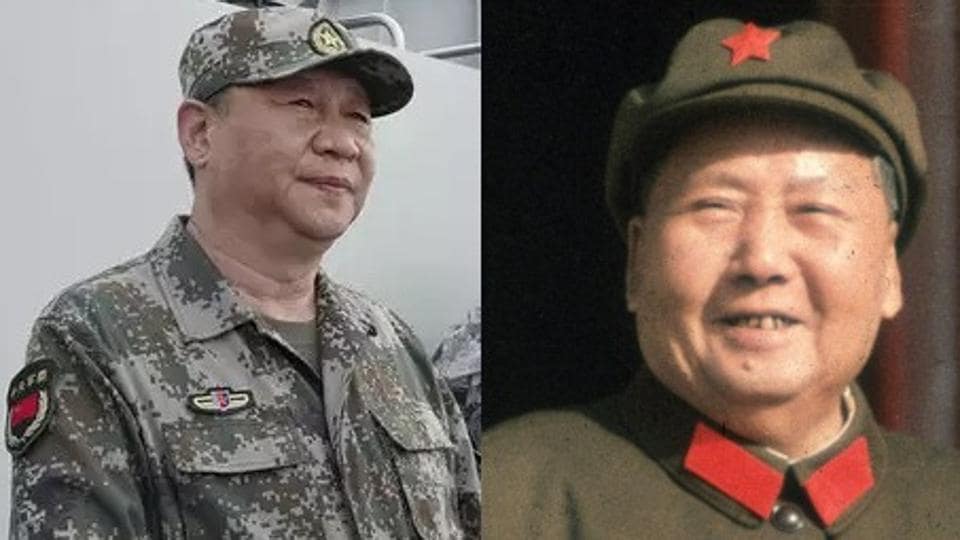
With Xi Jinping Centre On Diplomatic Thought, Chinese President is the new Mao
The centre will work on Xi’s diplomatic ideas to give aggressive Middle Kingdom a guide to handle relations with other countries

 Prefer HTon Google


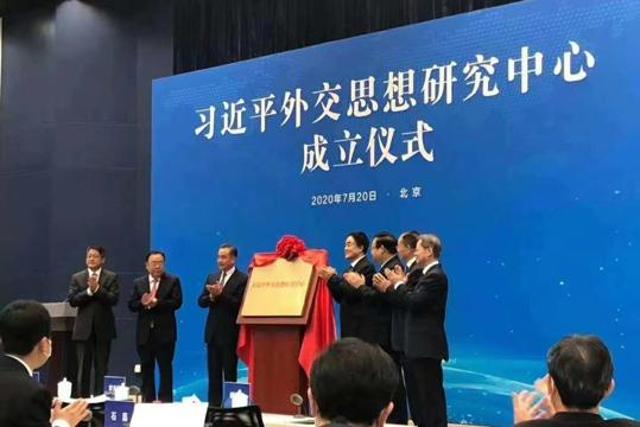
Chinese Communist Party General secretary and PLA commander-in-chief Xi Jinping became paramount leader of the Middle Kingdom in 2012. That President Xi thought himself second to none in the Chinese communist pantheon that includes founding father Mao Zedong and economic revivalist Deng Xiaoping became evident on Monday when the Xi Jinping Research Center for Diplomatic Thought was inaugurated within China’s foreign ministry.
Foreign minister Wang Yi, who inaugurated the center in Beijing, said Xi’s diplomatic doctrine embodies 21st century Marxism and transcends traditional theories regarding international relations, Wang said, describing Xi’s doctrine as the ultimate guiding principle for Chinese diplomacy.
According to China watchers, the new institute of research into Xi Jinping’s thought virtually places him on par with founding father Mao Zedong who led the cultural revolution in the Middle Kingdom that snuffed out millions of lives. Mao’s thought was incorporated into the Communist Party of China’s charter in 1945.
Also read: From Ladakh to Japan’s Senkaku Islands, ‘bully’ China is in an overdrive
In October 2017, Xi Jinping was the first Chinese leader since Mao to have had an eponymous ideology included in the charter while in office. Deng’s name was added to the charter after his death in 1997.
Deng Xiaoping, the man who led the rise of China as an economic power, stands below the pedestal with his doctrine that put economic development at the centre of party work and provided the ideological roadmap for the modernization of the Chinese economy.
While the world sees Xi Jinping’s aggression in Ladakh and South China Sea as divergence from struggles within the party, this move clearly cements his position as the first and most powerful Chinese emperor.
In the Indian context, it may be recalled that Mao Zedong mounted the aggression on India in 1962 after the failure of Great Leap Forward agriculture revolution in which millions died of hunger and famine, the PLA’s aggression on the India-China border under the garb of peace and tranquility has come after millions have been infected due to the coronavirus that originated in central China’s Wuhan.
At Monday’s event, President Xi who aims to turn China into an eminent global power, upending Deng Xiaoping’s approach to adopt a low profile to expand Beijing’s trade was described as a great strategist with vision. Deng’s doctrine advocated that China should “keep a low profile and bide your time” to stay focused on economic revival.
Xi, however, wants that China should take an active role as a contributor to development of global governance and what he had described as “a protector of international order”.
Also read: In renewed attack on border row, Rahul Gandhi connects PM’s image and China’s plan
“The theory of international relations has achieved a historic leap in the field of diplomacy in the localization of Marxism,” said foreign minister Wang at Monday’s event on XI’s approach.
This wasn’t the only aspect of Deng Xiaoping’s efforts to reform China that President Xi has reversed. Two years ago, President Xi had removed the constitutional bar introduced by Deng in 1982 on the China’s president serving more than two terms. This will allow him to continue as China’s president for lifetime, quite like Mao.


