E-Paper



‘Women continue to break barriers’: CJI-designate praises World Cup-winning team
Chief Justice of India (CJI)-designate Justice Surya Kant said that women must have not only a seat at the table but also the space and respect to shape the very nature of debate, decision-making

 Prefer HTon Google


New Delhi: Chief Justice of India (CJI)-designate Justice Surya Kant on Saturday congratulated the Indian women’s cricket team for winning their maiden World Cup title, calling it a powerful reminder of how Indian women continue to break barriers and set new benchmarks of excellence.
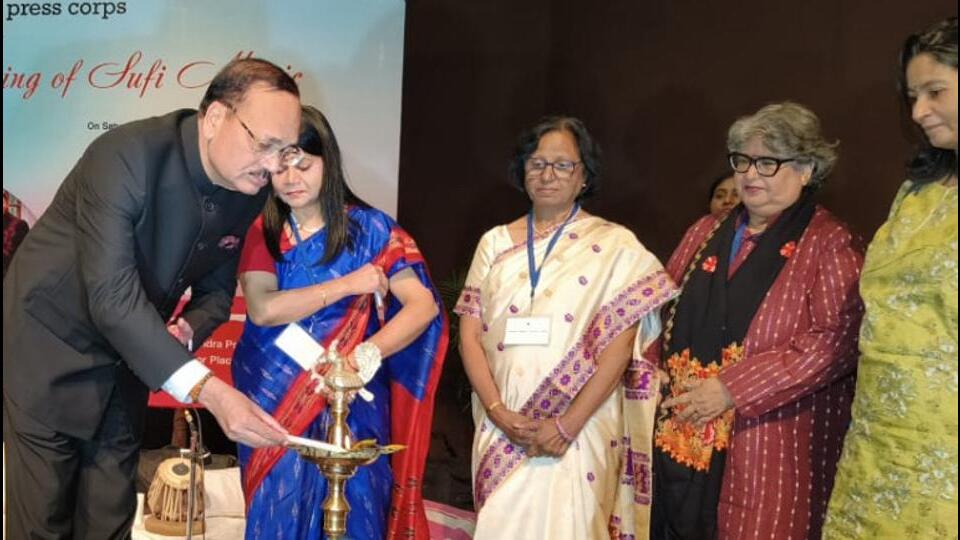
Speaking at the Indian Women’s Press Corps (IWPC) in New Delhi, the judge underlined that women must have not only a seat at the table but also the space and respect to shape the very nature of debate, discourse and decision-making in public life.
“I firmly believe that solidarity yields achievements. Remember, our National Women’s Cricket Team etching its name in history is a powerful reminder of how Indian women persistently break barriers and set new standards of excellence, whether on the cricket field or in the press gallery,” said Justice Kant, who is set to assume office as the CJI on November 24.
In a historic achievement, the Harmanpreet Kaur-led Indian side on November 2 defeated South Africa by 52 runs to win the tournament for the first time. Previous finals in 2005 and 2017 had ended in heartbreak, but 2025 proved to be the year the hosts triumphed, winning the eight-team tournament in front of a jubilant home crowd in Navi Mumbai.
He added that the IWPC itself was born out of an “audacious conviction” that women must not simply participate in public institutions but must actively shape them. Highlighting the journey of women in journalism, Justice Kant said the profession has been transformed by those who have reported from conflict zones, led investigative newsrooms, and brought a wider range of social realities into public conversation.
He said women journalists today drive change through persistent local reporting, community engagement and mentorship that strengthens media in regional languages and underrepresented areas. “When women cover stories on politics, health, education and social reforms, their journalism reflects the intricate complexities of our society and strengthens democratic participation,” he said.
At the same time, Justice Kant cautioned that new technological tools, particularly artificial intelligence, are reshaping the media landscape in ways that create unique vulnerabilities for women journalists.
“Deepfakes, manipulated images and online harassment are often deployed to silence, discredit or intimidate women,” said the judge, adding that such digital abuse not only harms individuals but also erodes press freedom by narrowing the diversity of voices in public discourse. “Perpetrators use online violence to belittle, induce fear, and discredit them professionally. As a responsible democracy, we cannot afford to normalize or tolerate such happenings,” he remarked.
Calling for industry-wide safeguards, Justice Kant said media organisations must adopt strong protocols to protect women journalists from harassment and misuse of personal data, and ensure women are represented “at every level — in reporting and editing, policy-setting, technology adoption and regulatory oversight.” He suggested that the IWPC could lead training programmes in digital safety and advocate ethical standards in the use of emerging technologies in newsrooms.
Justice Kant concluded by urging continued solidarity and collective responsibility in defending the integrity of journalism. “Rights and freedoms enshrined in our Constitution are not self-fulfilling; they must be vigilantly maintained… You are not just women in the media; you are the media itself — defining the present, shaping the future and inspiring countless others,” he said.