E-Paper



Yearly deaths due to heat may rise fivefold, says Lancet study
The new global projections are part of the 8th annual report of the Lancet Countdown on Health and Climate Change

 Prefer HTon Google


If temperatures rise by 2°C (over pre-industrial levels) by the end of the century then yearly heat-related deaths are projected to increase 370% by mid-century, according to an analysis published in The Lancet on Tuesday.
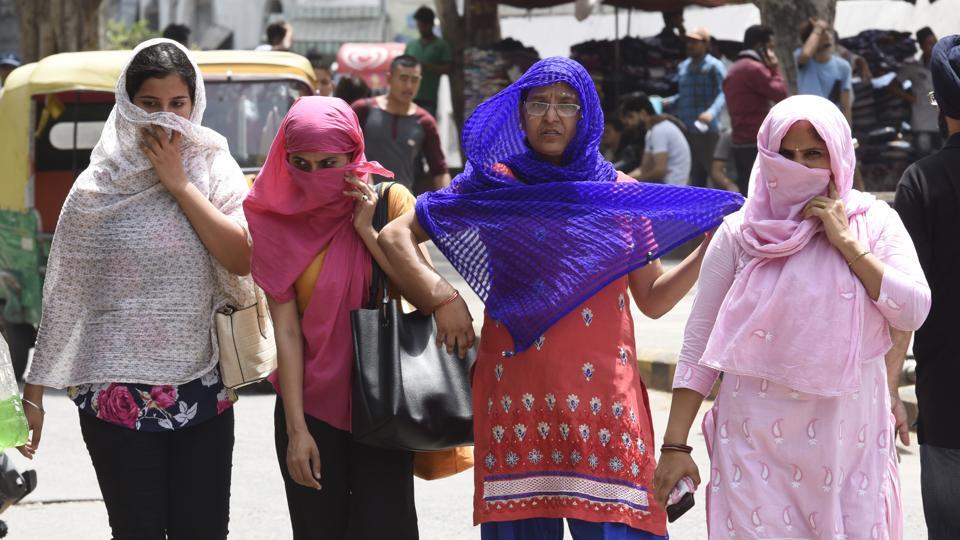
The new global projections are part of the 8th annual report of the Lancet Countdown on Health and Climate Change .
There is catastrophic threat to the health and survival of billions of people all over the world, and to successful adaptation efforts, from any further delays in action to limit temperature increase to 1.5°C above pre-industrial levels, the analysis stressed.
“Our health stocktake reveals that the growing hazards of climate change are costing lives and livelihoods worldwide today. Projections of a 2°C hotter world reveal a dangerous future, and are a grim reminder that the pace and scale of mitigation efforts seen so far have been woefully inadequate to safeguard people’s health and safety”, Marina Romanello, Executive Director of the Lancet Countdown at University College, London, said in a statement.
“With 1,337 tonnes of carbon dioxide still emitted every second, we aren’t reducing emissions anywhere near fast enough to keep climate hazards within the levels that our health systems can cope with.”
The anlysis, led by researchers at University College London represents the work of 114 leading experts from 52 research institutions and UN agencies around the world including the World Health Organisation (WHO) and the World Meteorological Organisation (WMO), providing the most up-to-date assessment of the links between health and climate change.
Published ahead of the 28th UN Conference of the Parties (COP), the anlysis presents 47 indicators that include new and improved metrics that monitor household air pollution, financing of fossil fuels, and engagement from international organisations on the health co-benefits of climate mitigation.
“There is still room for hope” Romanello added in the statement. “The health focus at COP28 is the opportunity of our lifetime to secure commitments and action. If climate negotiations drive an equitable and rapid phase out of fossils fuels, accelerate mitigation, and support adaptation efforts for health, the ambitions of the Paris Agreement to limit global heating to 1.5 °C are still achievable, and a prosperous healthy future lies within reach.”
Even at the current 10-year global average 1.14°C of heating, the analysis said that people experienced on average 86 days of health-threatening high temperatures in 2018-2022, over 60% of which were made more than twice as likely to occur because of man-made climate change. Heat-related deaths in people aged over 65 increased by 85% in 2013-2022 compared to 1991-2000, substantially above the 38% increase expected had temperatures not changed.
More frequent heatwaves and droughts were responsible for 127 million more people experiencing moderate to severe food insecurity in 122 countries in 2021, than annually between 1981 and 2010, the analysis claimed.
Similarly, changing weather patterns are accelerating the spread of life-threatening infectious diseases, it added. For example, warmer seas have increased the area of the world’s coastline suitable for the spread of Vibrio bacteria that can cause illness and death in humans by 329km every year since 1982, putting a record 1.4 billion people at risk of diarrhoeal disease, severe wound infections, and sepsis. The threat is particularly high in Europe, where Vibrio-suitable coastal waters have increased by 142km every year, said the scientists.
Healthcare systems are the first line of defence for protecting people from the growing health harms from the changing climate. But even the current 1.14°C of heating is putting serious pressure on health services, with 27% (141/525) of surveyed cities reporting concerns over their health systems being overwhelmed by the impacts of climate change, the analysis said.
The total value of economic losses resulting from extreme weather events was estimated at $264 billion in 2022, 23% higher than in 2010-2014. Heat exposure also led to 490 billion potential labour hours lost globally in 2022 (a nearly 42% increase from 1991-2000), with income losses accounting for a much higher proportion of GDP in low- (6.1%) and middle-income countries (3.8%). These losses increasingly harm livelihoods, restricting the capacity to cope and recover from the impacts of climate change.
“We’re facing a crisis on top of a crisis”, Georgiana Gordon-Strachan, director, the Lancet Countdown Regional Centre for Small Island Developing States said in a statement. “People living in poorer countries, who are often least responsible for greenhouse gas emissions, are bearing the brunt of the health impacts, but are least able to access funding and technical capacity to adapt to the deadly storms, rising seas and crop-withering droughts worsened by global heating. Despite this, rich nations have broken their long-standing pledge to deliver the comparatively modest sum of US$100 billion a year to help vulnerable countries cope with climate change, jeopardising a fair, equitable transition to a healthy future.”