
 E-Paper



CBI director: Nobody asked me to act according to law
CBI director Ranjit Sinha can be candid when he chooses to and he floored the audience at an event on Tuesday, saying in crisis situations he was asked to act and nobody told him to do things according to the rule of law.


CBI director Ranjit Sinha can be candid when he chooses to and he floored the audience at an event on Tuesday, saying in crisis situations he was asked to act and nobody told him to do things according to the rule of law.
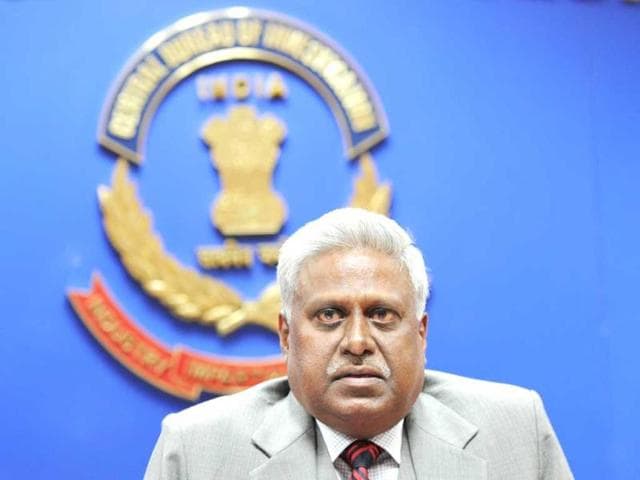
“I was asked to deliver and if I did not deliver, I was given the reason I was inefficient and not fit to work in field situation,” he said in an apparent reference to his policing days before he became the Central Bureau of Investigation (CBI) chief.
Claps greeted this statement from Sinha made at the golden jubilee celebrations of the Central Vigilance Commission (CVC).
Sinha was not so forthcoming at the same event when asked about the controversy over Archana Ramasundaram’s recent appointment as the CBI’s additional director.
He said being a serving police officer he would not like to comment.
With co-panelists — former comptroller and auditor general (CAG) Vinod Rai and former vigilance commissioner R Sri Kumar — raising uncomfortable questions, Sinha had the tough task of speaking on the accountability and autonomy of investigation agencies.
In his address earlier, Rai had argued it was a common complaint that investigative agencies were unable to function within the given parameters of the mandate. “I think this is in some way an alibi for their non-performance.”
Rai had added that if investigative agencies themselves demonstrated once that they were incapable of being influenced, the influences would stop.
Sinha did some straight talking in the face of the tricky situation.
The CBI director, who belongs to1974 batch of IPS, said a number of officers who were appreciated for delivering results had ended up facing CBI inquiries or were in prison.
In this context he spoke of the Bhagalpur blindings in Bihar and officers who had fought militancy in Punjab and Jammu and Kashmir.
“What type of police do we want? What have we done to bring about changes? Reality is there are more police officers behind bars now than at any point in time since independence. So much for police reforms and so much for the sermons that we get,” he said.
Sinha clarified that the CBI never wanted to work out of the government purview, but the control over the agency’s financial and administrative autonomy was an eye-opener for him, as all these powers could have been given earlier without the intervention of the Supreme Court.
“I don’t know if it was to show the supremacy of the bureaucracy over the investigating agency or something else. No rules were required to be violated. So much for the intent of the government to provide autonomy to the CBI,” he said.
The CBI recently got more financial and administrative powers from the government.


