
 E-Paper



Govt de-freezes HP dam project
The Narendra Modi government has decided to revive the Renuka dam project in Himachal Pradesh, rejected by the UPA regime as one that would cause massive environmental and social loss.


The Narendra Modi government has decided to revive the Renuka dam project in Himachal Pradesh, rejected by the UPA regime as one that would cause massive environmental and social loss.
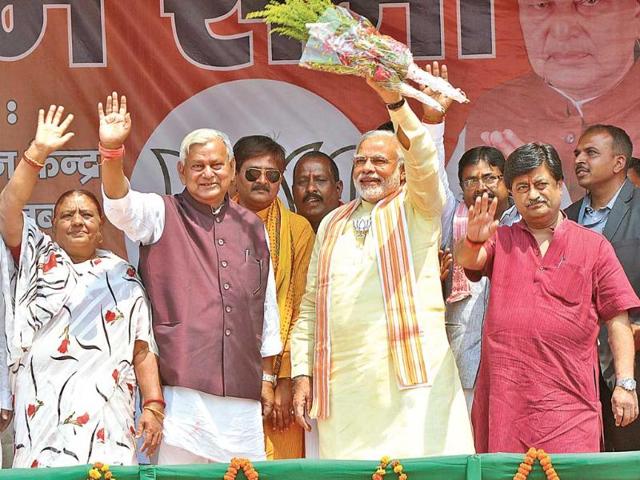
The benefits from this ambitious project are directed at Delhi: 275 million gallons of water daily, a fourth of the city’s existing supply, and a boost for the ruling party in assembly polls slated later this year.
But it would come at a cost: 1.5 lakh trees would be felled — according to the Forest Advisory Committee (FAC), to which the proposal has been sent — and 32 villages with a population of 2,334 affected.
The committee, under the Union environment ministry, grants clearances for diversion of forestland for non-forest purposes.
“The Renuka dam project would be high on the agenda of the next FAC meeting this month,” a ministry functionary said, adding that it would help meet Delhi’s water shortfall. According to a Delhi Jal Board (DJB) report, the city’s demand for water in 2012 was 1,150 million gallons a day but supply stood at 850 million gallons.
The ministry is expected to take a final call on the project in the next few months. This is the second big dam project the NDA government is pushing after giving the go-ahead last month to raising the height of the Narmada dam in Gujarat to 138.68 metres from the present 121.92 metres.
The 148-meter-high Renuka dam would come up on the Giri river, a Yamuna tributary, in the backward Himachal district of Sirmaur, 300 km north of Delhi. It would generate 60 MW of power.
Earlier, the Delhi government was to bear the entire project cost of Rs. 3,600 crore but it was later declared a national project funded by the Centre.
It did not take off in 15 years of Congress rule under Sheila Dikshit. In 2010, then environment minister Jairam Ramesh rejected it, saying the environmental and social loss would be higher than the benefit for Delhi. He later said he could consider the project if the DJB considerably reduced its transmission losses of about 40%. Since his offer, there has been no significant reduction in losses.
The Himachal government submitted a revised proposal in 2012 after Jayanthi Natarajan took over from Ramesh. She, too, decided not to take it up due to opposition from locals in Sirmaur, who stand to lose 1,300 hectares of fertile land apart from 900 hectares of rich forest.
“The revised proposal has a bizarre argument that about 45,000 trees would be saved as they would submerge only during flooding and not in the normal course. There is no explanation on how these trees would survive if submerged,” said water activist Himanshu Thakkar, who has submitted a detailed rejoinder to the revised proposal.
The Congress government in the hill state, meanwhile, has been trying to win over the locals by saying the project has huge irrigation potential. But environmentalist claim there is no such component in the proposal. In fact, they argue that the Giri, the main source of drinking water for the region, would seize to exist downstream once the dam is built.
Allaying these fears, the environment ministry functionary said, “We would adopt a balanced approach getting Delhi water without much environmental damage.”


