E-Paper



In MP’s Pench reserve, one tiger killed every 10 days this year
A tiger has died every 10 days this year in the land of Mowgli that spans Madhya Pradesh and Maharashtra. Experts blame the deaths on rampant construction, poaching and a lack of new habitat for the tiger whose population in the reserve grew almost 40% in the past five years.

 Prefer HTon Google


An animated reboot of the Jungle Book may be a roaring success at cinemas but the Pench Tiger Reserve that inspired Rudyard Kipling’s classic is facing its toughest battle yet to save the big cat.
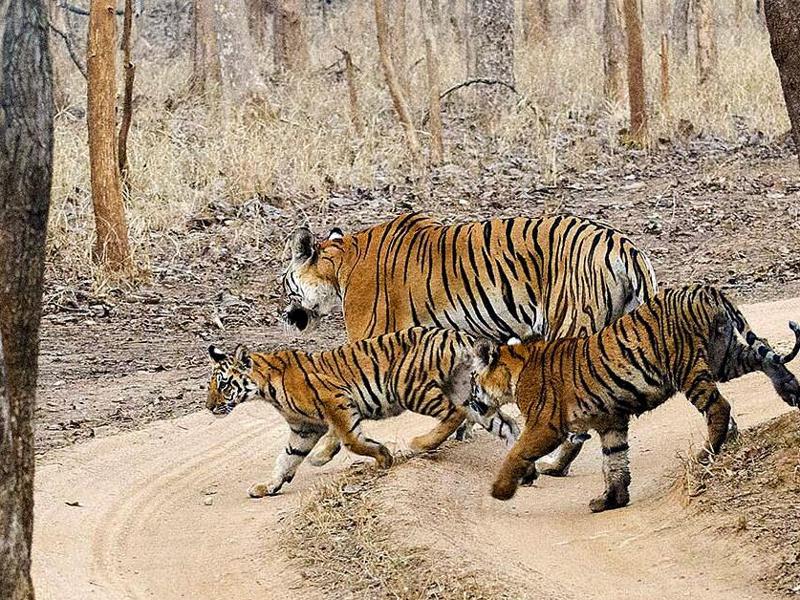
A tiger has died every 10 days this year in the land of Mowgli that spans Madhya Pradesh and Maharashtra. Experts blame the deaths on rampant construction, poaching and a lack of new habitat for the tiger whose population in the reserve grew almost 40% in the past five years.
Alarm bells set off last week when tigress Bhaginnala — a tourist draw whose photo adorns Pench’s main gate — died of poisoning, underlining how lax rules and bureaucratic apathy are hurting India’s conservation efforts.
On a visit to Pench, HT found the tiger population density coupled with lack of monitoring, illegal fishing and construction activities inside the core area were wreaking havoc with conservation efforts.
In addition, villagers are allegedly poisoning tigers to aid poachers — who pay them handsomely —- and steal tiger body parts believed to bestow wealth, according to local traditions in the drought-hit region.
This comes at a time when global tiger numbers are up for the first time in decades with India accounting for over 75% of the increase.
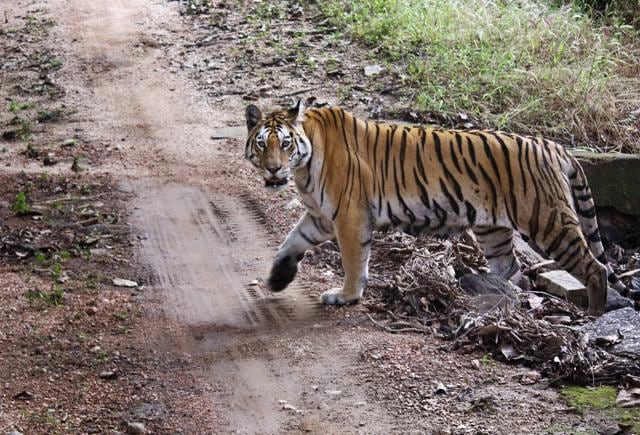
A tiger reserve is divided into a core — where no human activity is allowed and a buffer — where villages are situated but need to be relocated. Forest departments of the two states haven’t identified a new habitat for Pench’s 60-odd tigers — around 45 in the 411 sq km core area and 16 in the buffer zone.
This is proving fatal for tigers as Pench has fragmented linkages with other reserves especially Kanha in MP, thereby restricting tiger movement to new areas, Pench director Shubranjan Sen said. “Tigers become easy target for poachers and villagers with whom they come in conflict,” he said. Sen admitted it was impossible to provide security cover to each tiger that ventures out into buffer, where villages are situated.
“Villagers in buffer sometimes poison water sources or an animal carcass or use urea mixed with flour and mahua flowers for meat,” said Sagnik Sengupta, a local wildlife conservationist. State forest officials admitted enforcing strict conservation norms will not be possible until all villages inside the buffer are not relocated.
Bhaginnala’s death on March 28 was attributed to labourers or local villagers poisoning the water source. She died due to endosulphan pesticide poisoning and one of her two cubs who were shifted to Kanha died of infection. Three villagers were arrested for poisoning a water source but forest officials are clueless about who killed her.
A local guide said the park feels gloomy without Bhaginnala’s roar. “Something terribly wrong is happening here,” he added.
Authorities allowed loaders and bulldozers, tractors and labourers into the core area where Bhaginnala and her four cubs stayed, hinting at poor conservation and lack of coordination between government agencies. Local residents said most tigers were victims of poisoning and electrocution.
HT found entering the core area wasn’t difficult with many villagers illegally fishing in the Totaladoh dam. Many unauthorised fishing boats were stacked on the banks of the half-dry reservoir. “In the core, where you cannot cut a leaf without permission, how come illegal fishing goes on without the knowledge of officials?” questioned Narendra Kumar Dubey, president of Pench Gypsy drivers Association.