E-Paper



Kerala cops seize ivory of ‘40 tuskers’ from Delhi smuggler
Umesh Aggarwal, dubbed the Sansar Chand of the ivory trade, was arrested on October 2 after a raid on his Laxmi Nagar home in east Delhi following the interception of call records of his middlemen arrested in Kerala in June.


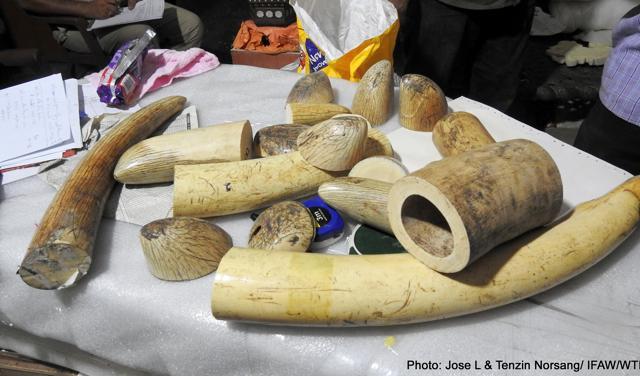
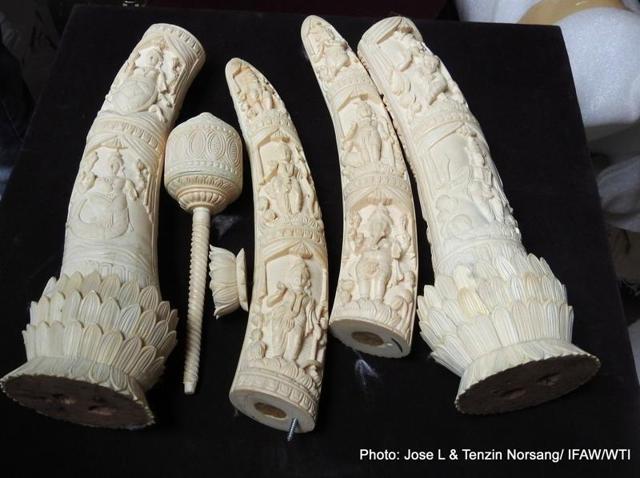
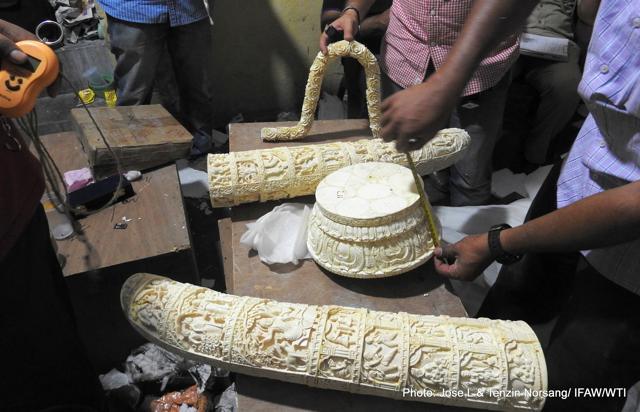
A raid on a Delhi artifact salesman-turned-ivory trader’s safe-house on Sunday led to the seizure of 487kg of ivory worth around Rs 12 crore, the largest in recent years, for which over 40 elephants could have been poached in three southern states over the last one year.
Umesh Aggarwal, dubbed the Sansar Chand of the ivory trade, was arrested on October 2 after a raid on his Laxmi Nagar home in east Delhi following the interception of call records of his middlemen arrested in Kerala in June.
“His fortified house where every corner was under CCTV surveillance had a number of artifacts made of resins that resembled ivory. There was also an artifact-carving unit in the basement but no real ivory,” said Jose Louies of the Wildlife Trust of India, who assisted Kerala Police in the three-month long operation.
Aggarwal was then taken to Kerala and made to meet his two middle-men, Preston Silva and Aji Bright, who were arrested two months ago with about 50kg of ivory and ivory products meant for the Delhi trader.
Aggarwal denied his involvement in the trade, but investigators were able to nail him after the return of Aggarwal’s key aide, Eagle Rajan, from Sharjah where he had fled after the arrest of Silva and Bright.
It was then that Aggarwal allegedly confessed to shifting a large amount of ivory from his Laxmi Nagar home to a safe-house in congested Jaffarabad in north-east Delhi. He was brought back to Delhi last weekend and he led the joint Kerala and Delhi Police team to the hide-out where the ivory was recovered.
The illegal ivory haul would not have surfaced if the chief wildlife warden of Kerala, H Harikumar, had ignored the statement of a 62-year-old state forest department cook, Kunjumon. Harikumar ordered an inquiry into Kunjumon’s claim that over 20 elephants had been killed by poachers in the last 10 months in Kerala even though his subordinates dismissed him as “mentally unstable”. They said all ivory seized in Kerala was coming from outside the state.
Kunjumon, allegedly part of a poacher’s gang in Kerala, provided the telephone numbers of seven poachers, leading to the recovery of 18 elephant carcasses and the arrest of several poachers.
Getting to Aggarwal wasn’t easy. Louies said he had removed all ivory and any evidence linking him to Kerala from his home.
Aggarwal reportedly first told his interrogators he ran a company called Art of India selling artifacts and handicrafts to rich buyers and had nothing to do with the illegal ivory trade. After the ivory haul,
police discovered he used to send ivory bangles to Gujarat and Rajasthan, where they are considered high value ornaments.
Aggarwal was a salesman in a Delhi-based handicraft shop in the early 1980s when he came in contact with Rajan. The two became friends and Aggarwal decided to start his own business in artifacts made of ivory procured from poachers in Kerala.
Poacher got just Rs 10,000 for a kilogram of ivory which Aggarwal sold for between Rs 4-5 lakh in the form of artifacts. The finished ivory products were sent to Aggarwal on trains and through couriers marked as plastic items.
“Raw ivory has no value, finished one gets huge money. Umesh realised that early in his business days,” Louies said.