Sign in

Now UIDAI feels the heat, forced to change tag-line

The spectacular victory of the Aam Aadmi Party (AAP) in Delhi has forced the Nandan Nilekani-led Unique Identification Authority of India (UIDAI) to do a re-think on its tag-line — Aadhaar Aam Aadmi Ka Adhikar.

Updated on: Jan 17, 2014, 01:27:51 IST
Hindustan Times | By , New Delhi
Share
Share via
  • facebook
  • twitter
  • linkedin
  • whatsapp
Copy link
  • copy link

The spectacular victory of the Aam Aadmi Party (AAP) in Delhi has forced the Nandan Nilekani-led Unique Identification Authority of India (UIDAI) to do a re-think on its tag-line — Aadhaar Aam Aadmi Ka Adhikar.

Article image

On Thursday, the UPA government came up with a new aim for the UIDAI — One India One Identity — in the process, taking a pot-shot at arch-rival BJPas well.

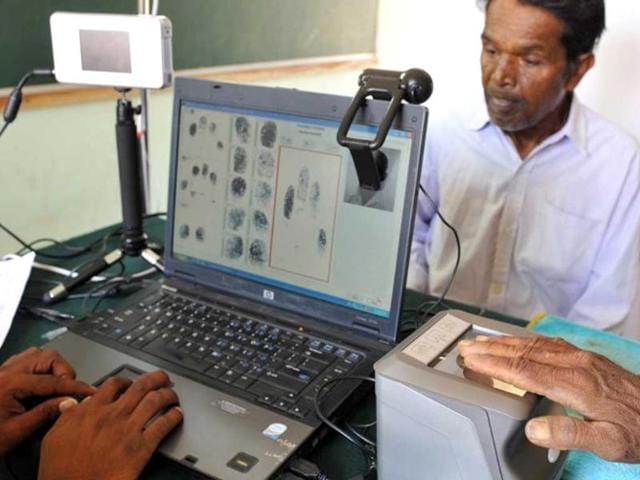
With the tag-line on over 560 million Aadhaar letters generated so far — almost half the Indian population — the authority had unknowingly been giving publicity to AAP, spreading its name to every nook and corner of the country. It was a precarious situation for Nilekani, the probable Congress candidate from south Bangalore.

“The use of aam aadmi on Aadhaar letters is in a generic sense and does not refer to any party,” Nilekani clarified on Monday — the day he accused the AAP of trying to check corruption through television screen.

The use of the phrase “aam aadmi” by Arvind Kerjiwal’s party has also reached the Bombay high court, with a public interest litigation challenging the Election Commission registration. The petitioner has claimed the phrase cannot be used by a political party as agencies like UIDAI use it for the delivery of their services.

Till now, the government claimed that Aadhaar was primarily a system to improve the efficacy of service delivery of schemes worth R 3,00,000 crore annually. It was also described as a tool to check corruption by reducing human intervention in service delivery to a bare minimum.

“The Aadhaar is a unifying factor, as it gives a national identity number to every resident, enabling easy mobility and residency anywhere in the country,” said a senior UIDAI functionary. “The unifying factor of Aadhaar was always there, but it now being promoted for the first time. It is a binding force for a people who come in various hues.”

  • Chetan Chauhan
    ABOUT THE AUTHOR
    Chetan Chauhan

    Chetan Chauhan is the National Affairs Editor looking into all aspects of news and features from across India. A Chevening scholar with over three decades of experience in reporting and news management, Chetan has extensively covered all important aspects of the social sector, political economy, environment and climate change nationally and internationally. He did a journalism course at the Reuters Institute of Journalism in Oxford and Digital Media training at Nanyang Technological University in Singapore. He started as a reporter with The Statesman in 1996 and joined the Hindustan Times in 2000 in the metro bureau covering environment, crime and Delhi politics. He covered hot local news, from the Jessica Lal murder case to the rebellion of Delhi Congress MLAs against then Chief Minister Sheila Dikshit, to the replacement of toxic vehicle fuel with cleaner compressed natural gas (CNG) in the national capital. Some of his stories on air pollution became part of the Supreme Court’s landmark MC Mehta versus Government of India case in the National Capital Region (NCR), forcing the government to take corrective measures. As part of the national political bureau since 2004, he covered important central sectors such as environment, education, social justice, labour, rural development, water resources, renewable energy, agriculture, broadcasting and the Planning Commission for more than a decade producing several exclusive and investigative breaking stories. His specialisation is the environment, having covered at least a dozen United Nations global conferences on climate change, biodiversity and wildlife including climate summits in Paris, Copenhagen and Bali. He also covered India’s two five-year plans ---11th and 12th and reported on drafting and execution of right based laws such as Right to Education, Right to Information and rural job guarantee law, MG-NREGA, now being introduced in new format as VG-RAM-G Act. He has in-depth knowledge of social sector issues. He was one of the first to report on tigers vanishing from Sariska and Panna wildlife reserves in 2004 and 2008, respectively, leading to the setting up of the National Tiger Conservation Authority (NTCA) and the introduction of stringent penal provisions for poaching. He has written extensively on the rising human-animal conflict in India and the degradation of India’s biodiversity hotspots because of mining and other activities. Since 2004, Chetan has covered Parliament comprehensively and participated in training on the nuanced coverage of Parliament proceedings. He has travelled extensively across India to cover national and provincial elections since 1998, especially in the Hindi heartland states, considered India’s road to power. He writes a regular column for Hindustan Times, Ecostani, on important national politics, economy, Himalayan ecology and environmental issues. His other responsibilities include providing inputs for edits and edit page articles for the publication, apart from managing news flow from across India.Read More

Follow India news real-time updates and the latest news covered on Hindustan Times, featuring today's critical updates on Sonam Wangchuk LIVE and more across India.