
 E-Paper



Pathankot attack has striking similarities to Gurdaspur assault
The pre-dawn attack by Pakistan-based terror outfit Jaish-e-Mohammed (JeM) on the strategically significant air force base in Punjab’s frontier Pathankot district on Saturday bears a striking resemblance to the Gurdaspur siege in July last year.


The pre-dawn attack by Pakistan-based terror outfit Jaish-e-Mohammed (JeM) on the strategically significant air force base in Punjab’s frontier Pathankot district on Saturday bears a striking resemblance to the Gurdaspur siege in July last year.
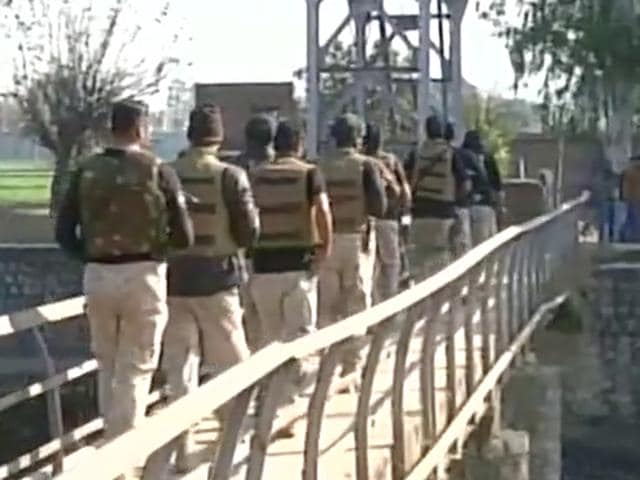
Also, both attacks came close on the heels of meetings between Indian and Pakistani prime ministers and an upswing in the ties between the two sides. The Pathankot attack has come nearly a week after Prime Minister Narendra Modi made a surprise stopover at Lahore and held talks with his Pakistani counterpart Nawaz Sharif. The Gurdaspur attack took place after Modi and Sharif met in the Russian city of Ufa and agreed to explore ways to pursue peace talks.
The terror strike in Pathankot, nearly five months after the Gurdaspur incident, clearly indicates that Punjab has become a ‘target area’ for terrorists, posing a new challenge to security agencies, including Army’s Western Command. In both these attacks, the ultras were on a suicide mission; hijacked vehicles to make it to the destination and their target was a defence installation.
Even the pre-attack modus operandi---snatching vehicles and slitting throats of occupants---adopted by the four terrorists in army fatigues in Pathankot is identical to the method terrorists had adopted in March last year before attacking a security establishment in Kathua district of neighbouring Jammu and Kashmir, revealed a security official.
Initial investigations suggest that the terrorists involved in Saturday’s strike sneaked into Punjab through the porous riverine belt in Pathankot district. According to Punjab Police, the three fidayeen involved in the Dinanagar attack had entered the Gurdaspur sector after crossing the Ravi river near Mastgarh village. The Border Security Force has, however, has stoutly refuted the Punjab cops’ claim. The GPS recovered from the slain ultras had the entry of the path they had used for sneaking in. The GPS had the entry of Gurdaspur town, indicating that they had planned a strike on the town too.
In July, the terrorists had planted 2.5-kg RDX on a rail line to blow up a small bridge. It was from this bridge, a US-made night vision device was recovered. Then terrorists shot at a Dinanagar resident and drove away in his car. Later, they stormed the Dinanagar police station. The terrorists, who were neutralised after a 12-hour gunbattle, were planning to target a defence base, said defence sources.
Sources said the terrorists behind Pathankot attack belonged to the JeM and had entered India about three days back. The terrorists were from Bahawalpur area of Pakistan’s Punjab province, they added.
“On its Facebook page, the JeM had uploaded the google map of the Pathankot airbase,” a senior police officer said.
-kMNB-U1021018938041uE-250x250%40HT-Web.jpg)


