E-Paper



Peace, stability and prosperity in Nepal crucial for India: Rajnath
Rajnath Singh informed that both countries held detailed talks on cross border crime and terrorism, smuggling of fake Indian currency and human trafficking and agreed on creating a mechanism to address them.


Home Minister Rajnath Singh said on Saturday that peace, stability and prosperity in Nepal is crucial for India’s interests.
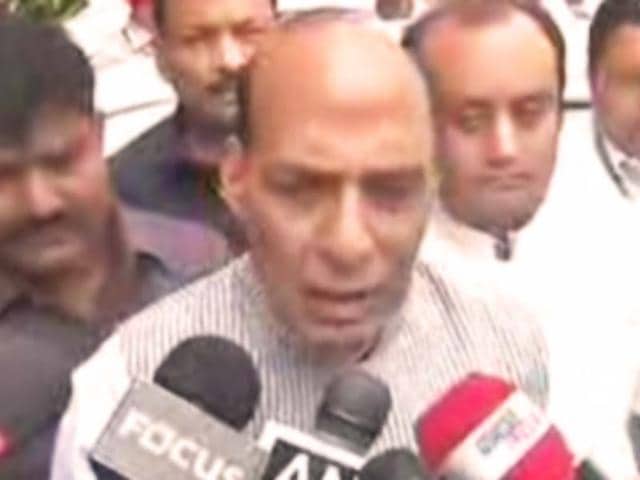
“India realizes that when there is peace, prosperity and stability in Nepal, only then we can have peace, prosperity and stability in our country,” he told journalists here before departing for New Delhi.
Singh, who was on a three-day visit to Nepal to attend the 6th SAARC (South Asian Association for Regional Cooperation) home ministerial meeting, termed his visit as fruitful.
“Talks on the treaty will continue. We haven’t reached any conclusion yet, but I am confident that the outcome will be positive,” he said when asked about the pending extradition treaty between India and Nepal.
Singh informed that both countries held detailed talks on cross border crime and terrorism, smuggling of fake Indian currency and human trafficking and agreed on creating a mechanism to address them.
“Nepal is a sovereign country and any decision on whether the country should revert back to Hinduism will be taken by Nepal’s citizens,” he replied to a query on his government’s views on Hinduism in Nepal.
Besides attending the SAARC meeting, Singh met President Ram Baran Yadav, Prime Minister Sushil Koirala, Deputy Prime Minister and Home Minister Bamdev Gautam and leaders of political parties during his trip.
“I felt after meeting people here that Prime Minister Narendra Modi’s visit to Nepal has had a very positive impact on common masses here,” he said.
Singh lauded signing of the agreement between Nepal government and GMR Group to develop the 900 MW Upper Karnali hydro-power project and hoped it would lead to flow of more investments from India.