E-Paper



Six cops among nine dead in Nepal in protests over Constitution
Simmering protests over Nepal’s new constitution turned violent on Monday afternoon claiming nine lives including those of six policemen in clashes between protesters and security forces.


Simmering protests over Nepal’s new constitution turned violent on Monday afternoon claiming nine lives including those of six policemen in clashes between protesters and security forces.
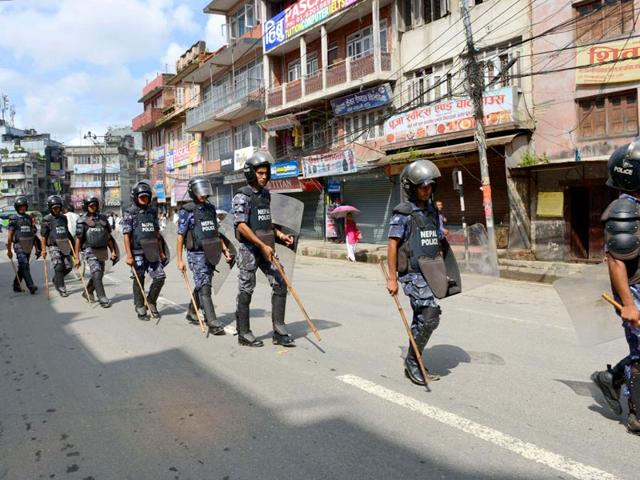
Those killed in the clashes at Tikapur in Kailali district in far-western Nepal include four personnel from Nepal Police, two from Armed Police Force and three civilians.
“We have confirmation on nine deaths. Prohibitory orders have been issued and the area is tense but under control,” said home ministry spokesperson Laxmi Prasad Dhakal late on Monday evening.
Read | Nepal parties now agree on seven states in new constitution
Unofficial reports put the death figure at over 20 including 17 policemen. But chief district officer Rajkunmar Shrestha told HT that the figure can’t be confirmed and only six policemen have been killed.
Officials in Kathmandu and in Kailali admitted that the death toll could be higher as several civilians sustained injuries in police firing.
Terming the clash as pre-planned, home minister Bamdev Gautam told Parliament that a police constable was burnt alive by the protesters while others killed with spears, sickles and axes.
The situation went out of control when thousands of protesters defied prohibitory orders and attacked a police picket. Police resorted to firing to disperse the mob.
Curfew had been imposed in Kailali for the past four days after protests by activists belonging to Tharuhat United Struggle Committee, who have been demanding a separate state for the Tharu community, turned violent.
“Additional forces have been rushed from other areas to bring the situation under control. There could be casualties among protesters too, but it is not clear yet,” said Nepal Police spokesperson Kamal Singh Bam.
An emergency meeting of national security council following the incident authorised district authorities in the affected districts to mobilise Nepal Army if needed.
Protests have been taking place in Madhes region of Nepal bordering India and in several districts in far-western and mid-western Nepal for over two weeks now, following the decision by four major parties to demarcate six states in the new constitution.
The agitation forced major parties earlier this week to change the number of states to seven, but the protests by those unhappy with boundaries of the states have not abated.
Despite the protests, Nepal’s constitution-drafting process is already in its final stage with final draft of the statute handed over to the constituent assembly on Sunday.
Read | Major parties sign breakthrough deal for Nepal's new constitution
Read | Nepal's constitution to be promulgated by two-third majority