
 E-Paper



Petlawad blasts: A tragedy not to be forgotten easily in lifetime, say locals
On this day last year, a huge quantity of mining explosives—gelatin rods—stocked illegally in a warehouse had blown up the building on the busy Thandla Road in Petlawad, a small town in MP’s Jhabua district, which erupted in mourning.

 Prefer HTon Google


On this day last year, a huge quantity of mining explosives—gelatin rods—stocked illegally in a warehouse had blown up the building on the busy Thandla Road in Petlawad, a small town in MP’s Jhabua district, which erupted in mourning.
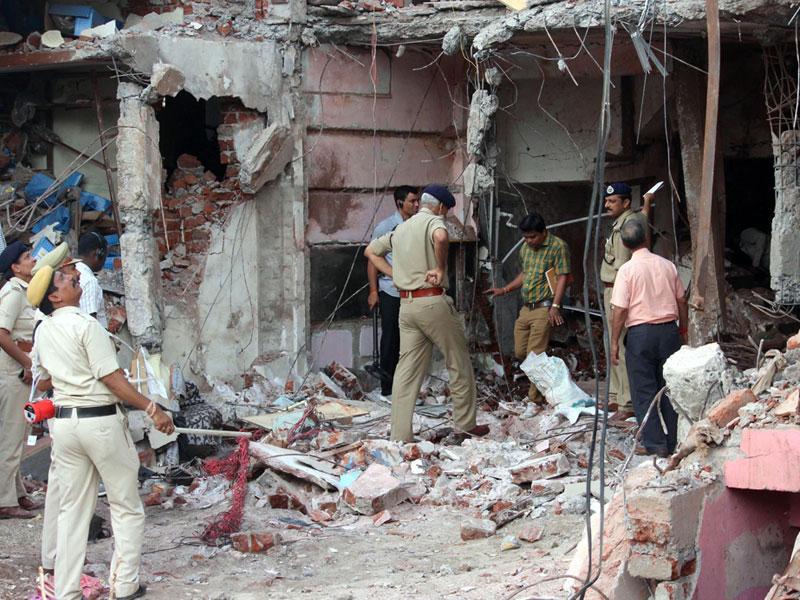
What was a double-storey building was reduced to shambles. The gelatin rods were kept in the godown in the basement. Tenants residing on the first floor were all killed. So was the building’s owner and the main accused Rajendra Kaswa. He was later identified by the police based on a DNA test.
A restaurant adjacent to the building was badly damaged by the impact of the explosion, killing several people there too.
The huge quantity of explosives also caused debris to fly almost 300 metres away and hit people, most of them labourers who had gathered at the square here like every day.
Bloody bodies and limbs were strewn across this small town in Jhabua while several others suffered serious injuries.
Soon, sirens roared and ambulances made their way in and out, taking away victims to the Petlawad government hospital.
An ATS officer, who had reached the scene soon after the explosion, said he had seen many blast sites. “But this is something I have never seen in my whole life.”
Sniffer dogs and forensic teams were everywhere, trying to find out the cause of the blast.
When state home minister Babulal Gaur arrived, he was gheraoed by angry locals, who suddenly started shouting slogans against the government.
“For more than a decade, Kaswa was storing gelatin rods illegally at the godown, but authorities did not take action,” a woman, residing in the locality told this reporter.
Gaur was forced to leave.
By evening, the town was shut and the National Highway 18, passing through the town, was blocked.
Around 50 bodies had been lined up on the banks of Mahi river for cremation.
Most people were shouting slogans against district authorities or mourning.
In front of the blown-up building, a man stood alone and started wailing loudly. He had lost his only son in the blast.
A few days later, residents named the square Sharddanjali Chowk with every victim’s photograph pasted on the building.
For Mukesh Sisodia, a local scribe who reached the site first and filmed the aftermath, the incident is still alive in his memories.
“I saw heaps of bodies and limps. People were crying and wailing inconsolably. I could not sleep for months. People still come to me and share their pain. It is a day people of this town will not forget easily,” Sisodia said.


