
 E-Paper



No, risk of coronavirus hasn’t reduced after sound produced during Janta curfew
There is no truth behind this message and one shouldn’t believe such rumours as they are false and misleading.

 Prefer HTon Google


Coronavirus, the deadliest threat in recent times is tightening its grip around the world. Amid this pandemic, the Internet is flooded with fake news and that is adding on to the panic. Case in point, this message circulating online involving the recent janta curfew and COVID-19. The message claims that the sound created when people clapped, rang bells and blew conch shells on March 22, has reduced the risk of coronavirus. The message claims that the sound produced has weakened the virus.
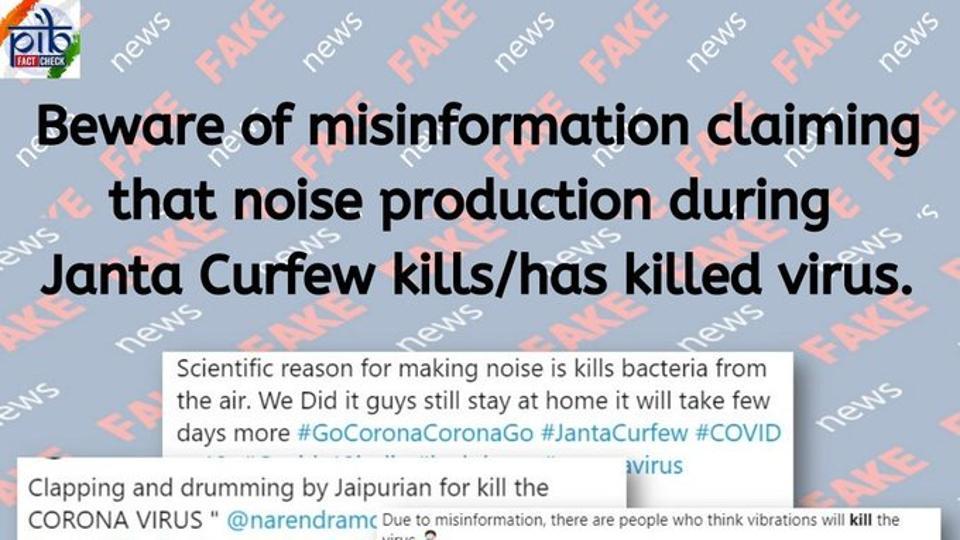
There is no truth behind this message and one shouldn’t believe such rumours as they are false and misleading.
Press Information Bureau’s fact checking Twitter handle took to the micro-blogging site and debunked the claim.
“Beware! Messages are being shared on Social media claiming that the risk of #Coronavirus in India has been reduced due to noise produced during the #JantaCurfew,” they wrote.
“Everyone is advised to not get misled and continue to practice #SocialDistancing and personal hygiene,” the agency added.
In fact, not just the medical authorities, Prime Minister Narendra Modi is also sharing multiple messages on social media conveying the seriousness of the threat and urging people to follow self-quarantine and stay indoors. Here’s one such tweet where he’s urging people to take the lockdown seriously:
Earlier, PIB debunked another similar fake news. Posts claimed that clapping during Janta curfew would kill the virus. The initiative was only to express gratitude.


