
 E-Paper



A window to the past: History buffs find solace on social media


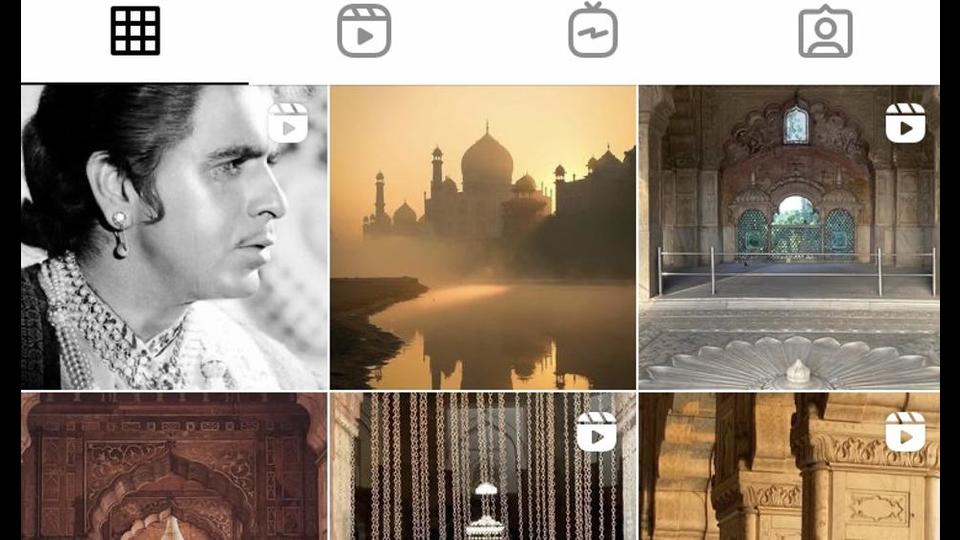
Cooped up indoors at present, the past seems alluring to netizens. As the world warmed up to a virtual way of life since the last lockdown and even heritage walks shifted to the online mode, there has been a rise of enthusiasts discussing history and heritage through social media.
New Delhi
Stroll through the bylanes of purani Dilli, witness the zamindars of Bengal live lavishly or hear the clocks tick towards India’s independence as Nehru delivers his Tryst with Destiny speech, all virtually. The pandemic might have restricted people to the confines of their homes, but the internet is allowing netizens to take an immersive peek into the past. Amid on-and-off lockdowns and travel restrictions, history and heritage are having their renaissance moment as various pages on social media have found new takers lately.
From sharing rare photos and facts to making short videos encapsulating entire historical episodes — many history and heritage pages and groups have captured the attention of netizens in the last few months. Unzip Delhi, an Instagram page dedicated to documenting the tales of Old Delhi, says it witnessed a 40% growth in follower count during the pandemic. Anas Khan, a 26-year-old anthropologist, who runs this page with 62.8k followers, shares, “I grew up hearing tales about this city from my grandparents. But in this age of technology, when such beautiful traditions are disappearing fast, I try to use this boost to keep them alive. I started the page before the pandemic, but I wasn’t consistent. The lockdown made me take my blog much more seriously, and the huge response encouraged me to keep at it.” Now, the visual blog shares multiple posts and clips daily.
Khan’s page isn’t the only online history repository to have a success story amid the pandemic. Ghare Baire, a museum exhibition commissioned by the Ministry of Culture and curated and organised by DAG, in collaboration with the National Gallery of Modern Art (NGMA), at Kolkata’s Old Currency Building, has been extensively using the online medium. “When we launched Ghare Baire in March 2020, the online space was supposed to be just an extension of our operation. However, the onset of the first lockdown just three weeks later made us rethink and expand. The lockdown gave us much more room to explore the digital space,” shares Sumona Chakravarty, deputy director of Ghare Baire. The vast curation, which captures the evolution of Bengal’s art, was soon made available to their 7,112 followers and counting through their #museumfromhome experience with regular posts on DAG’s Instagram account.
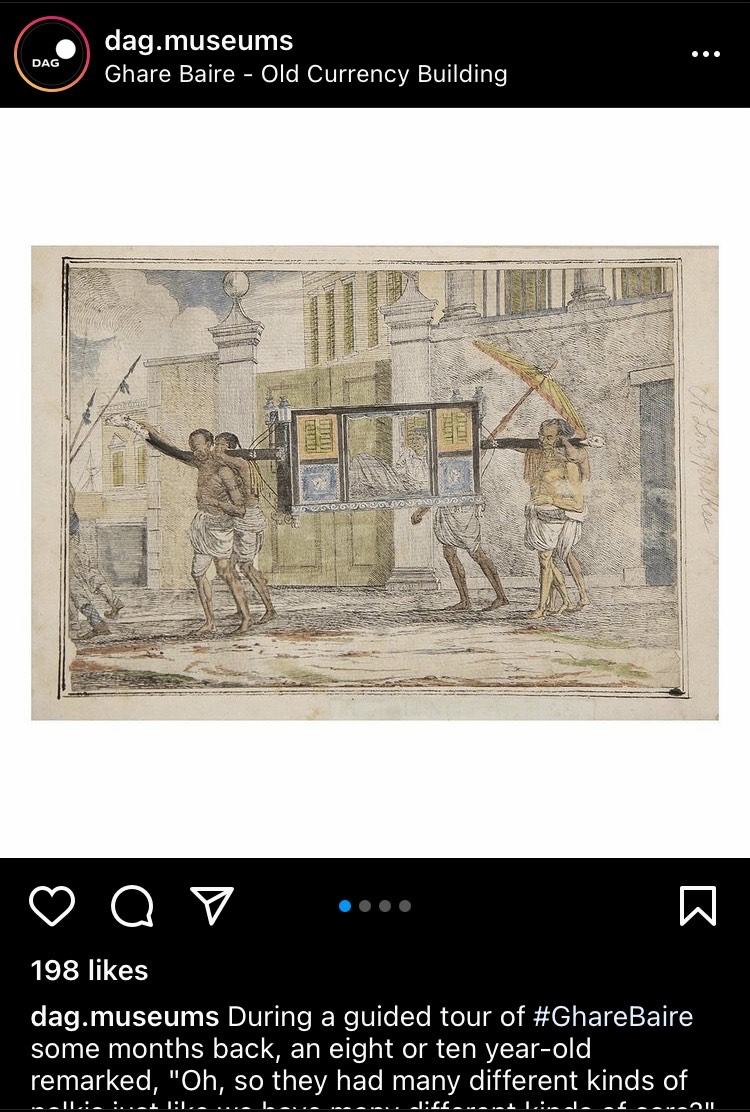
Decoding the reason behind the spike in public interest for a subject often labelled as “boring”, Chakravarty opines, “There has been a gradual rise in people’s desire to learn about their own history. But these spaces have mostly been intimidating and less accessible. However, the way we post online, the language and presentation have been easier for the masses to absorb. Also, in the lockdown, many people just wanted to learn something new, expand their horizons.”
Making a case for the lockdown being the catalyst for this newfound enthusiasm towards the discipline, Khan adds, “I think everyone was at a loss at that time and they took to social media as their only respite. Stories are like a ray of hope and history teaches us that nothing is permanent.”
As most such pages feature short captions and a vintage aesthetic appeal, followers are happy that the subject, so far restricted to school and college courses, is more interesting now. “I hail from the STEM (Science, technology, engineering, and mathematics) background and can’t claim to be very well-versed in history. But I regularly join in Clubhouse rooms that hold riveting discussions,” says Rishabh Shaw, a 30-year-old software engineer from Agra, Uttar Pradesh. Topics in these discussions range from the lesser-known episodes of India’s freedom struggle to the influence of French and Portuguese settlers in various parts of India, shares Shaw.
For many, the societal shutdown amid Covid-19 became a time for exploring the events of the past. Kerala-based 23-year-old media professional, Aarati Satish says, “The stunning artworks, rare photos of events and artefacts instantly draw me to these posts and relive the days. It gives me a better understanding of society, in a way, as the pandemic didn’t give people of my age a lot of time or opportunity to experience it on our own. It provides a remote sense of normalcy and hope.”
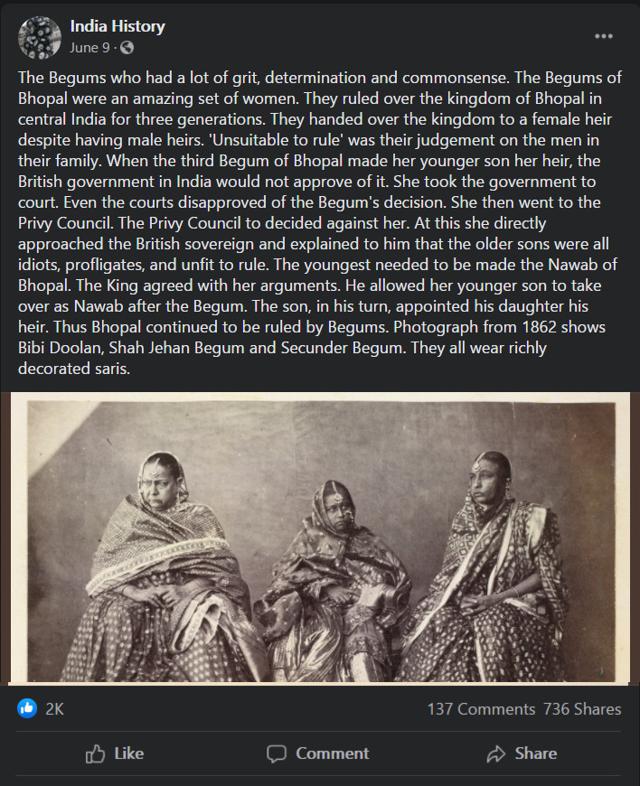
But while social media holds a space for conversations on history to thrive, stopping them from spreading misinformation and prejudices is also essential. M Rajivlochan, professor at the Department of History Panjab University, Chandigarh, who is the admin of a Facebook page called IndiaHistory, shares, “On our page, we take extreme care to be factually correct and to not pursue any sectarian agenda. Reliability of information, use of primary sources for seeking out information, are basic principles with which we work.” Rajivlochan’s page not only caters to history enthusiasts with rare pieces of verified facts but also acts as a reliable resource for professional historians and students doing their PhDs in history. After a surge in followers during the lockdown, the page currently reports over 3,57,00 likes and a humongous reach.
While the domain mostly has experts, youngsters are not shying away from it either. Apoorva Raj, an 18-year-old student from Patna, Bihar, channelises her passion for the subject through her history page on Instagram called The Wonders of Hindustan, since December 2019. “I am a part of the batch that did not get to give the 12th board exams due to the pandemic. I started this page because of my love and passion for history but the extra time I got for an entire year with less schoolwork, helped me spread information more,” she shares. With a follower count of 2.6k, Raj reveals the interactions on her page have doubled since the pandemic.
As the world warms up to the virtual way of life, where does the future lie for these pages? “I see people accepting and preferring the virtual medium more openly now. Earlier this year, I conducted a virtual session on Delhi’s tryst with Sufism, accompanied by a virtual tour across important Sufi pedestals. I hope to do more of these,” adds Khan.


