
 E-Paper



Across the Jordan: K Narayanan writes on his love affair with the Wheel of Time books

 Prefer HTon Google


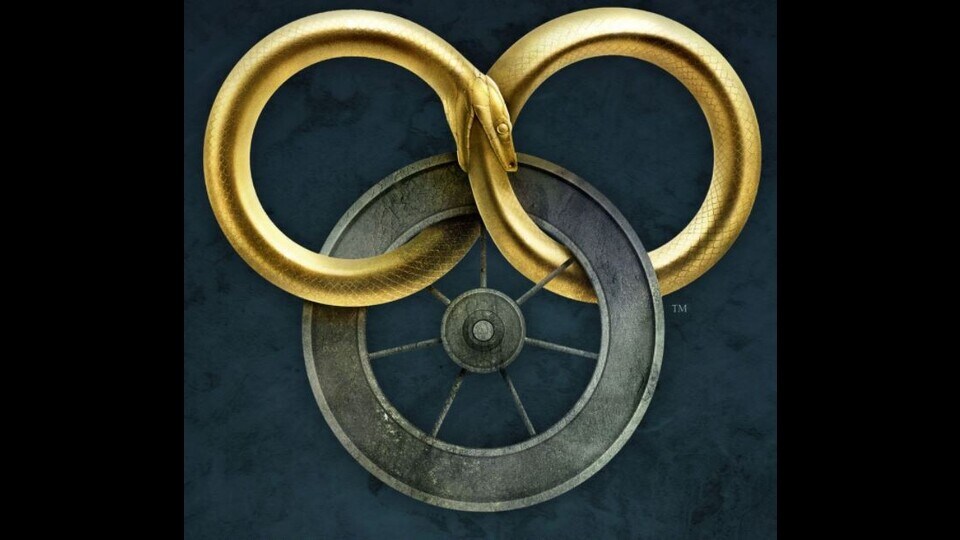
There’s a tenderness to giving one’s heart to something neither highbrow nor very popular. Here’s the story of how I fell in love with Robert Jordan’s series.
It’s hard to remember precisely when a love affair began; hard enough with people, even harder with books.
This is a personal story. A story of a love affair with a series of fantasy novels, Robert Jordan’s Wheel of Time.
It would be easier, I suppose, if these were acknowledged literary classics. Shakespeare. Joyce, maybe. Or if these were books that had gained respectability because of their niche nature. Instead, they were massively successful in the ’90s and Aughts, but since the death of the author and the completion of the series, in that order, the buzz around them has subsided.
These books are high fantasy; not the more fashionable grimdark or the even-more-fashionable romantasy. They were never reviewed by The New York Times. The Guardian’s Alison Flood posted a sneering critique of the series, quoting generously from an essay that was equally scathing.
Flood’s reaction is representative of those who didn’t fall under the spell of the novels. But there were, and I suspect still are, plenty of us who still love them and return to them every so often, our hands automatically flipping to sections we have read and reread over decades.
The series is made up of fifteen volumes, release between 1990 and 2013.
I don’t remember when I bought the first in the series, The Eye of the World, but it was sometime in the ’90s. I was young, single, employed as a financial analyst at a small firm. Landmark bookshop, an airconditioned oasis in the sweltering heat of a Madras summer, had the luxury of two whole shelves devoted to Science Fiction and Fantasy. I decided to take a break from my usual diet of thrillers and try a fantasy novel. The fantasy shelf was dominated by The Wheel of Time.
The books follow the adventures of three young men from the village of Emond’s Field, one of whom could be the prophesied Dragon, the Chosen One who would lead the battle against the Dark One. There are other prominent characters as well, so many of them, with so many branching side stories, backstories, subplots and little histories, that it takes commitment to keep up. But it eventually all circles back to Perrin, Rand and Mat. A fighter, a mage and a rogue. Or, in another sense, Thor, Tyr and Odin. Cliched? I suppose so.
The book draws heavily from the well of standard fantasy tropes. Emond’s Field is Hobbiton. And the journey begins when Moiraine, a Gandalf figure, disrupts the tranquillity of this quiet village.
There is a militant church. There are wolves and humans who talk to them. There are Darkfriends on the trail of our heroes, and there are heroines there to ensure the boys stay out of trouble. There is a flight into a deserted city, where a killer mist prowls the empty streets at night; a room full of cursed treasure; a creature that needs just one item of that treasure taken way.
I remember that it was around this time that I realised I had been reading late into the night, and I had to get to work the following day.
The first book of a series is often an anomaly. But The Eye of the World, despite its many cliches, had two things going for it: the action and the world-building. There was a complex magic system, the nature and capabilities of which were revealed slowly. Like so much in Jordan’s imagined world, the magic is gendered. The female aspect of the power can only be controlled through surrender. The male aspect can only be mastered through force.
Small events, such as the arrival of a gleeman (or bard) or a peddler’s visit bringing news of the outside world, added colour and depth, and would tie into the plot, sometimes several books later.
MORE FORESTER THAN GARDENER
Jordan’s fellow fantasy serialist George RR Martin once said there are two kinds of writers: the architects, who plot their books tightly and know exactly what will happen and when; and the gardeners, who plant seeds and water them, often not knowing what kind of plant will grow or how many branches it will have.
By this measure, Jordan was more a forester than a gardener, drawing from Hinduism and Buddhism, Arthurian legend and Celtic myth, and generously from Tolkien and Frank Herbert’s Dune for his multiple plotlines. There is an all-female organisation of magic users, the Aes Sedai, a clear derivative of the Bene Gesserit sisterhood. In time, we meet the Aiel, who, like Dune’s Fremen, are a warrior race made deadlier by the harsh and unforgiving land they inhabit.
But these are not pale imitations. The structure and politics of the Aes Sedai is far more complex than that of the Bene Gesserit. Elaborate rules of etiquette and fealty govern the Aiel tribes.
One of the pleasures and pains of reading an ongoing series is waiting for the next book. I tore through the first seven. By 1998, I was up to date. The final battle seemed aeons away, but I treasured the promise of further adventures.
This was when I discovered Usenet. I lurked on rec.arts.sf.written.robert-jordan, reading and rereading posts and the fabled FAQ. It was my first experience of an internet community. Meanwhile, I would wait for each new book to be announced, and begin a ritual reread of the earlier volumes in anticipation.
In 2006, Jordan announced that he had been diagnosed with cardiac amyloidosis, and would probably not last the decade. Jordan died on September 16, 2007, aged 58.
In December that year, his widow Harriet McDougal, who was also his editor, announced that up-and-coming fantasy writer Brandon Sanderson would use notes Jordan had left behind, to co-author the last three books.
By the time I finished the first of these, The Gathering Storm (2009), I wasn’t sceptical anymore. There were inconsistencies, characters one knew Jordan would have written differently, but by and large, Sanderson did a remarkable job in bringing the series to a conclusion.
A MEMORY OF LIGHT
In February 2013, a month after it was released, I bought the final volume, A Memory of Light, this time at the Blossom bookstore in Bengaluru. I had been in my 20s when I started the series. Now in my 40s, I had seen my share of births, deaths and marriages. I had struggled with addiction and disease, had a heart attack and bypass surgery, had good and bad relationships, changed professions three times. I had grown more cynical, and perhaps at least a bit wiser. Yet I felt that old familiar thrill as I re-entered Randland, and was satisfied.
Jordan wrote the last chapter of the last book before he died. He ended the series with: “The wind blew southward, through knotted forests, over shimmering plains and toward lands unexplored. This wind, it was not the ending. There are no endings, and never will be endings, to the turning of the Wheel of Time.
But it was an ending.”
There would be no more. It was over.
And yet, a couple of years later, I was reaching for The Eye of the World again. Like a man still in love.
(K Narayanan writes on films, videogames, books and occasionally technology)


