
 E-Paper



As easy as 2 + 2?: Violinist L Subramaniam discusses his unique formula for music

 Prefer HTon Google


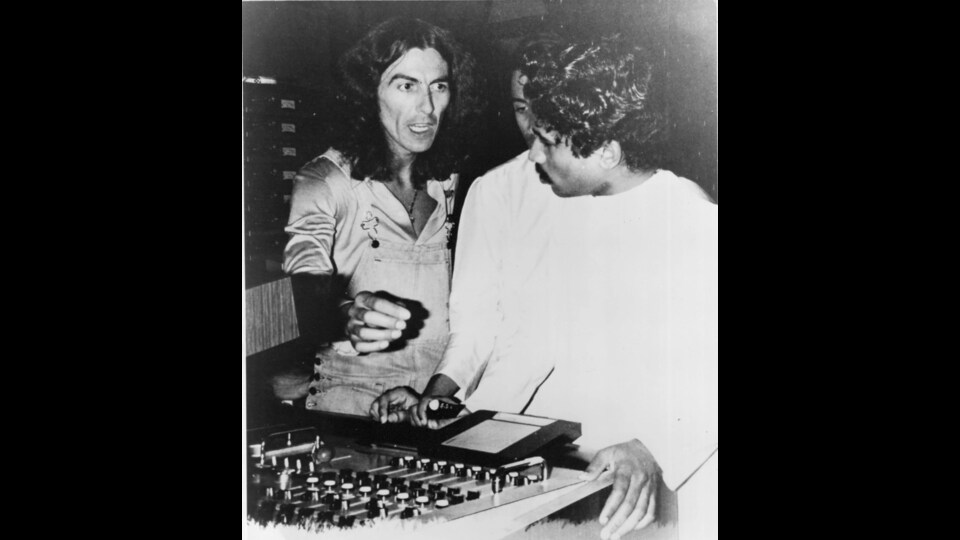
The world-renowned Carnatic violinist has always sought to meld musical cultures. In his new book, he explores an approach that would let anyone do this.
L Subramaniam, 77, has spent decades creating music that challenges the very idea of an East-West binary. Here, Bhanuj Kappal interviews the world-renowned Carnatic violinist, as part of Wknd’s Living Legends special.
What led you to strike out of the comfort zone of Carnatic music, and study Western classical composition in America?
My father was very open-minded. He enjoyed, and introduced me to, all kinds of music. He would take us to concerts of all kinds, so I developed an interest in Western classical music early on.
My elder brother also bought a piano at some point, and was learning to play it. He bought some books for the Trinity College course. So I ended up learning, and writing those exams. I went up to the diploma level, practical, got a distinction… did all those things.
Then, when I was in the second year of my MBBS, a famous German violinist came to play in Chennai. My father got me an appointment to perform for him, to get his opinion on my playing. The German told my father I had the potential to be an international star, which was very encouraging.
How did “global fusion” come about?
When I started composing major works for orchestra, I wanted to create a new style and go in a new direction. I wanted to incorporate Carnatic music and the raga and tala system.
The response to my work was encouraging. When I performed Fantasy on Vedic Chants in Moscow in the 1980s, a professor asked me to stay back for six months and write a paper on how I worked out these totally new harmonies.
He said that if I wrote the paper and created a joint composition with him, I would get a doctorate from the Moscow Symphony. But at the time, it was -35 degrees Celsius in Moscow. And my children (Subramaniam is a father of four) were very young. So I very politely refused the offer. But that did give me great encouragement.
I ended up writing a lot of major orchestral work based on the raga and tala system. Carnatic music has these elements. No other system allows you to create millions of derived scales from the existing 72 parent scales.
I then started applying that system of derived scales to every composition I wrote. That’s how the Raga Harmony concept came to me.
Can you tell us a bit about it, and the new book?
Well, I didn’t want to write the book first. A thesis is scrutinised by a lot of different people, who vet it. So first I did the thesis, in 2017, and then the book.
Talking about the system, in Carnatic music, we have 72 scales which are divided into 36 scales with perfect fourths and 36 scales with sharpened fourths. This means that when you use a main scale, you needn’t give both the fourths equal importance — but you may do so, if you wish. This means that there are many, many possible combinations to use; and many minor scales to derive.
Using these raga scales, you can create harmonic tonalities that fit into the Western harmony system.
I have methodically developed this system. In fact, I am working on a formal expansion where millions of scales will be published.
Raga Harmony is essentially the idea that, using the ragas, we can create all the harmonies that have been used so far, and others which have not even been put down yet.
(What does this sound like? Click here to find out.)
That is fascinating. How do you see the role of music in the world?
Music can help bring emotional balance. When listening to something we enjoy, at least during that time, we don’t think of anything. We forget that we have to pay the telephone bill or that petrol has to be put in the car. The mind is relieved of all pressure.
Playing music also requires a lot of spontaneous creativity. If a person develops this spontaneous creativity, then even if they go into another profession later, it will stay with them. So, I think it’s very important for every child to have a musical education.
As someone who has witnessed — and contributed so strongly — to the evolution of Indian music, what are you most excited about today?
That more youngsters are open to innovation and experimentation in the classical space. This was a big no-no in the ’70s and ’80s. If anybody from the Indian classical space started doing something different, everyone immediately said “No, no, he’s spoilt it.”
But this generation… because of the internet, they’re able to see what’s out there. And if they like what someone is doing, they try to reach out to them and say “Let’s collaborate”. Which means that a lot of innovation is happening, which is a very good sign. I hope many, many more people become musicians and do more creative things, so that our music continues.


