Award-winning portraits that document the disappeared
Photographer Vijay Jodha’s ongoing project, The First Witnesses, features portraits of family members of farmers who have died by suicide, holding up photos of their late loved ones. See how the series is causing ripples around the world.
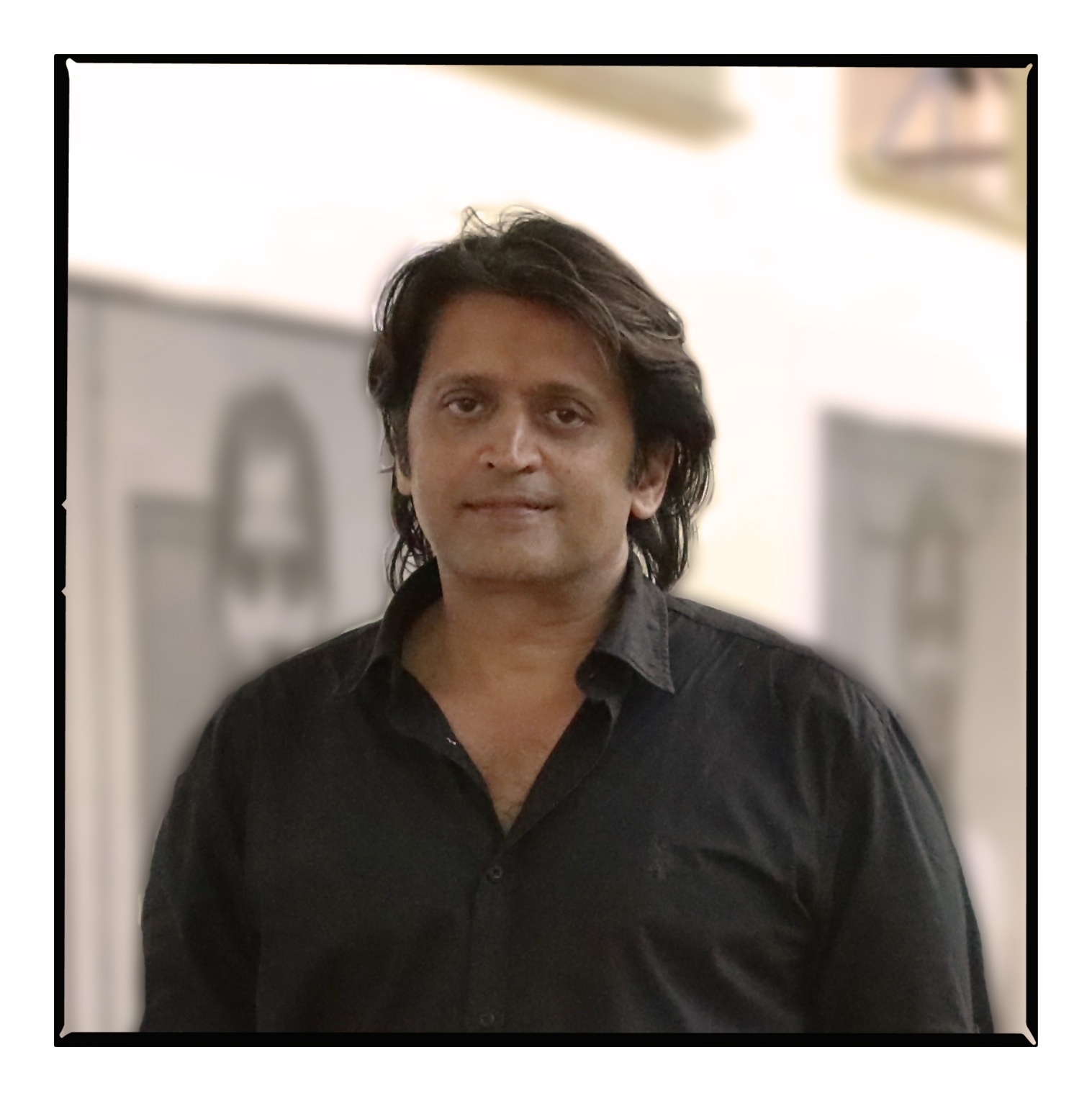
You could say Vijay Jodha’s gift is that he sees dead people. The 55-year-old photographer is focusing his lens on India’s farmer suicide crisis, and working to ensure that the deaths are not forgotten.
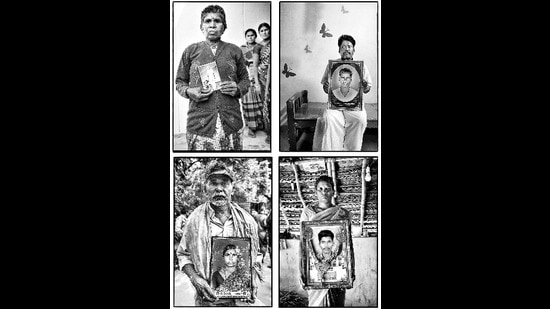
The First Witnesses, a black-and-white series that he began in 2017, features portraits of family members of farmers who have died by suicide. In a classic frame-within-a-frame style, they hold up for the camera, and the world, photos of loved ones glaring out from behind garlanded frames. Some just hold up now-redundant passport-sized photos.
As the marginalised Indian farmer’s indebtedness and vulnerability to the vagaries of the monsoon are exacerbated by a growing climate crisis, the Gurugram-based artist says he wants to break fresh ground on the issue. At least in terms of global impact, he seems to be succeeding.
Jodha recently co-won the best photo series award given out as part of the British Journal of Photography’s Decade of Change initiative, launched in 2020 to use art to highlight the climate crisis. As part of the initiative, 10 stills from the series were displayed at the world’s first museum of climate change, in Hong Kong, from June until mid-September; and then at Climate Week NYC, an annual event held since 2009 to coincide with the UN General Assembly.
Jodha, also a filmmaker and writer, says his photography is a reflection of his legacy, a reference to the famine research conducted by his late father, agricultural economist NS Jodha, and referenced in books by economists such as Amartya Sen and Jean Drèze.
Often, one member of a family won’t acknowledge that their loved one died by suicide. Those are the hardest conversations to have, Jodha says.
“It’s a heart-breaking process, taking such photos,” he says. “It’s infuriating. Equally infuriating are some of our farm policies that completely bypass these people. And still, they’re desperate to tell their stories, travelling from the furthest corners of India to protest near Parliament.”
At protest sites, people tend to be more willing to talk, engage, discuss their losses and their despair. “What’s relatively more difficult is visiting families in their villages. They’re confused about why I would travel, stay in a hotel, hire a car… all to document their stories,” Jodha says.
Often, one member of a family won’t acknowledge that their loved one died by suicide. Those are the conversations he finds hardest to have. “One young man in Tamil Nadu said his parents died of heart attack, both on the same day. A widow pinned her 30-something husband’s passing on a heart attack too,” Jodha says
His hope is that these stark portraits will help put a face to the abstract and rather distant idea of the climate crisis. Storytelling is his purpose, his dharma, he adds. “Not dharma as it is popularly understood, linked to a religion, but dharma the ancient Indic idea, of a larger sacred duty around a profession. A doctor’s duty is to heal; a teacher’s to impart knowledge. For a photographer, documenting our world is dharma.”
Jodha’s next projects will be manifestations of that dharma too: A graphic novel “on all kinds of censorships… that of the marketplace, of the government, of the mob”, and an art project on mob violence, expanded to include voices of saviours. “I believe, in India, if you get past the verbal flourish, be it of politicians or op-eds, it’s the decency of ordinary folks that has saved us,” Jodha says.

 E-Paper