
 E-Paper



Can your mixed emotions make you a better thinker? New science says they can

 Prefer HTon Google


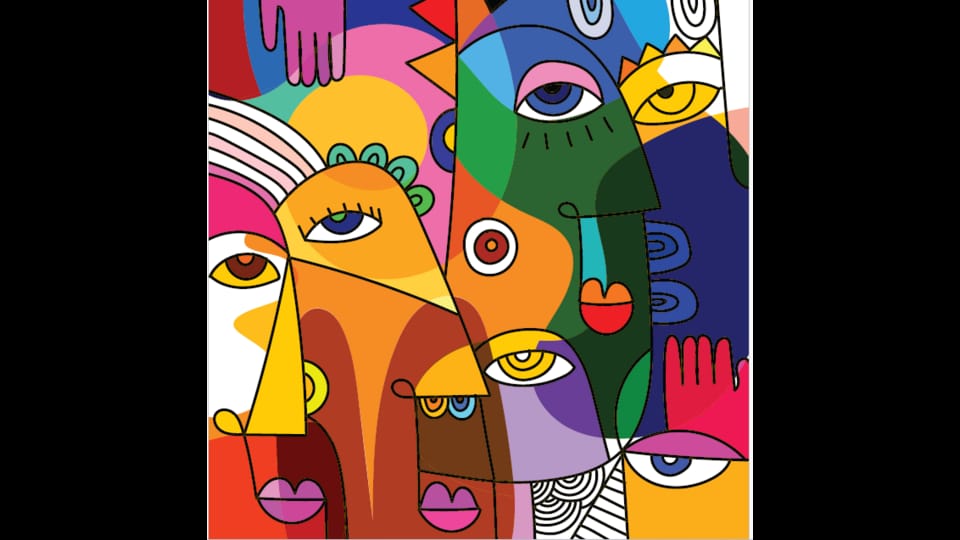
For decades, researchers weren’t sure mixed emotions existed. The brain is just toggling, they said. Well,not only do they exist, they have a surprising purpose
How does one explain the exhilaration and fear of moving to a new city? The ache of sadness and gratitude at the end of a long-awaited trip? The grief and relief just after a breakup?
Can people truly feel both positive and negative emotions at the same time, or do we just rapidly flip back and forth between them?
For over 150 years, neuroscientists and researchers have been trying to answer this question, not just because it is intriguing, but because it has implications for how we deal with risk, navigate new experiences, and process input from our world.
Before we unpack some of this, a brief look back.
Since Charles Darwin’s publication of The Expression of the Emotions in Man and Animals in 1872, emotions have been studied as mental states that cause stereotypical bodily expressions: the smile, the shrug, the sneer. More recently, researchers have named and studied phenomena such as dimorphous expression, which is when a person experiences a strong emotion of one kind and expresses it as cues linked to a very different feeling, the most common example being tears of joy.
Dimorphous expressions likely hark back to a time before language, when humans struggled to convey the idea of extreme joy or grief or embarrassment. Struggling to regain emotional balance or convey, “Yes, I’m happy, but how do I tell you how happy this has made me,” tears spring to the eyes and do the job.
Mixed emotions have been harder to study, requiring brain scans just to confirm their existence. It was only last year that psychologists and neuroscientists at the University of Southern California (USC) Dornsife College of Letters, Arts and Sciences proved, for instance, that the brain does in fact display distinct neural signatures when experiencing mixed emotions. (The paper was published in the journal Cerebral Cortex.)
“Mixed emotions like bittersweet and nostalgia are fascinating because they reflect how our brain can weigh multiple timelines and values at once — what matters now, what mattered in the past, and what will matter later,” says neuroscientist Anthony Vaccaro, who led the USC study as a postdoctoral researcher and is now a research assistant professor at University of North Carolina.
This is new information to us as a species.
Do you have a name for that?
The traditional scientific view, until the 20th century, was that emotions were simple responses arranged on a single scale, from positive at one end to negative on the other.
By the 1960s, there was a renaissance of sorts in the field of psychology, with researchers shifting towards nuanced theories that recognised emotions as individual interpretations of certain situations rather than a direct and somewhat universal response to them.
It turns out the brain is even more complicated than that.
How we described our emotions — the words we use, and the emotional culture in which we are raised — can affect how nimbly the brain navigates, for instance, two contrasting emotions at once.
In 2011, researchers at the Max Planck Institute for Human Development in Berlin and University of Zurich described the German word sehnsucht (a longing for an ideal but unobtainable circumstance) to one group of people from Germany and another from the US and found that the Americans associated more negative feelings with the idea than the Germans did. (Their findings were published in the journal Developmental Psychology.)
The sense of comfort vs discomfort with mixed emotions appears to be a key cultural influence, says Vaccaro. Eastern cultures value mixed emotions more and therefore, are more comfortable with them. “This may have something to do with having more easily identifiable words for these feelings, or just cultural values about the vital roles of both pleasure and pain.”
A higher calling
Let’s pause there for a minute: Why do the vital roles of both pleasure and pain matter?
Well, in plenty of complex scenarios, we would miss out on crucial information if we could only consciously experience one or the other.
Take the heartache-and-pride a parent feels as their child leaves home to live alone for the first time. “If we only felt the negativity, we might try to hold on too tight or avoid raising independent kids altogether. At the same time, if we only focused on the future positive feelings of raising a self-sufficient adult, we might miss out on the emotional richness of the journey to that point,” says Vaccaro.
It is by embracing mixed emotions, in many ways, that we grow and gain the richest life experience, during intense and complex times. The lessons we thus learn help with decision-making and aid our evolution as individuals.
In a simple example, the combination of excitement and fear we feel when facing a new challenge — whether one’s first skydive or a new job — makes us want to take the plunge, where plain fear would have prompted us to step back. But we also go in cautious, alert and well-prepared (that’s fear, playing its ancient role).
In an interesting detail, the neural activity that reflects this simultaneous experience of two emotions occurs in neocortical regions responsible for abstract thinking and conflict resolution. “These ‘higher’ regions of the brain are the ones able to process this complex dynamic, letting us hold all this information together as one unified mixed feeling in our consciousness,” Vaccaro says.
The bittersweet spot
Can we use mixed emotions to our benefit?
“Our lives are filled with change, and we change a lot ourselves. Embracing mixed emotions may help people have a coherent personal narrative of who they are, and their albeit-shifting goals and values, as things change,” Vaccaro says.
They are an essential aid to scepticism, which takes on added significance in our world of increasingly black-and-white oversimplification. “They let us feel the tension of nuance — like feeling hope and worry simultaneously about a new technology or social change,” Vaccaro says. “That emotional complexity can make us better thinkers.”


