E-Paper



Feel the burn: The nature of the heat we face is changing. What should you expect this summer?

 Prefer HTon Google


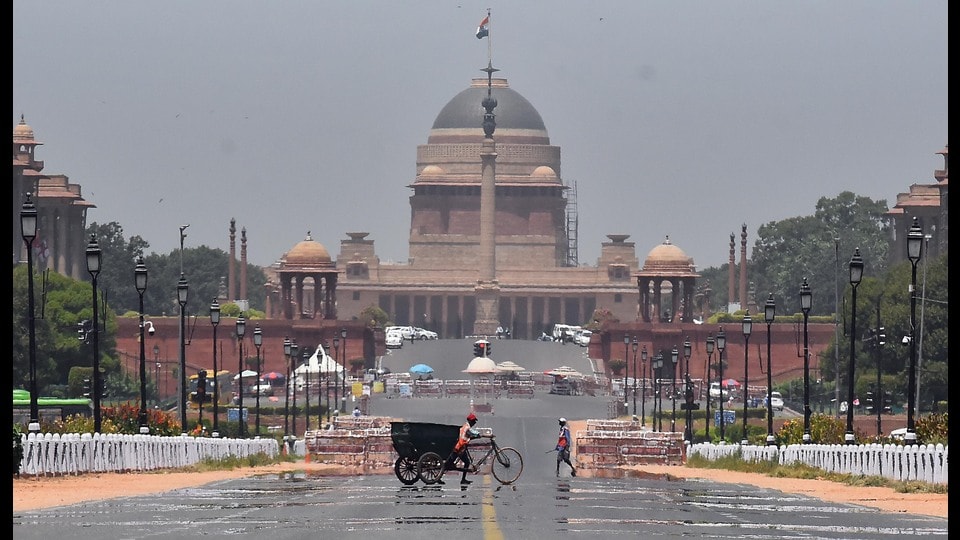
As summers become more deadly, governments are responding with literal alarm bells: awnings to cover entire streets, names and grades for heatwaves. Take a look
It isn’t just getting hotter. The nature of the heat we face, on our warming planet, is changing.
Have you stepped out of a cooled car recently and felt like your clothes were on fire? This is the result of what meteorologists call “oppressive” heat: high temperatures paired with high humidity.
An oppressive heatwave is a step up, in intensity, from an extreme heatwave, says Subhankar Karmakar, a professor with the Environmental Science and Engineering Department and the Centre for Climate Studies at the Indian Institute of Technology-Bombay (IIT-B).
As we know by now, when humidity rises, it makes it harder for the human body to cool — because sweat cannot evaporate as easily.
“Extreme heatwave conditions are uncomfortable and dangerous, but at least there’s the opportunity for sweat to cool the human body, since humidity isn’t high,” Karmakar says. “Oppressive heatwaves can quickly turn fatal. They have a higher correlation with heat-stress-related deaths.”
According to 2024 data from the think-tank Centre for Science and Environment (CSE), five of India’s six megacities (barring Bengaluru) have seen average relative humidity in summer (March-August) rise by 5% to 10%. That’s across Delhi, Kolkata, Mumbai, Chennai and Hyderabad.
Over the last 13 summers, Hyderabad has been 10% more humid on average than it was in 2001-10. Delhi has been 8% more humid. Mumbai, 7%, and Kolkata and Chennai 5% more humid on average.
Interestingly, both Delhi and Hyderabad are in some of the driest climatic zones in India. Where, then, is the moisture coming from? How much of it has to do with our activity, the fallout of urban heat islands, and even air-conditioning directly? Read on for more on this.

Meanwhile, back at IIT-B, Karmakar, working alongside professor Subimal Ghosh and doctoral researchers Naveen Sudharsan and Anokha Shilin, is in the process of tallying actual oppressive heatwave days in India.
The number of such days is rising, driven by rising temperatures and delayed or weak monsoons and by the density of urbanisation and shrinking green spaces, Karmakar says. Preliminary results suggest that oppressive heatwaves are expanding both in frequency and geographic extent across the country — and these trends are projected to worsen as global temperatures approach and exceed 1.5°C above pre-industrial levels.
(A marker that, by some accounts, has already been crossed.)
Getting word out
There’s an issue with talking about the dangers of heat. Too much of the time, no one’s buying it.
Between an overwhelming sense that “we’ve dealt with this before” and the idea of a warm day as a good thing (torrential rain is a problem; ice and snow are problems; what’s a little heat, right?), governments are hitting literal red alert in efforts to be heard.
In India, heatwaves have been colour-coded since 2017, based on the action required: green is a normal day (no action required); yellow is tolerable (but a point of concern for vulnerable populations such as seniors and people with comorbidities); orange is severe (avoid exposure, stay cool, hydrate); and red is extreme (be very cautious, venture outdoors only if you must).
Yellow, orange and red alerts typically come with cautionary messages, particularly for vulnerable populations.But the alerts only go out from the India Meteorological Department (IMD) to arms of the government. It is up to the media and local governing bodies to take the message to the people.
In Europe, where a heatwave in 2003 killed 70,000 — nearly 15,000 of those in France alone — some governments are no longer waiting for this kind of multi-link chain to take effect.
France has a government-run heat map app that pings if the users are in a high-temperature zone, and can tell them what to do to stay safe, and guide them to the nearest “cool island”.
Seville in Spain and Athens in Greece have started naming and ranking heatwaves so people have a clearer sense of how serious each one is, and so that a graded emergency response can follow. Weather bureaus in these cities consider air temperature as well as humidity, sea-level pressure, cloud cover, solar radiation and wind speed, among other factors, when assigning these grades.
Seville is naming heatwaves too, in an effort to make the threat as real as it would be with, say, a hurricane.
The US National Oceanic and Atmospheric Administration (NOAA) also factors in heat, relative humidity and wind speed, when announcing heatwaves in the US.
IMD, in a significant drawback, still relies only on temperature. It declares a heatwave when the maximum temperature at a weather station reaches 40 degrees Celsius in the plains, 37 degrees Celsius at the coasts, and 30 degrees Celsius in hilly regions and stays at least 4.5 degrees Celsius above normal for two consecutive days.
“In India, we are still primarily focusing on extreme temperature thresholds, rather than explicitly incorporating humidity-driven heat stress,” Karmakar says. “So, we’re potentially underestimating heat risks.”
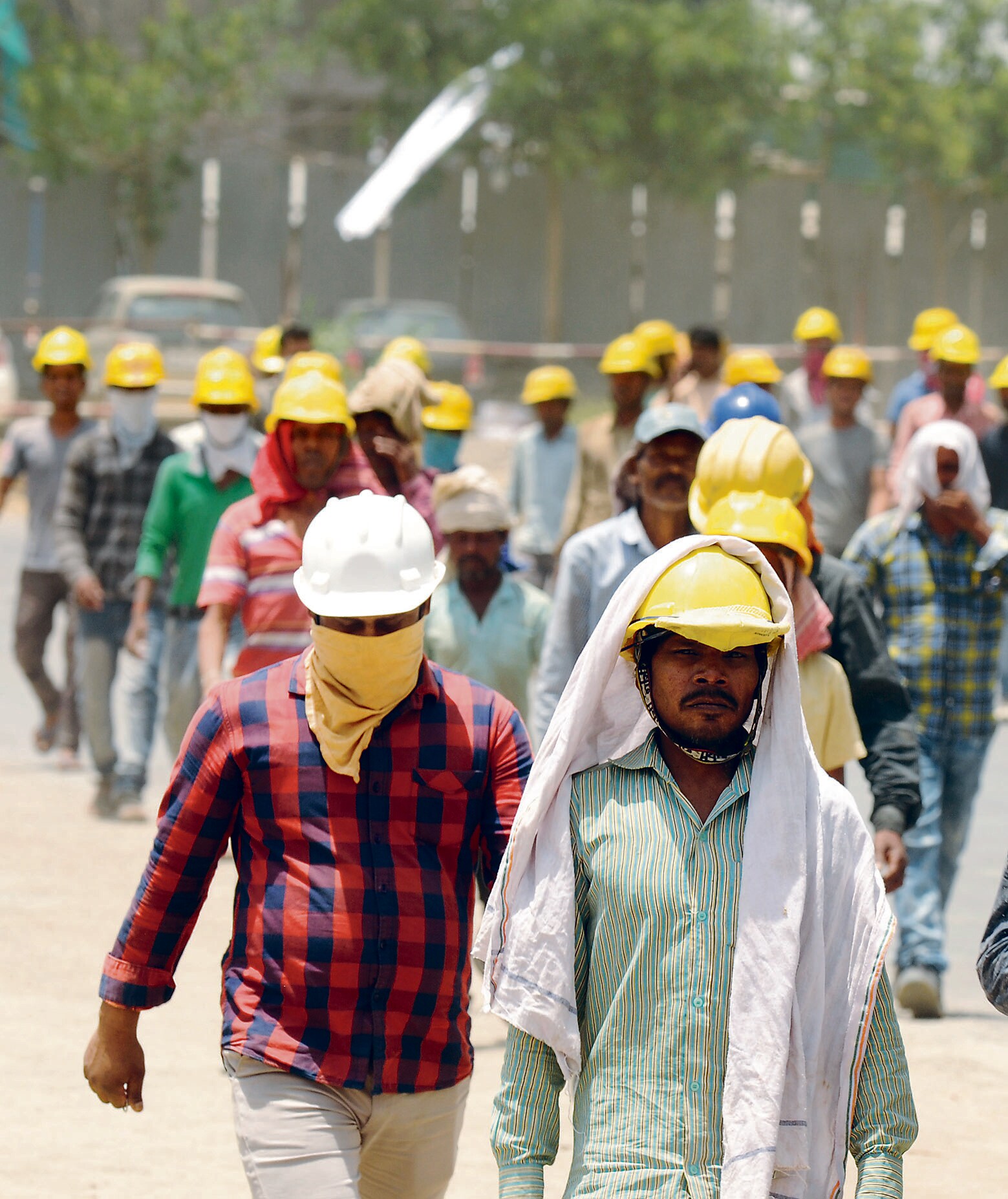
Night sweats
Meanwhile, partly because of the rising humidity levels, our megacities aren’t cooling; not even at night.
All six megacities — Delhi, Mumbai, Bengaluru, Kolkata, Chennai and Hyderabad — have recorded a rise in nighttime relative humidity in summer, nullifying the fall in air temperatures in certain areas, notes the 2024 report by CSE.
“A web of climatic, urban and anthropogenic factors are contributing to the rise of relative humidity across our cities,” says Sharanjeet Kaur, programme officer at CSE and co-author of the report. “Rapid urbanisation and the expansion of built-up areas contribute significantly to heat retention, triggering the urban heat island effect (UHI). The UHI, in turn, intensifies local humidity levels — because warm air can hold more moisture; cool air reaches a saturation point faster. Additionally, cooling systems such as ACs and cooling towers release both heat and moisture into the surrounding atmosphere, intensifying this effect.”
The situation is compounded by dense infrastructure, which restricts natural ventilation and limits the dispersion of moisture.
“The increase in built-up area has altered the natural thermal balance,” Kaur says. “Concrete and asphalt also absorb heat more during the day than earth, and release it slowly at night, contributing to persistently high nighttime temperatures.”
How bad is it?
Where Delhi’s summer nighttime temperatures typically fell by 12.31 degrees Celsius between 2001 and 2010, they have fallen by an average of 11.2 degrees Celsius since 2014.
Mumbai nighttime temperatures typically fell by 10.22 degrees Celsius between 2001 and 2010, and have fallen by about 7.8 degrees Celsius since 2014. In Bengaluru and Chennai, there was generally an 11.90 degrees Celsius and 10.17 degrees Celsius fall respectively. Now, the drop stands at 10.1 degrees Celsius and 9.7 degrees Celsius respectively, on average.
“People get little chance to recover from daytime heat slaughter if temperatures remain high overnight, exerting prolonged stress on the body,” the study notes.
The same is true for plants, birds and animals. Without adequate cooling at night, they too struggle to recover, leading to greater heat stress over time, and a weakening of systems. This can range from higher respiration rates, poor growth and reduced yields in flora, to altered behaviours and disruptions in migration patterns in fauna.
We don’t know the toll
India’s data-gathering systems haven’t fully caught up to the problem.
Between March and July 2024, for instance, India reported 48,156 suspected cases of heat stroke, 269 suspected deaths and 161 confirmed deaths, says a December 2024 report released by the National Programme on Climate Change & Human Health (NPCCHH).
HeatWatch, an Indian non-profit organisation, found that across 17 states, there were at least 733 confirmed deaths within the same timeframe.
The government data needs improvement, in terms of coverage, says HeatWatch founder Apekshita Varshney. On average, 55% of public health facilities submitted data on cases of heat distress and death in 2024, up from 23% in 2023, according to the NPCCHH report. Clearly, gaps remain and that means we do not know the true toll of this threat.
In the most glaring instance of missing data, “many deaths occur outside the formal medical system, particularly among outdoor workers, the homeless and rural communities,” Varshney says. “There’s also a lack of standardisation when it comes to identifying, categorising and confirming heatstroke and heat-related deaths.”
We need to update our definitions
The National Disaster Management Act of 2005 does not currently classify heatwaves as a notified disaster. This will need to change, to unlock more funding for mitigation and relief efforts (the kinds of efforts we currently see with notified disasters such as floods and cyclones).
Certain states — Tamil Nadu, Odisha, Kerala, Uttar Pradesh and Telangana — have notified heatwaves as a disaster at the state level.
But NDMA notification alone won’t be enough, Varshney says. “There needs to be a better, clearer blueprint of coordination between state officials, municipalities, district administrations and health departments, before, during and after heatwave conditions.”
For now, the very definition of a heatwave in India is holding things back. In addition to accounting only for heat — not even for humidity — the IMD parameters of 40 degrees Celsius for the plains, 37 degrees Celsius for the coasts and 30 degrees Celsius for the hills are too narrow.
“We need to start accounting for a wider range of local thresholds, and for changes from historic temperature and humidity levels,” says Karmakar of IIT-B.
Across most of India, dangerous heat begins well before official thresholds are crossed, he adds.
Our current view on heat continues to misrepresent this, leaving vulnerable populations —including outdoor workers, the urban poor, children, the elderly and people with comorbidities — exposed, unprotected and perhaps most vitally, uninformed.
Data and definitions are all very well. What else can we do?
Nine Indian cities — Delhi, Mumbai, Bengaluru, Kota, Ludhiana, Meerut, Faridabad, Gwalior and Surat — are likely to face the sharpest immediate spikes in heat, indicates a study conducted by the independent research organisation Sustainable Futures Collaborative (SFC).
All nine cities are reportedly working on short-term emergency measures, but not adequately on long-term ones. The former include access to drinking water, staggering or changing work schedules, boosting hospital capacity, setting up cooling centres, sprinkling water on roads, and distributing oral rehydration solution (ORS) packs.
What’s missing? Long-term measures — such as making cooling systems more easily available; developing an insurance plan for work days and daily wages lost to heat stress; expanding fire management services; retrofitting electricity grids to maintain distribution — are either missing or poorly targeted, the report states.
“Expansion of local weather stations for more granular data on heat variation within a city, mapping urban heat islands, and training heat plan implementers were only seen in some cities. Other actions like expansion of urban shade and green cover, the creation of open spaces that dissipate heat, and the deployment of rooftop solar that could help with active cooling, among others, were implemented without adequate attention to populations and areas that experience the greatest heat risk,” the authors note.
What’s holding us back?
One of the biggest roadblocks is inter-departmental coordination, says Tamanna Dalal, a senior research associate at SFC and co-author of the nine-cities study.
For instance, in some cases, the disaster management department is the nodal agency; in others, it is the health department. “Neither has any real power to coordinate action between departments. Meanwhile, some departments, such as urban development, who are responsible for certain areas of heat-mitigation action, aren’t made part of the conversation at all,” Dalal says.
Worse still, “heat is seen as a second-order priority or not at all,” she adds. “For instance, even within the health departments in these cities, malaria or dengue might be the top priority during summer, rather than heat.”
Within the bureaucratic imagination, heat lies in a tricky space, adds Aditya Valiathan Pillai, a visiting fellow at SFC, a PhD researcher at King’s College London, and lead author on the study. “It’s still a nascent policy area. It doesn’t have firm institutional, legal or financial backing.”
The study recommends strengthening heat action plans with more funding, training and institutional backing.
It is also time for the government to begin to subsidise cooling equipment, Pillai says. “While air-conditioning isn’t a long-term fix, it can help. Subsidised AC-buying programmes, like the government Ujala programme for LED lights, could help promote less-power-intensive and cost-intensive solutions. Most of India’s lower-middle-class and poor are currently buying power-guzzling second-hand ACs or poor-quality coolers. They can’t afford the power these machines guzzle, and this kind of equipment isn’t good for the grid either.”
Is it a given, then, that most of us will need cooling equipment, at least during part of the year?
“Unfortunately, yes, yes it is,” he says.