
 E-Paper



Jeopardy!: See how a global agreement is quietly saving species from extinction

 Prefer HTon Google


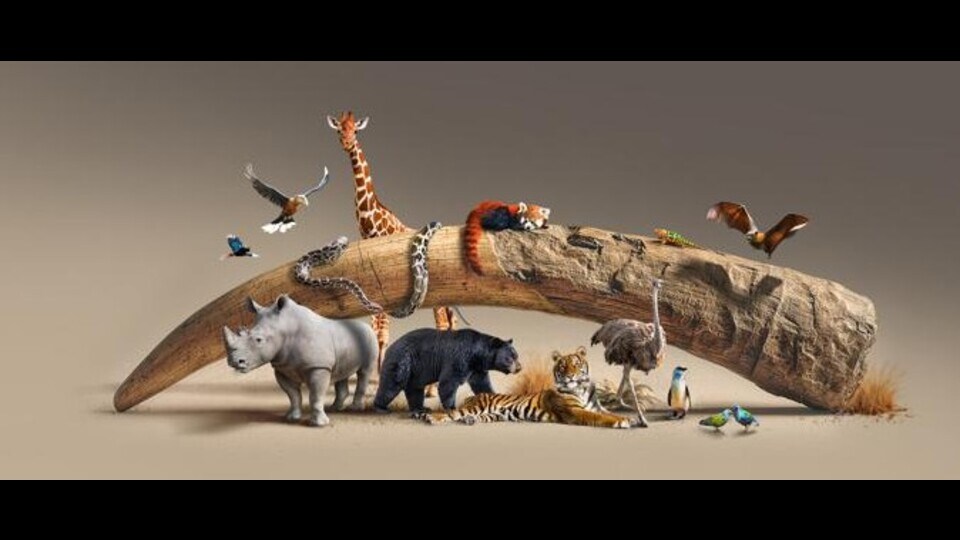
By taking on international trade, CITES has managed to save large mammals, tiny snails, preserve patches of rainforest to protect a single endangered butterfly.
Let’s start with the African elephant, because we almost lost it.
In July 1989, Kenyan President Daniel arap Moi set fire to a giant heap of 2,000 tusks, worth about $2 million then (about $7.5 million today).
It was a powerful gesture: against poaching, the ivory trade, and the slaughter of African elephants. The fire was followed by other measures. Poachers would face the death penalty, he announced, and forest guards has been given orders to shoot on sight.
The poaching of elephants had increased dramatically through the 1970s, partly as a result of the demand for ivory, and more importantly as a result of the proliferation of assault weapons amid the continent’s post-colonial Border Wars.
The number of African elephants had plummeted from 5 million in 1950 to fewer than 1 million. The trade had become so lucrative and widespread that entire economies now depended on it, in countries ranging from Singapore and Hong Kong to Dubai, Taiwan and Macau.
As 12 tonnes of ivory caught fire in Kenya, something would finally shift.
Three months later, CITES (the Convention on International Trade in Endangered Species of Wild Fauna and Flora) announced a ban on all trade in ivory; one that has remained in force ever since.
In many ways, the story of the crackdown on ivory reflects both the strengths and weaknesses of CITES, an international convention that is now 50 years old. It is also a good way to explore how CITES works, and how it found ways to be more effective.
***
Wildlife trafficking remains the fourth-largest criminal enterprise in the world (after narcotics, human trafficking and the trade in counterfeit goods, according to Interpol). CITES was one of the first international agreements that sought to tackle it.
But this is a crime with roots that run so deep, and stakes so high, that it took 10 drafts before enough countries would sign on.
Leading the movement to pass the treaty and expand its scope was one man: the evolutionary biologist Julian Huxley, who made international conservation efforts part of his mission as head of Unesco; and then set about creating the International Union for Conservation of Nature (IUCN, founded in 1948), whose Red List still shapes efforts around the world; and CITES. (Read the story alongside for more on his remarkable efforts in this field).
The convention was proposed in 1963, formally ratified in 1973, and came into force in July 1975 (four months after Huxley’s death). Eighty countries signed on back then; there are 185 parties to the convention today.
Eventually, based on input from IUCN and participating countries, the convention would specify three categories of trade in under-threat wildlife.
Trade in species threatened with extinction (listed in what came to be called Appendix 1) could continue only in “exceptional circumstances”, with permits from the local government. Trade in species not threatened with extinction but considered at-risk (Appendix 2) would be “controlled”. Trade in species protected in even one country (Appendix 3) would be controlled with the help of governments in other countries that had signed the convention.
***
The African elephant started out in Appendix 2.
With less than a million left in the wild, this was one of the greatest flaws in the CITES approach, and a reminder of how strange progress can look, when that easily spooked entity we call the international community is involved.
What the CITES listing did do, however, was lay the ground for a first step: information.
By 1986, paper permits were required for all ivory trade, ivory stockpiles had to be registered, and all legal trade began to be monitored.
Intriguingly, Singapore, a country with no elephants in the wild, emerged as the single largest processor of ivory, with 297 tonnes of the material processed there each year. What connected Singapore with faraway countries such as Kenya and Tanzania? They had all until recently been British colonies. And one man had designed a control system so riddled with loopholes that it made it easy for ivory poachers to ply their trade.
That man was Rowan Martin, then head of wildlife and fisheries research at the Department of National Parks in Zimbabwe. Martin would lead the fight to keep ivory legal.
He helped create what came to be called the Ivory Producers Export Cartel, linking stakeholders in Africa with units processing ivory in Singapore, Hong Kong and Dubai. Worked ivory was not controlled, which meant that poached ivory became legal as soon as it passed out of the numerous carving units here.
Meanwhile, confiscated ivory could be legalised and sold by governments, which meant that dealers in poached tusks could collude with officials to profit, despite the new law.
A ground-breaking 1989 report by the US Environmental Investigation Agency (EIA) revealed that ivory traders such as Zulfikar Rehmatullah of Burundi and George Ebola of Uganda were frequent visitors at government and CITES offices, and had offered bribes to CITES personnel. The report provided information on smuggling routes and listed major traders around the world too.
For CITES member nations now growing tired of the ineffectiveness of their shared agreement, the EIA report served as the final straw. Arap Moi set the tusks on fire, banned all ivory trade and issued his shoot-at-sight orders. And CITES finally banned all trade in ivory.
Elephant numbers began to rise. Then, a controversial CITES amnesty was declared, in 2008: a one-off sale of any ivory confiscated and stockpiled by African governments. Once again, Rowan Martin led the charge. A portal was reopened; elephant killings surged.
Where President arap Moi had set fire to 12 tonnes of tusks in 1989, President Mwai Kibaki built a heap of his own, and set fire to nearly 5 tonnes in 2011.
The poaching continues. There are now less than half a million African elephants left in the wild.
Martin, meanwhile, is still at it. As recently as 2022, he was advocating for an annual amnesty window in which national stocks of ivory could be sold, and arguing for the legalisation of trophy-hunting in Africa, on the grounds that the revenue from such ventures could help pay for the continent’s conservation programmes.


***
CITES did eventually help save the African elephant.
Similar Appendix 1 and 2 listings have effectively protected endangered snails, whales, trees, flowers, birds, insects and animals. (See the story alongside for more on this.)
The agreement has played a significant role in the decline of commercial whaling and the trade in whale products. It has helped dramatically reduce traffic in rare birds, particularly parrots and raptors. The agreement now lists close to 40,000 species, making it the largest one of its kind.
CITES works because it has binding trade controls, unlike, say, the Convention on Biological Diversity, which relies on members to set their own targets, if any. CITES has sanctioned non-compliant countries by suspending all wildlife trade with them. It is nonetheless a trade treaty, and is helpless without government support. So it can do little when armed groups, government officials and political elites use poaching to fund their operations or feather their nests.
The problem is replicated for other endangered species. Tiger poaching in India and other parts of Asia is fuelled by demand in increasingly affluent Vietnam, and by practitioners of traditional Chinese medicine around the world. Tiger bones, rhinoceros horns, bear bile and pangolin scales remain heavily-trafficked items. Increased affluence, combined with growing nativist pride in China and other parts of East Asia, have driven up demand.
Meanwhile, countries lobby extensively to keep species out of Appendix 1.
CITES is an imperfect tool, in the face of such pressures. But it has proven to be an important and effective one, and the best we have come up with so far.


