
 E-Paper



Lab-grown fashion: These new brews could hit the runways soon

 Prefer HTon Google


Companies are weaving silk from sugary yeast, leather from mushroom fibres; creating textiles so alive, they must be watered — and they breathe as they're worn.
We know fashion, as it exists today, is one of the most polluting industries. So, what should we wear?
If we are to start with the raw materials - as we should - what are the alternatives to the water- and carbon-intensive cotton fields, animal hides, silkworms, wood pulp (used for viscose) and fossil fuels (for polyester and a range of other synthetic materials) in use today?
The answers are already fairly dramatic. Researchers in labs around the world are working with living materials that “breathe”, absorbing carbon dioxide and releasing oxygen. Others are creating alternatives to leather, fleece, denim and silk, out of polymers extracted from orange peel, pineapple leaves and discarded flowers. They’re even making alternatives to leather from layers of lab-grown collagen.
It’s alive: Clothes that make oxygen
One of the most interesting conceptual projects to have emerged in the space of lab-grown fashion is biogarmentry.
In 2019, Canadian-Iranian designer Roya Aghighi, in collaboration with scientists and material designers from the University of British Columbia, bio-fabricated a textile that conducts photosynthesis while it is worn. It could essentially breathe, like a plant, and turn carbon dioxide into oxygen as it did so.
To make the fabric, Aghighi and the researchers spun chlamydomonas reinhardtii, a type of single-cell green algae, into a linen-like material, with the help of nano polymers.
This material is a living thing that must be cared for as one would care for a plant — by watering it and exposing it to light for two hours a day. Over time it changes colour and becomes greener. At the end of about a month, it “dies” and can be composted.
In a similar project, in 2021, researchers from the University of Rochester and Delft University of Technology in the Netherlands used 3D-printing technology to deliver algae on to a non-living grid made of tough, flexible bacterial cellulose. This again formed a “breathing” fabric that is completely biodegradable.
This material can survive for days with no water or nutrient access, the researchers said, in a paper published in the journal Advanced Functional Materials in 2021. Which is already a step forward in the field.
New strands: Editing genes to make leather, silk
Earlier this year, the government-supported Central Leather Research Institute (CLRI) in Chennai developed a “bio-leather” using recombinant DNA technology.
Researchers edited the DNA of bacteria to grow collagen (the protein in skin that gives it elasticity and strength), which was then assembled in layers to form their bio-leather. It has 90% of the durability of traditional tanned leather and is 50% more biodegradable, CLRI says. The institute has also developed a leather-like material from mango waste, and is now experimenting with rice and wheat straw, adds director KJ Sreeram.
The process used by CLRI is called precision fermentation, and has been in use in the pharmaceutical and food industries. Now, it’s making forays into fashion.
In the US, Modern Meadow is using a strain of bioengineered yeast to make bio-leather. Also in the US, Bolt Threads genetically modified yeast cells to resemble arachnid DNA, left these cells to ferment with sugar and water, to produce a liquid protein that can be extracted, spun, then woven into textile called MicroSilk, which has a high tensile strength, elasticity, durability and softness.

MicroSilk was used by Stella McCartney to create a tennis dress prototype, in collaboration with Adidas, as well as a dress for a 2018 exhibition at New York City’s Museum of Modern Art’s (MoMA).
In 2017, Bolt also released its own limited-edition knit beanie hat, made from a blend of wool and Microsilk, in association with the apparel company Best Made. With a valuation of over $700 million, incidentally, Bolt Threads is one of the highest-valued companies in the alternative materials space.
Shrugging off the hurdles?
Most materials being invented in this space face two hurdles: they can currently only be used as components of a blend, because they do not have the tensile strength to stand on their own. And, particularly with the case of precision fermentation, they are incredibly difficult to make. Results can vary widely with minimal contamination, or with small changes in the temperature or pH levels of the water used.
There have been some advancements on the first of these hurdles: tensile strength.
In 2019, the Japanese company Spiber produced a limited-edition range of 50 jackets branded Moon Parkas, in collaboration with Japanese sports apparel manufacturer Goldwin. The parkas were made using a fibre called Brewed Protein.
It is produced by genetically engineered microbes, using plant-derived sugars. The microbes can be gene-edited to alter desired characteristics such as strength, elasticity and thickness. The fibres can be knitted and woven to potentially make fleece, fur, denim and leather alternatives.
So far, the fabric has only been used as a blend. But in 2022, Spiber began mass production of protein polymer at its plant in Thailand. Its materials are now in use by brands such as The North Face, Goldwin, Nanamica, and Woolrich. A concept model of Toyota’s Land Cruiser Prado also used Brewed Protein fibres in its interiors.
Fruit, flowers, fleather
In Italy, Orange Fiber is making a soft, silky, lightweight cellulose yarn from citrus juice byproducts — essentially orange and lemon rind. This textile was used as early as 2017, by Salvatore Ferragamo, to create a capsule collection. In 2019, it was used by H&M.
The fabric earned Orange Fiber a spot on the list of finalists for the prestigious Earthshot Prize, in 2020.
Meanwhile, in Kanpur, India’s leather capital, Ankit Agarwal’s Phool (a finalist for the 2022 Earthshot Prize) is using discarded temple flowers to create a leather-like material called Fleather.
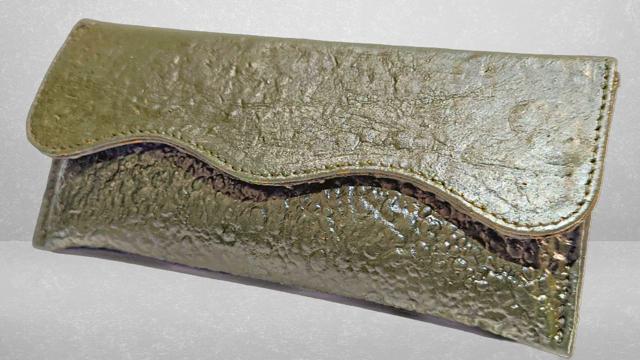
To make Fleather, certain strains of microbes are fed cellulose and lignin, which are extracted by boiling the flower petals. As the microbes and sugars ferment, they produce a foamy layer that is poured in trays, dried and dyed using tree-bark powder. In its next step, the company will work with fashion labels on Fleather or blended Fleather collections.
Skin to skin: Bio-leather
Synthetic leathers have been around since at least the 19th century. But they typically use source materials such as PVC and PUs (polyvinyl chloride and polyurethanes, both types of plastic polymers).
Over the past decade, bio-leather has been made using fibres from mushrooms and pineapple leaves, though most of them need some percentage of plastic polymers in the final product, to provide strength and durability.
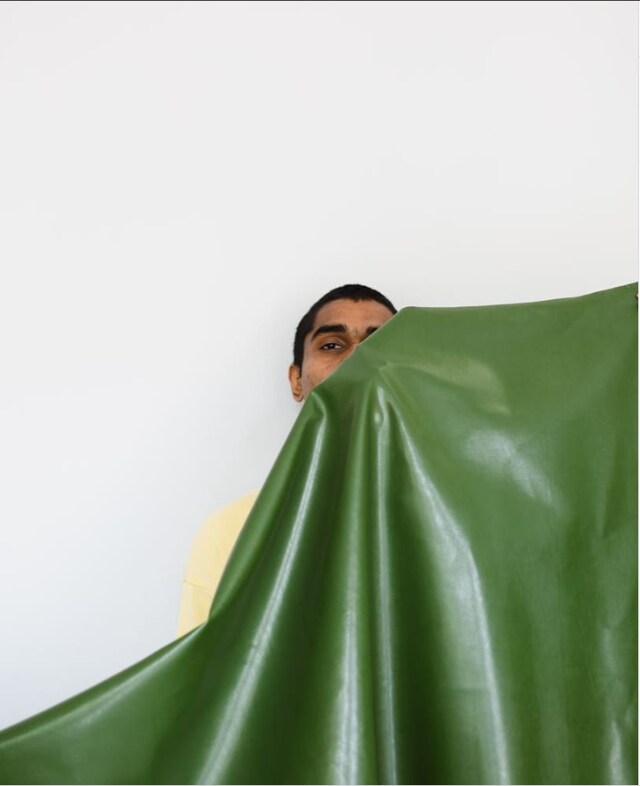
In an exciting step forward, in Mexico in 2019, brothers Adrián López Velarde and Marte Cázarez launched a type of faux leather made from that country’s prickly-pear cactus, a highly resilient and regenerative native plant that requires almost no water to grow.
This bio-leather, blended with a proprietary bio-polymer, has since been used by Karl Lagerfeld, in a collection of designer bags, and by H&M in a limited-edition collection of clothes and accessories, both in 2021. Fossil, Adidas, Givenchy, Mercedes Benz and BMW have used the material too.
“It should be noted here that none of the currently available or developed leather-like materials match the longevity and durability of animal-based leather,” says CLRI director Sreeram, who puts the lifespan of that institute’s mango leather between three and five years. “But the process of producing it consumes far less water and discharges a negligible quantum of wastewater without the use of eco-sensitive chemicals.”
Change in this field would ideally need to be accompanied by changes in diet too. As long as cattle are reared for their meat, it is prudent that their byproducts be used. But if we could scale back the rearing of livestock for food, well, the picture would begin to change.
In the end, however, consumption remains at the core of the fashion problem. That is a mindset issue. No amount of biodegradable materials can solve it. The only thing that can solve it, is you.


