
 E-Paper



Spirited away: Where did all our traditional alcohols go, asks Mridula Ramesh

 Prefer HTon Google


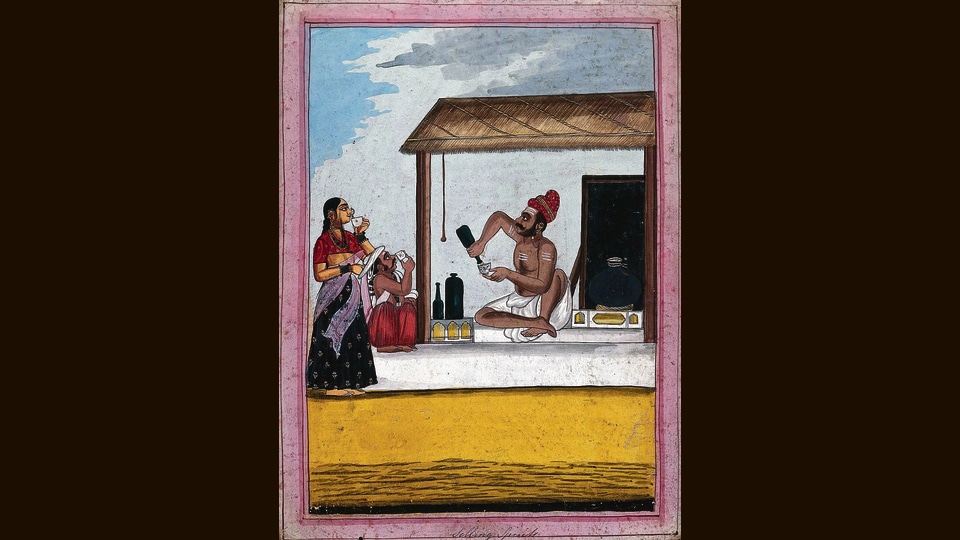
There are climate implications to losing touch with our rich history of alcohols, brewed locally and consumed close to the point of production.
There was once a strictly-brought-up man named Sanudasa, a child conceived after many years of fervent prayer. His parents raised him sheltered, while his teachers indoctrinated him with stories of virtue and duty.
In time, he married, but was so prudish that he did not consummate the bond, leaving his parents, who were anxious for a grandchild, in a quandary. They hatched a plan with his friends to use alcohol to loosen up the young man. It did the job perfectly well.
This story appears in the Brihatkatha Shlokasamgraha by the Sanskrit poet Budhasvamin, most likely written sometime in the first millennium CE. Alcohol was the ideal handmaiden to erotica, as the book puts it: “Liquor, or Madira, intoxicates by its nature, how much more so when beautified by contact with the beloved’s mouth?”
The story of Sanudasa was my favourite of the tales in An Unholy Brew, a fascinating book on alcohol in ancient India, by James McHugh, a professor of South Asian religions at University of Southern California. The first thing that struck me as I read his book was the astonishing variety of alcohols consumed in ancient India.
Any grain — rice, barley, millets — could be, and was fermented, with a variety of starters, saccharifiers and herbs. Aside from the different types of sura (Medaka, Kadambari, Prasannaa, etc), there were asava, seedhu (sugar or juice-based wines), arishta (an Ayurvedic medicinal liquor, where specific herbs were boiled in water and added to sugar before fermenting), maireya (a spicy, complex liquor), and imported and prized madhu (or grape wine). Honey, jackfruit and wood apple were crafted into liquors too.
The earliest references, from the Atharvaveda describe alcohols made from rice, maasara (a liquid with toasted grain), a starter and some form of saccharifying agent, either sprouted grain or moulds. This mixture was placed over a pot into which it could drip the fermented liquor. The process took three nights, the ancient text states, after which the beverage could be filtered and served.
Ancient Tamil literature describes several varieties too. Avvaiyar, an ancient Tamil poetess, bemoans the loss of her friend, a local king, remembering his generosity in sharing his drink. After all, socialising and conducting business often involved alcohol, then as now. Tamil adds its own vocabulary: Theral, madhu, and the still-popular kal, made from palm sap, which ferments into toddy in a few hours.
It is sad to think that we’ve lost most of this glorious tradition. Only a few “traditional” alcohols survive, including mahua in central India, and tongba in the north-east.
Why is that?
Part of this loss stems from the fraught relationship between humans and alcohol.
Simply put, alcohol is unhealthy. Data from the World Health Organization (WHO) indicates that, in 2019, 2.9 million people worldwide died because of alcohol, 400 million suffered from alcohol-linked disorders, and 209 million were dependent on it.
It was responsible for nearly 300,000 road deaths globally in 2019. As a potent carcinogen, it was also responsible for an estimated 4.4% of cancers diagnosed. And plays a causal role in more than 200 diseases.
I was at a hospital recently where the director quipped: “We should build a shrine to alcohol. It is responsible for 40% of our patients.”
Alcohol also makes one dumber, both in the short term (many of us have at least one boozy evening we’d like to forget) and in the longer term (by making brains shrink). It literally rewires the brain and rejigs the neurochemistry, neuroscientist Andrew Huberman of the Stanford University School of Medicine has shown, making regular drinkers more vulnerable to stress when sober and needing more alcohol to reach the same high.
Chanakya called it the vice with “the most serious consequences”, because it makes one lose control of one’s senses. But its addictive power makes it deliciously profitable, and so Chanakya decreed that manufacturing alcohol would be largely a monopoly of the state and private production would be taxed.
Drinking, for the most part, was confined to well-appointed and well-supervised drinking houses, where one could run into beautiful female spies. To preserve public order, Chanakya further declared that liquor could neither be sold in large quantities nor on credit.
***
But alcohol has a lingering, potent appeal. It loosens our grip on the everyday world, a rare pleasure. It is an important lubricant, as our ancients acknowledged, to socialising and intimacy.
Light drinking (definitions of which do admittedly vary) appears to be associated with cardiovascular and relaxation benefits, especially when accompanied by food. McHugh’s book is replete with descriptions of the various snacks that accompanied ancient Indian drinking bouts. A royal drinking feast included various spiced roasted meats, chewy snacks from urad dal and wheat, yoghurt rice, fresh ginger, chickpeas cooked in peppery oil, “large… delightful onion bulbs” flavoured with tamarind juice and salt… the list goes on.
Alcohol is a disinfectant, an excellent solvent, and an inebriated patient was less reactive to pain. It is therefore used in many Ayurvedic remedies.
The British, like Chanakya, recognised the revenue potential of alcohol. In the 19th century, they began to sell licences for palm and mahua trees, and then for distilleries, essentially creating local monopolies that could and did price-gouge (and produced liquor in large quantities and sold on credit, in contrast to Chanakya’s decrees).
Some of India’s notable liquor companies originated then: The Kasauli Brewery and Distillery, started by Edward Dyer (father of the perpetrator of the Jallianwala Bagh massacre), morphed into the company that first made the iconic Old Monk rum.
Because legal liquor was so expensive, and personal production was outlawed, people turned to illicit liquor, then as now. Post-Independence, as India doubled down on British policy, alcohol morphed into the financial lifeblood of many states, making up a fifth or more of own tax revenues in states such as Karnataka, Uttar Pradesh and Jharkhand.
Alcohol provides both financial power and a source of favours that few state politicians will forsake. But this relationship has turned the Indian market away from traditional alcohols brewed by communities and consumed close to the point of production, and towards more generic bottled spirits.
Today, India is arguably the most important alcohol market in the world. WHO data indicates that Indians drank nearly five litres of pure alcohol per person in 2019. That’s nearly 7 billion litres. And, while almost every other major market is shrinking in size, India is growing. Unlike the Scots, Russians, Mexicans and Japanese, we appear to have completely forsaken our traditional alcohols and become a nation of Indian-made-foreign-liquor drinkers.
The proportion of spirits to wine and beer drunk in India is among the highest in the world too, with spirits accounting for about 92% of all alcohol consumed in the country, as of 2016. Spirits or distilled alcohols use 10 times more water and emit eight times more carbon than beer or wine. While we don’t admittedly quaff vodka in the same quantities as we do beer or wine, this is something to keep in mind.
Because this has climate consequences.
Data from the consulting company Kearney indicates that beverage companies are responsible for about 3.8% of global greenhouse gas (GHG) emissions globally. For context, India’s share of global GHG emissions is about 7%. And yet we barely hear a peep about the climate impact of liquor.
This is problematic, because attention draws the investment that is necessary for innovation. The carbon footprint of India’s GDP has been falling, for instance; but the water footprint of your beer? Who knows?
Using water footprints from the Beverage Industry Environmental Roundtable (BIER), a global beverage industry think-tank, and India-specific data from WHO, I reckon that, in 2019, India’s alcohol production used about 1,550 million litres of water a day. This is about 30% of the daily drinking water used by the city of Delhi. Not insubstantial.
And this only accounts for the water used within a manufacturing facility; not the water used to grow the grain or the sugar. BIER data also shows that global players have improved their water and carbon footprint substantially over the years, but without our attention and demand, there will be precious little incentive for them to continue in this direction.
Meanwhile, alcohol is vulnerable to climate too: 2023 saw the lowest production of wine in 60 years, thanks to flooding and mildew in Italy, and heat and drought in Spain. Heat changes the flavour of wine as well. In an earlier column, we saw how sugarcane, an important source of Indian alcohol, is vulnerable to climate.
Can we make alcohol more climate-friendly and more resilient? Could we temper its ill-effects? A quick riffle through the options appears to suggest that our heritage could hold the answers. In what way? Tune in next week, for Part 2 of this alcohol special.
(Mridula Ramesh is a climate-tech investor and author of The Climate Solution and Watershed. She can be reached on tradeoffs@climaction.net)


