
 E-Paper



The art of the steal: History’s greatest museum thefts

 Prefer HTon Google


The British Museum, the Louvre – art heists have intrigued us through centuries. See how they elevated the status of the Mona Lisa, changed how museums function
What is it about art and jewel heists that so capture the public imagination?
It is partly the daredevilry involved; the idea that a clever renegade has outsmarted “the rich” in one of their own walled fortresses. What also captures the imagination is the element of surprise: How could this happen!
These aspects of the heist can serve to elevate the status of the stolen art itself.
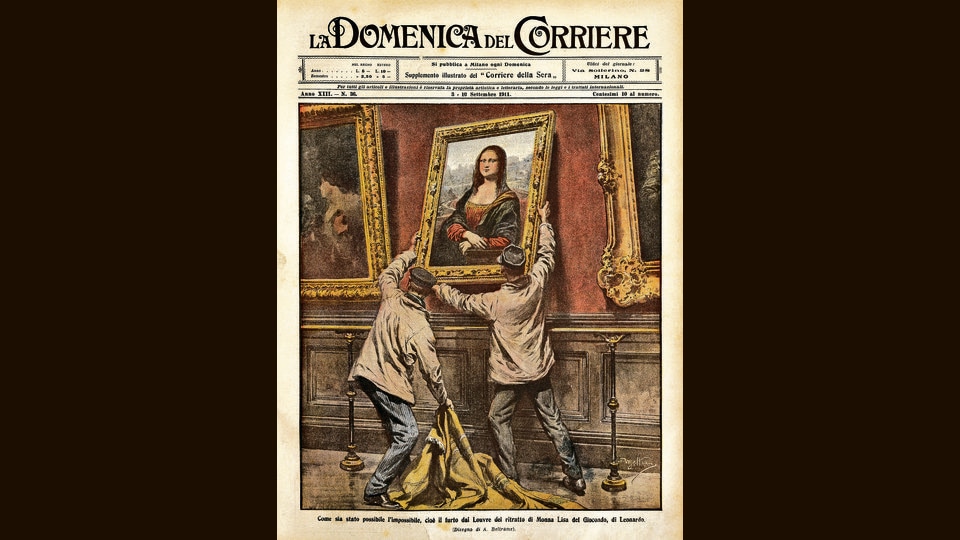
Leonardo da Vinci’s Mona Lisa, for instance, was so little-regarded, before it was stolen from the Louvre in 1911, that it was 28 hours before anyone noticed it was gone. The theft then sparked a widespread search, with the two countries at the heart of the story — France (the painting’s home) and Italy (its country of origin) — trading accusations amid escalating geopolitical tensions in the build-up to World War 1.
In the two years that passed before it was recovered, it stayed in the headlines. There were articles, films and plays written about how it was taken, where it might be, and who might have been behind the theft.
The thieves turned out to be low-level criminals from Paris, led by an artist-handyman who had helped install the protective glass around the painting. They were caught when they tried to sell the painting to an art dealer in Florence. The Mona Lisa was returned to the Louvre, amid much fanfare, and became the museum’s biggest attraction.
The sense of “How could this happen” echoed again this August, when the British Museum announced that an estimated 2,000 items had been stolen from its collection, including gems, jewellery and antiquities dating to 1500 BCE.
No one had noticed the items were missing from storage until an antiquities dealer traced the provenance of two artefacts on eBay back to the museum. The authorities now suspect an inside job, carried out over many years and hidden via altered records.
The museum director stepped down. Its chairman has now announced, in October, that about 60 items have been returned. None of them is quite the Mona Lisa, but there are plans afoot to display these items in a special exhibition.
In addition to drawing attention to art and artefacts, such thefts tend to bring about changes in the institutions that housed them. Here, then, are some of the most high-profile art heists of all time, the audacious plans laid to make them possible, and the changes they effected.
The fake policemen
It took two men and just over an hour to execute the most high-value single art theft on record. And it played out just like a film plot.
One night in March 1990, two men dressed as police officers told security guards at the Isabella Steward Gardner Museum in Boston that they had been sent to check on suspicious activity. Once they’d been let in, they overpowered the guards, tied them up, and proceeded to cut 13 priceless artworks out of their frames, including two Rembrandts and a Vermeer.
Eighty minutes later, they were gone. The men were never caught. The paintings, worth an estimated $500 million, never recovered. The museum is still offering a $10 million reward for the return of the works, and smaller rewards for any information relating to them. The empty frames still hang at the museum, in an evocative statement of loss.
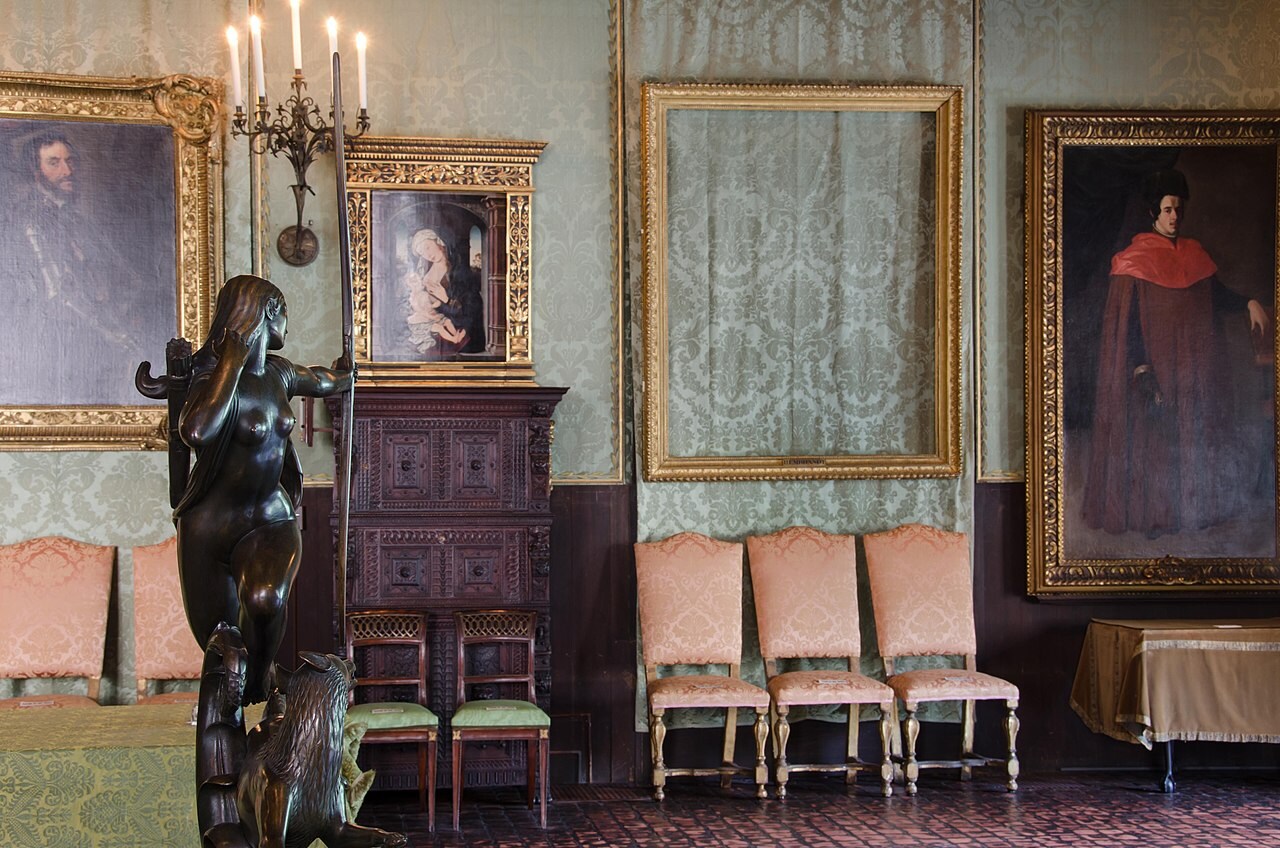
After the theft, the American Association of Museums updated its guidelines on who gets to enter an institute after hours, and how. The theft also led to the passing of a law that made high-value art theft a federal crime in the US.
The magician thief
Stéphane Breitwieser and his girlfriend Anne-Catherine Kleinklaus conducted what is arguably the highest number of art heists by a single crew. Between 1994 and 2001, they carried out over 200 thefts, stealing more than $2 billion worth of art from museums and cathedrals across Europe.
The aim was never to sell the works but to enjoy it at leisure, Breitwieser would later say.
He reportedly stole it all with a single tool — a Swiss Army knife — and an uncanny gift for sleight of hand, according to details from a biography titled The Art Thief by memoirist Michael Finkel (Simon & Schuster; August 2023).
It helped, he said, to always dress sharply, and strike at lunchtime, when guards were usually rotating shifts. Kleinklaus acted as lookout, often standing at the exit and coughing to alert him of danger.
Breitwieser stowed the art in the attic of his mother’s house in France. As the hunt for the works intensified, the mother proceeded to destroy many of them to cover his tracks. He was nonetheless arrested in 2001, convicted in 2005, and served two years in prison. He was arrested again in 2011, when the police discovered 30 more works in his own home.
Breitwieser served another three-year sentence and is currently under house arrest. In all over 100 items were recovered, about 60 are suspected to have been destroyed; over 60 remain unaccounted for.
The Screams
There are four versions of Edvard Munch’s The Scream, and two have been stolen and recovered.
The first theft occurred in 1994, when a team of four thieves used a ladder to climb to the first floor of Norway’s National Museum, smashed the window, picked the painting up off the wall and made off with it, all in under a minute. They then demanded 1 million Euro from the gallery for its return. When the gallery refused, they turned to a private buyer, who turned out to be an undercover British detective. You can guess what happened next.
In the second attempt, in 2004, another version of the painting was stolen by masked gunmen. They walked into the Munch Museum in Oslo in broad daylight, pulled their guns on startled visitors, and simply yanked two frames off the walls: Scream and a work titled Madonna. They were arrested a year later and the pieces eventually recovered, safe but with a few tears and some water damage. The damaged pieces went on display for five days, and then the Munch Museum closed for a much-needed security overhaul.
When it reopened in 2006, it was a bit more like a Munch painting itself, receding from the entrance into twists and turns. Paintings are also now displayed within protective cases.
The Spider-Man of Paris
Vjeran Tomic only ever stole five paintings, but they were a Matisse, Picasso, Modigliani, Braque and Léger, worth a combined 110 million Euro.
Tomic conducted the heist at the Paris Museum of Modern Art in 2010, and was nicknamed The Spider-Man of Paris for how he did it. He’d been preparing for it, in one way or another, for years.
As a child, he had climbed into a library through a window and stolen two rare books. Over time, he taught himself parkour and began using a crossbow as a rappelling kit to sneak into homes and steal from the rich as they slept.
Ahead of the Paris museum heist, he spent days figuring out how to dodge motion sensors to loosen window screws. He worked with bolt cutters in some cases, dangling from walls and ledges with the help of suction pads, to bypass security systems that had cost over $17 million dollars to install just a few years earlier, in 2006.
Eventually, when he had laid the ground well enough, he simply climbed to his chosen windows, padded into his chosen gallery, and clambered back out with the works.
He was caught during a robbery at a home, in 2011. The five canvases were never recovered; authorities believe they were destroyed ahead of his arrest in the case.
Tomic is currently five years into an eight-year sentence that came with a fine of 104 million Euros. After the theft, the City of Paris also amped up security across the 14 museums it manages.


