E-Paper



The bug stops here?: A look at where we are in the fight against antimicrobial resistance

 Prefer HTon Google


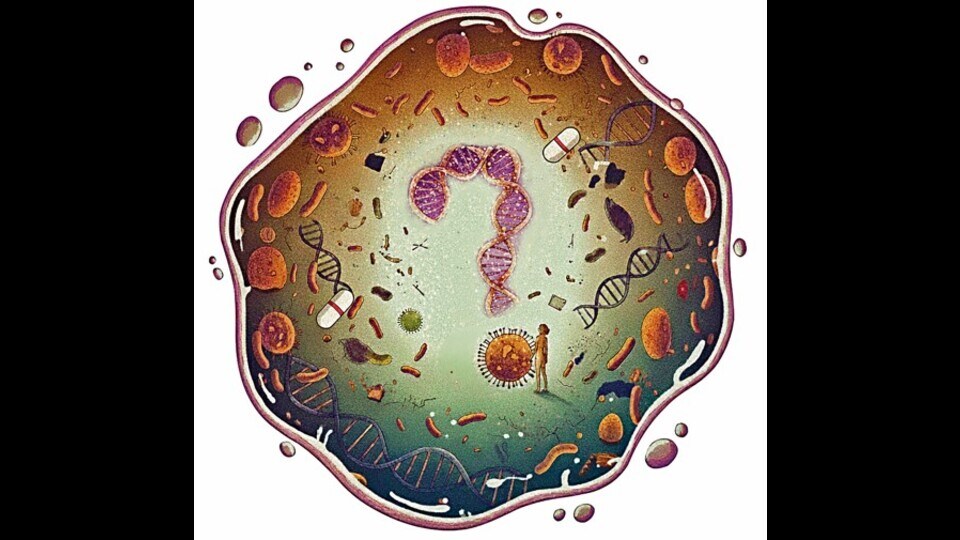
New solutions involve using AI, studying wastewater for early detection – and mining the Tree of Life for compounds that helped in the ancient past.
“The time may come when penicillin can be bought by anyone in the shops. Then there is the danger that the ignorant man may easily underdose himself and by exposing his microbes to non-lethal quantities of the drug make them resistant.”
That was Alexander Fleming, speaking the year he won a Nobel Prize for his discovery, in 1945.
We are living in the world he warned of.
As of 2023, one in six bacterial infections causing common diseases was resistant to existing antibiotic treatments, the World Health Organization (WHO) reported, last month. In 2019, nearly 5 million deaths were linked to antimicrobial resistance (AMR), the report states.
“Antimicrobial resistance is outpacing advances in modern medicine,” WHO director-general Dr Tedros Adhanom Ghebreyesus said, in a WHO statement accompanying the report.
Efforts to combat this threat include initiatives such as World AMR Awareness Week (November 18-24; initiated in 2015). Ahead of this year’s awareness week, Bengaluru hosted a symposium organised by the American Society for Microbiology (ASM) and the Centre for Infectious Disease Research at the Indian Institute of Science (CIDR-IISc), from October 29 to 31.
“This is a problem we will never really solve,” Stefano Bertuzzi, chief executive officer of ASM, told Wknd, speaking from the event. “There is no one silver bullet. As Fleming predicted, this is now a very crucial and silent threat. But there are interventions, tracking systems and solutions being framed to manage it.” (Some are taking shape in India; more on that in a bit.)
DOSED AND CONFUSED
Now for a quick recap: AMR occurs when microbes — bacteria, viruses, parasites, fungi — evolve a resistance to the drugs used to eliminate them (in the human body, in animals or in plants). The process of evolving such resistance is often boosted significantly by our misuse of these drugs (primarily, through overuse, interrupted courses of medication and incorrect self-prescription). The overuse extends to agriculture and animal husbandry too, and dates back about 80 years.
Fleming’s penicillin, incidentally, wasn’t the world’s first such drug. About two decades before it, in 1910, the German physician Paul Ehrlich and Japanese bacteriologist Sahachiro Hata devised a cure for syphilis using arsenic compounds.
By the 1950s, the golden age of antibiotics had begun. New compounds were devised and released: streptomycin, chlortetracycline, ampicillin and more. Since the 1980s, the rate of antibiotic discovery has dropped sharply.
This is because there is little economic incentive, says Bertuzzi. “Antibiotics tend to involve short treatment courses, meaning that each patient does not use very much. This is in sharp contrast to lifelong medicines for chronic diseases, such as statins for cholesterol.” Rapid rates of microbial evolution make this research more difficult as well, and keep the failure rate relatively high.
As a result of these factors, pharmaceutical companies prefer to focus R&D efforts on more expensive drugs (think cancer treatments) or drugs used to treat long-term conditions such as cholesterol imbalances and diabetes.
“The overall lack of economic incentive is one of the major challenges in the fight against AMR,” Bertuzzi adds. “The situation has improved over the past decade, with more awareness about resistance, more research and some new drugs in the market, but it is still worrisome.”
GERM OF AN IDEA
In some good news, new avenues are now opening up in this fight.
Wastewater-based surveillance is helping researchers identify resistance genes and pathogens before they begin to spread. “This sort of surveillance is crucial as it can help prevent potential outbreaks before they reach clinical settings,” says Bertuzzi.
CRISPR-Cas gene-editing technology is being used to identify resistance genes within hours instead of days.
And artificial intelligence-led programs are helping mine data to identify promising antimicrobial compounds. With these algorithms, research that once took years can now be completed in a matter of hours.
At University of Pennsylvania, for instance, César de la Fuente, presidential associate professor and director of the Machine Biology Group, is scanning entire genomes (the map of all genetic information for a species) in hours, identifying protein fragments that act as natural antibiotics (or acted as natural antibiotics in Neanderthals and woolly mammoths).
This essentially turns the Tree of Life (as much of it as we have identified, which is an infinitesimal fraction of all life but still consists of millions of species) into a searchable source of possible antibiotic elements.
“The idea is to look at all of biology as information, as a bunch of code, which can be mined with AI,” says de la Fuente. “We are also using generative AI to design antibiotics from scratch that evolution has never imagined.”
SHOTS IN THE ARM
These were among the avenues discussed at the three-day summit. Why Bengaluru?
“India is crucial in the larger arc of resistance, given its population, population density and mix of rural and urban settings,” says Bertuzzi. “But perhaps more crucially, the country is home to immense research and rollout capabilities.”
At the ASM symposium, for instance, were Maneesh Paul-Satyaseela, co-inventor of Enmetazobactam, a new antimicrobial drug approved for use in India, the US, UK and EU (developed at Orchid Pharma in Chennai); a team from Bugworks Research, Bengaluru, which has a novel broad-spectrum antibiotic candidate in early human trials; and researchers from the Centre for Cellular and Molecular Platforms (C-CAMP), a central government initiative that backs young companies working on rapid AMR diagnostics and solutions.
A key roadblock, around the world, remains behavioural change, says microbiologist Anirban Mahapatra, author of When the Drugs Don’t Work (2024) and chief science and global strategy officer at ASM. “The science and medicine can catch up if we all start to treat antibiotics as a scarce and valuable resource,” he adds.
We don’t really have a choice.
Over the next 25 years, more than 39 million people around the world could die from antibiotic-resistant infections, according to a study published in The Lancet last year. The stakes simply couldn’t be higher.