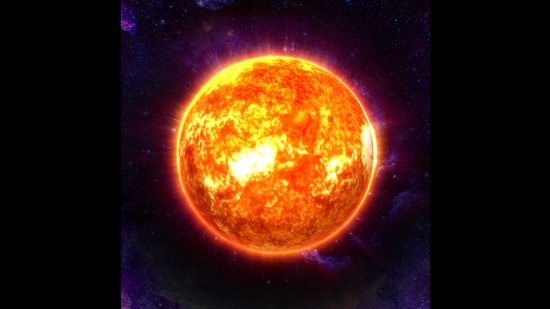
A representation of a very young earth in the Hadean Eon, when the surface was an ocean of lava. (Shutterstock)
New discoveries are being made almost every year. Crystals so ancient they go back almost to the start. Fossils no one even knew to look for on the Indian mainland. It turns out, there’s evidence of prehistory hiding in plain sight, even in and around India’s largest cities. Take a look.
4.54 billion years Before Present: A very young earth is in the Hadean Eon. The surface is an ocean of lava and is constantly bombarded by meteors. It will remain like this for a few hundred million years.
4.2 - 4 billion years Before Present: Zircon crystals, fine as hair, dating from this period were found in granite rock at Champua, Odisha, in 2018. Along with similar zircons found in the Acasta Gneiss in Canada and the Jack Hills in Australia, they are the oldest objects in known geological history. (See interview alongside for details on how they survived and why they matter)
.
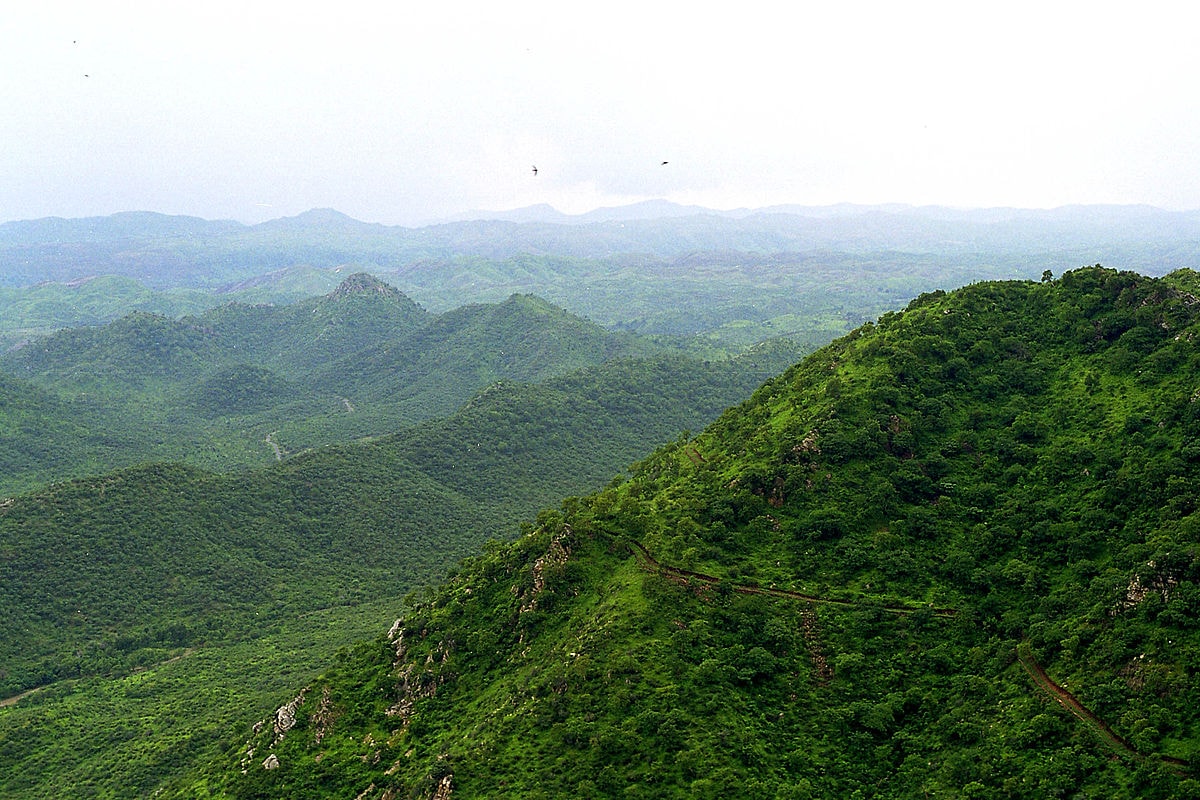
The Aravallis, India’s oldest mountain range. (Wikimedia Commons)
3.2 billion years Before Present: The Aravallis, India’s oldest mountain range, begin to take shape, as tectonic plates push against one another. Erosion over the next 2 billion years will mould them into the shape you see today. The mountains stretch 692 km, from Gujarat to Delhi, passing through Rajasthan and Haryana.
.
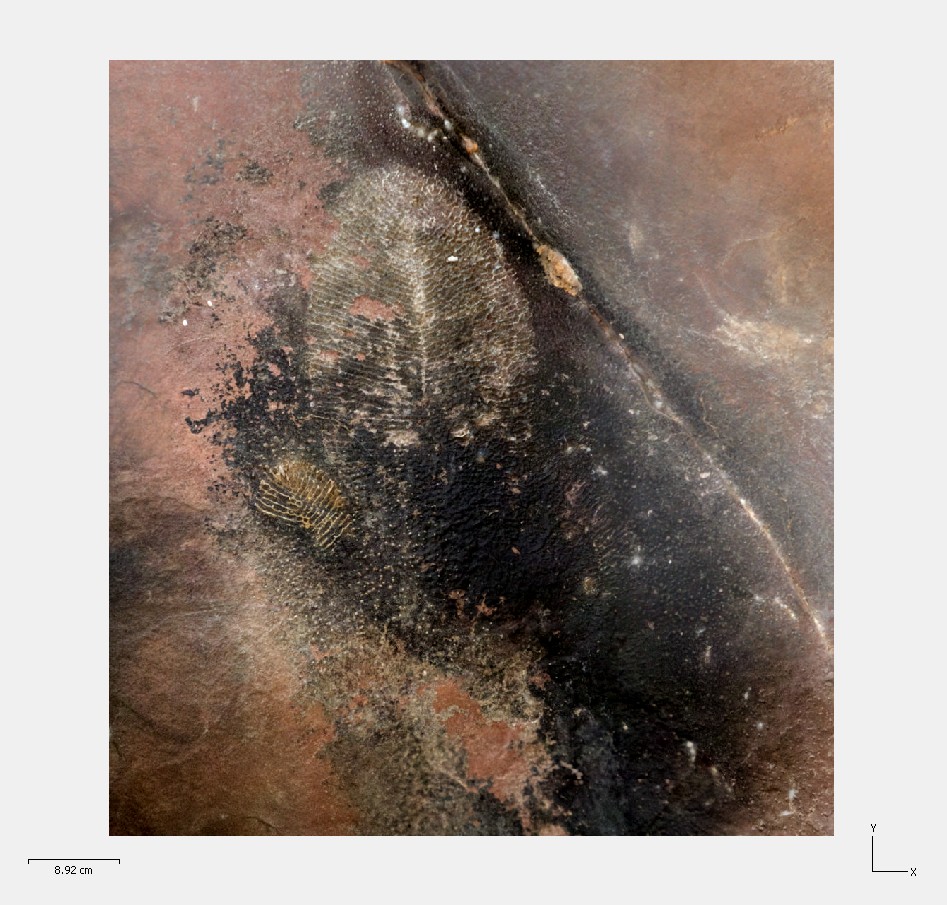
Dickinsonia fossils found in Bhimbetka. (Gregory Retallack)
550 million years Before Present: Dickinsonia fossils, the remains of one of the earliest known creatures on earth, are formed at Bhimbetka in Madhya Pradesh.
200 million years Before Present: The fossilised footprints of three types of theropods or predatory dinosaurs form, in what is now Jaisalmer’s Thaiat village, in the Thar desert of Rajasthan.
.
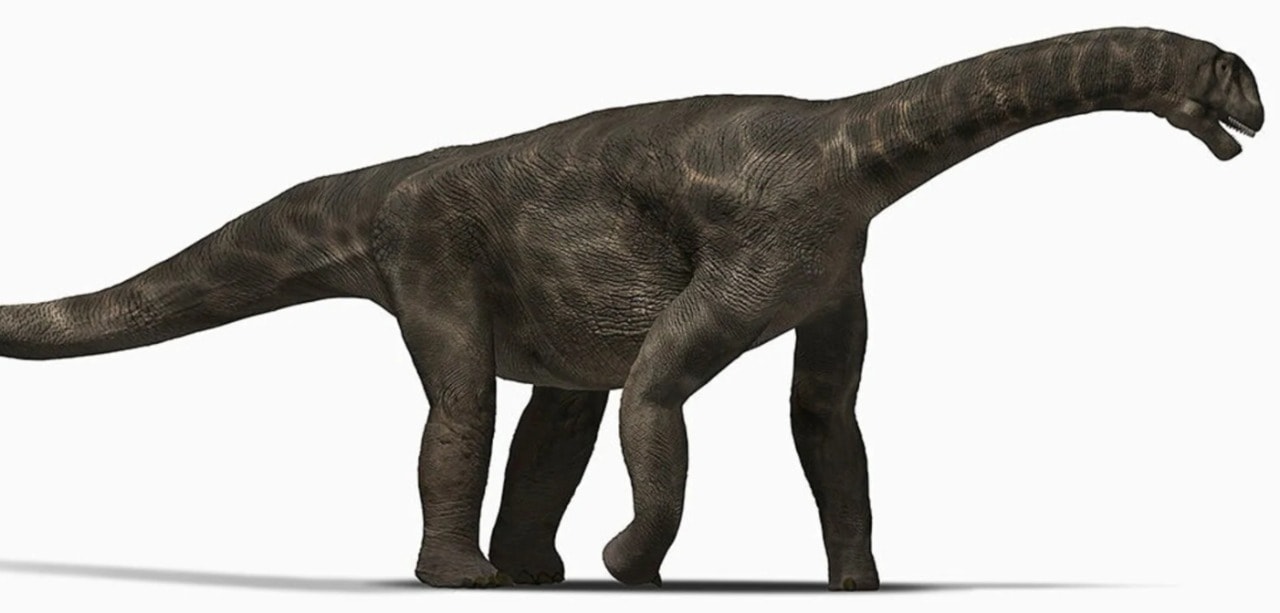
A representation of a sauropod. (HT Illustration)
100 million years Before Present: This is the age of sauropods. The long-necked vegetarian dinosaurs are some of the oldest and most abundantly found fossils in India.
66 million years Before Present: The Chicxulub impactor hits earth, plunging it into a nuclear winter. It is during this period that most of the dinosaurs are wiped out.
.
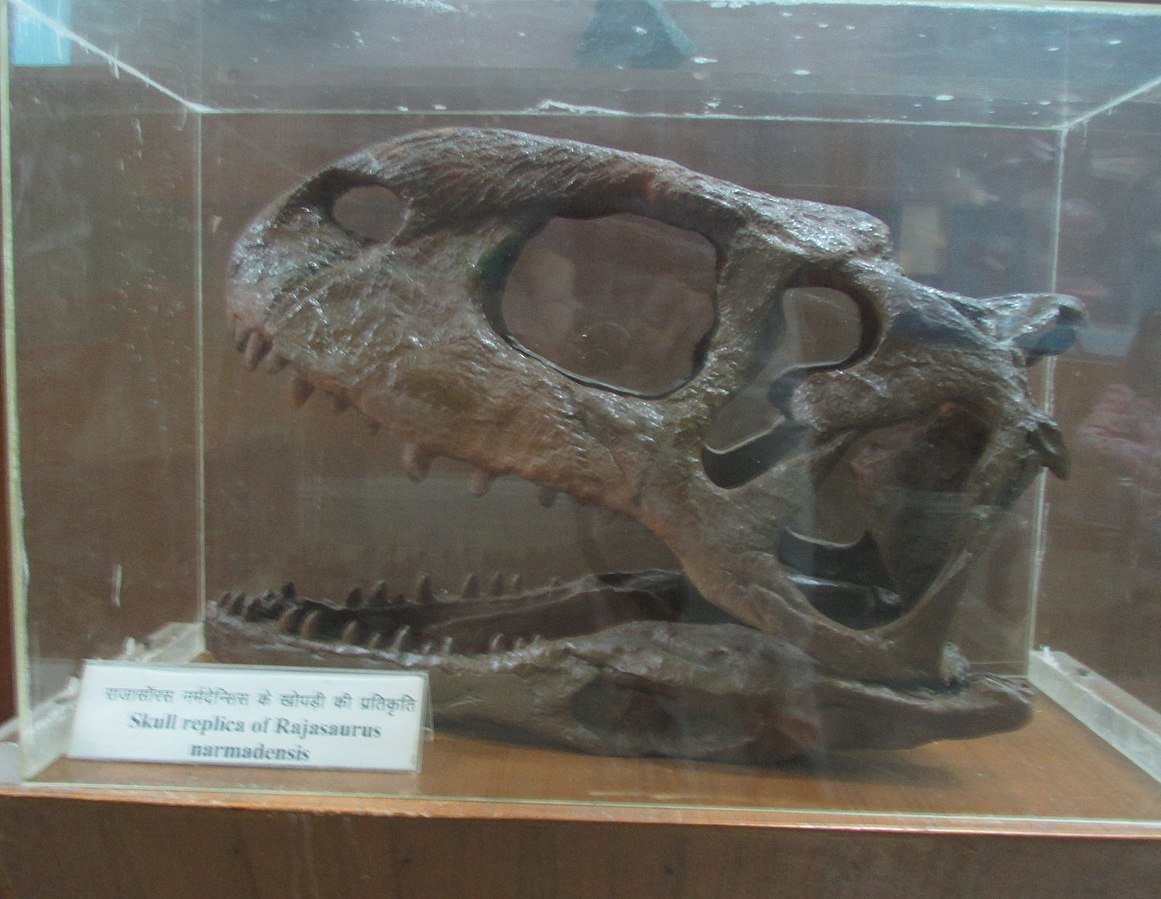
A replica of a Rajasaurus skull. (Wikimedia Commons / Swapnil Karambelkar)
65 million years Before Present: The Rajasaurus, a native of the Narmada valley, goes extinct. This carnivore with a horned crest, probably one of the last dinosaur species to survive on the subcontinent, was so fierce that it probably even ate other dinosaurs. Around the world too, the age of the dinosaurs draws to a close.
.
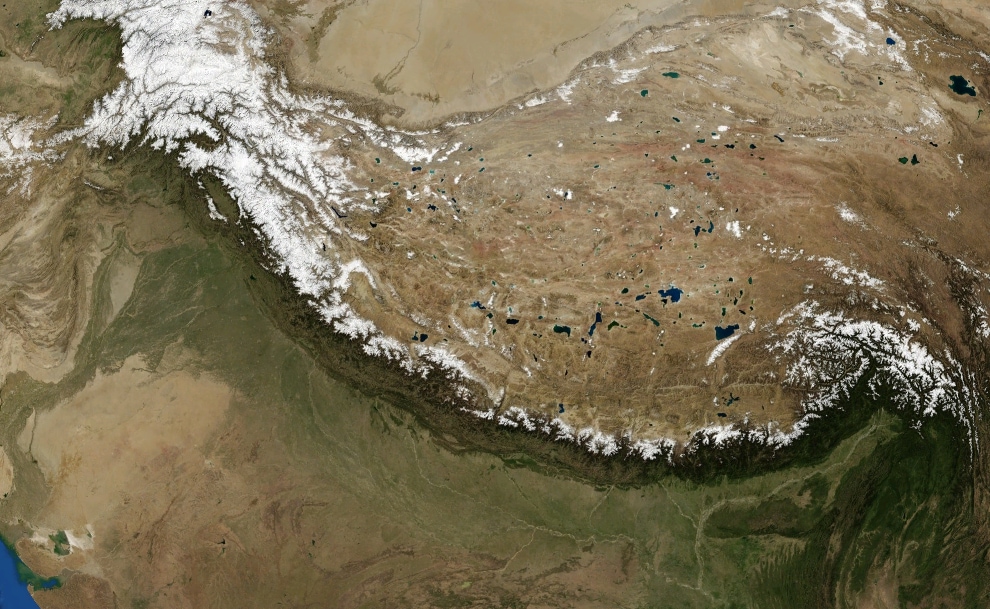
As the Indian Plate collided with the Eurasian Plate, the world’s highest peaks were formed. (Landsat 7 Satellite / NASA)
47 million years Before Present: The birth of the Himalayas. As the Indian Plate collides with the Eurasian Plate at the astonishing speed of 15 cm per year, the world’s highest peaks are formed.
.
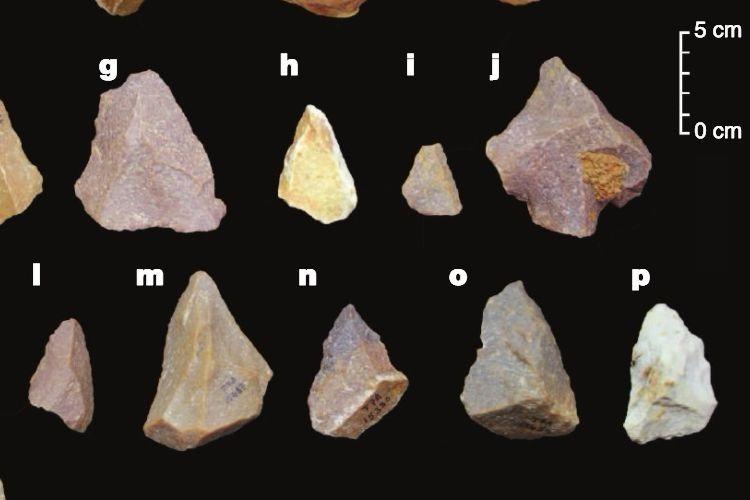
Hand-axes and cleavers. (Sharma Centre for Heritage Education)
1.5 million years Before Present: At Attirampakkam near present-day Chennai in Tamil Nadu, early man leaves behind hand-axes and cleavers.
.
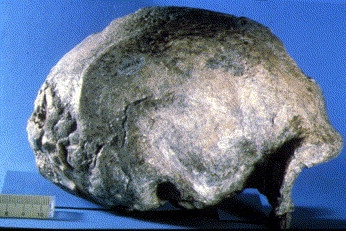
The fossilised skull cap of the Narmada human. (Arun Sonakia)
500,000 - 600,000 years Before Present: The Narmada human dies. All we find is a fossilised skull cap, in 1982, but it is the only early human (Homo erectus) fossil found in India. From it we know that India was a home, even before the Homo sapiens.
385,000 years Before Present: Things have progressed at Attirampakkam. Tools found here from this Middle Stone Age period are smaller, sleeker, sharper.
.
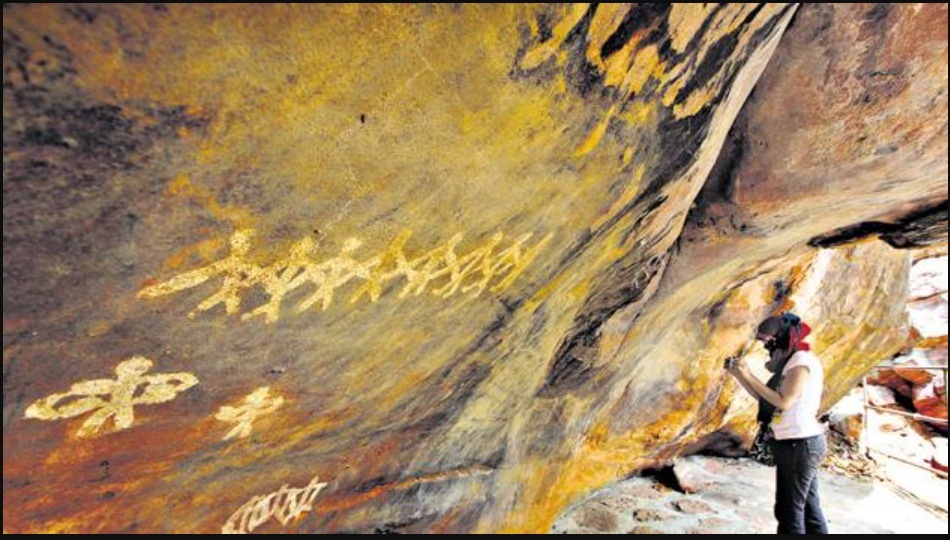
Cave paintings at Bhimbetka. (HT Photo)
10,000 years Before Present: Human and animal figures are painted on cave walls at Bhimbetka, in present-day Madhya Pradesh. These paintings constitute some of the earliest rock paintings in the country. Later paintings in the same caves depict hunting, horse-riding and agriculture too.
8,000 years Before Present: The Indus Valley Civilisation stretches from present-day Afghanistan, through Pakistan and into northwestern India, making it the most extensive of the world’s three earliest civilisations (the other two being in Egypt and Mesopotamia).
.
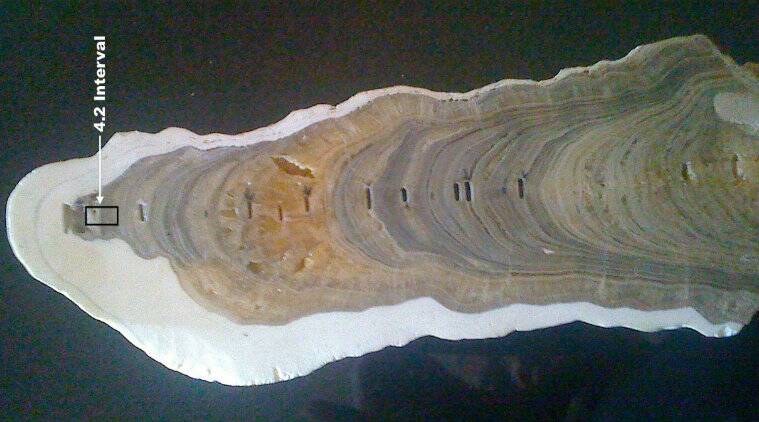
Signs of a 200-year global megadrought are recorded in a stalagmite in the Mawmluh cave in Meghalaya.
4,200 years Before Present: Signs of a 200-year global megadrought are recorded in a stalagmite forming in the Mawmluh cave in Cherrapunji, Meghalaya. It was extracted in 2003 and studied, and its findings were considered so dramatic that the entire age we are currently in is called the Meghalayan Age, considered to have begun at this point. The drought, incidentally, is thought to have played a role in the collapse of the Indus Valley Civilisation.
.
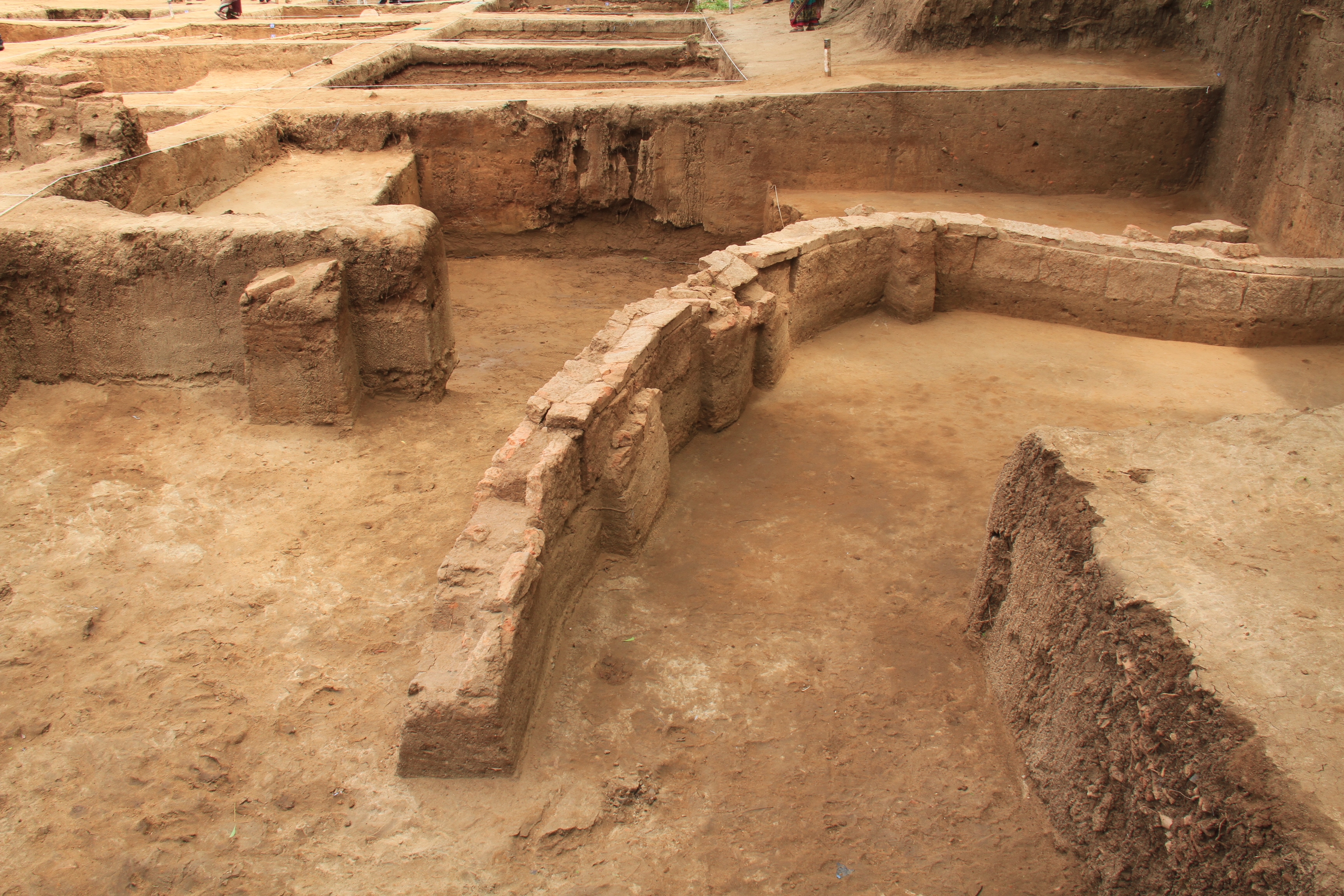
Remains of the Thamirabarani River Civilisation in present-day Tamil Nadu. (Tamil Nadu Archaeology Department)
3,200 years Before Present: The Thamirabarani River Civilisation takes root in the Tirunelveli region of present-day Tamil Nadu. There is evidence of trade between this and the Indus Valley Civilisation.
0 years: Here and now. In a few hundred years, there will likely be no denying that this has been the Anthropocene Age, defined by Man’s impact on the planet. What will remain of our civilisation millions of years from now? Hopefully more than piles of indestructible plastic.
Explore the latest Lifestyle News on health, fashion, travel, relationships, food and festivals. Find useful tips, expert advice, trends and inspiring stories for everyday living.
Home/Lifestyle/Art Culture/Earth’s Been Through A Lot In Its 4.54 Billion Years. Take A (very) Brief Tour

 E-Paper