
 E-Paper



To have and to hold: The curious case of the vanishing digital library

 Prefer HTon Google


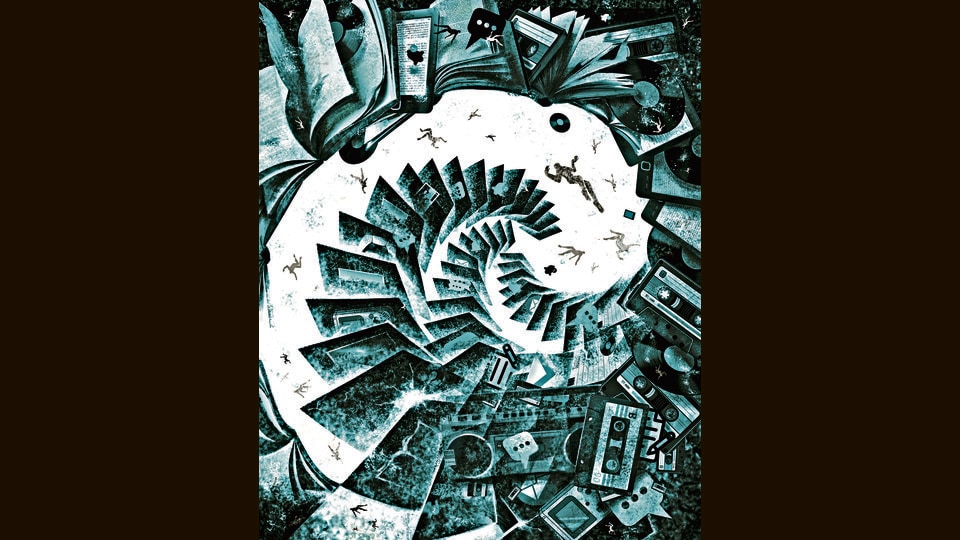
Games, books, music that we have paid for online are at risk of disappearing with licensing or tech changes. What will it take to rebuild this personal library?
Sony made two announcements this year that sit rather awkwardly beside each other.
From September 1, PlayStation customers in certain markets (currently the UK and parts of Europe) will lose access to hundreds of StudioCanal films and programmes they purchased in digital form. Sony says content linked to that company will be deleted, amid new licensing agreements, including from personal video libraries within the platform.
In other news, Sony announced plans to turn all new PlayStation games into digital-only products, by 2028.
Neither decision is inexplicable on its own. Licensing deals expire. More than 80% of Sony’s game sales are already digital.
Put the two together, though, and they paint a peculiar picture: the physical copy is disappearing, just as the limits of the digital copy become visible.
HEAD IN THE CLOUD
There is a longer arc here. For much of the past half-century, technology has steadily made our personal libraries smaller, lighter and more portable.
Records became cassettes, shelves full of volumes became tablets one could slip into a satchel. Sony, of course, kickstarted the shift.
In 1979, it launched the Walkman, an idea so extraordinary at the time that salespeople took to riding the Tokyo metro, asking commuters to put on headphones and try this new way of listening.
The Walkman did something entirely new: it made a library portable.
We still had to acquire the cassettes, and store them. But we could now toss a few in a bag to take with us, while the rest stayed at home. The collection cost money and effort; it was at risk of being “borrowed” or damaged over time. But it was sitting there, entirely yours.
Today, the personal library has become almost unimaginably larger, stretching potentially to thousands of songs and books; a lifetime’s worth of photographs and videos; films bought, saved or downloaded; videogames; documents, messages, notes.
These show up in “libraries” and folders in cloud storage, but it is starting to become clear that paying for the product or for the space doesn’t mean they will always be there.
EASY COME, EASY GO
The risk was always higher with digital possession.
What if one decides to give up the Kindle, or unsubscribe from Spotify? What happens to all the titles and playlists one has invested time, effort and money in?
It was never quite the same thing as buying a CD.
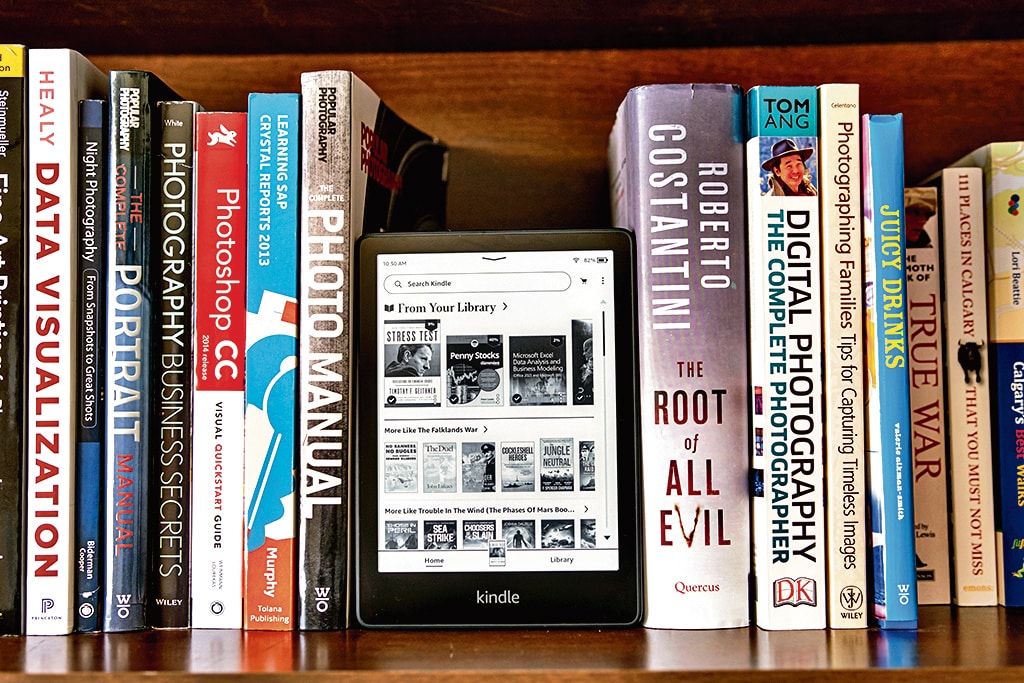
Still, in an era of seemingly limitless space in the cloud, most buyers did not make room for the ways in which their purchases could be compromised. Some of these are now starting to loom, amid changes to licensing agreements (as with Sony and StudioCanal). And devices being discontinued (as with Amazon, which stopped Kindle Store support this year to all devices released before 2013. Books on them remain readable and accessible via the app. But the device can no longer download new titles directly.)
There are other risks too: changes to, or discontinuations of, software; issues with host servers; companies shutting down entirely.
Most people of a certain age would lose years of their lives, memories-wise, if Meta decided to close Facebook. This is also already true of a different generation and a different Meta platform: Instagram.
Citizens are already starting to protest the cases of “I paid for it. I had it. And now I do not.” (Read on for a bit more on that).
But, usually, there is no going back.
Much of what we own digitally is either unaffordable, no longer feasible, or simply not available in physical form.
NEW WORLDS AT A CLICK
None of this makes digital content or distribution a bad bargain.
These platforms have opened up new worlds to us. A Spotify account today gives a listener access to catalogues that, in the cassette era, would have required impossible amounts of money and shelf space, and still been impossible, in most cases, to piece together.
In addition, there is the ease. We can move from Kishori Amonkar to Miles Davis to Blackpink in minutes. We read books we wouldn’t earlier have attempted; access translations in languages we’d barely heard of. And we can do it all in a single afternoon, if we choose.
Digital access is one of the wonders of the modern consumer economy.
The mistake is to confuse abundance with ownership. Libraries have always provided the former without the latter. It would help to view all digital libraries in the same manner, and plan accordingly.
WHAT DOES THAT EVEN MEAN?
It can feel overwhelming to think about.
Take Gmail. It is an archive of correspondence, but also of legally admissible contracts and official communication, work shared and projects completed.
WhatsApp is a social archive no less significant (who doesn’t have quiet paper trails tucked away here, to be produced with a flourish in cases of ambiguity — “Oh, I think we did agree on Sep 27!”).
Then there are the notes apps, iCloud and Google Drive, all of which hold records, work product, accounts, recipes, reminders, birthday calendars and more.
It once took small rooms full of files to preserve such information, for a person, a family, a small firm. Today, we have entrusted it to various cloud services that, it turns out, are far from immutable.
CAN WE FIX THIS?
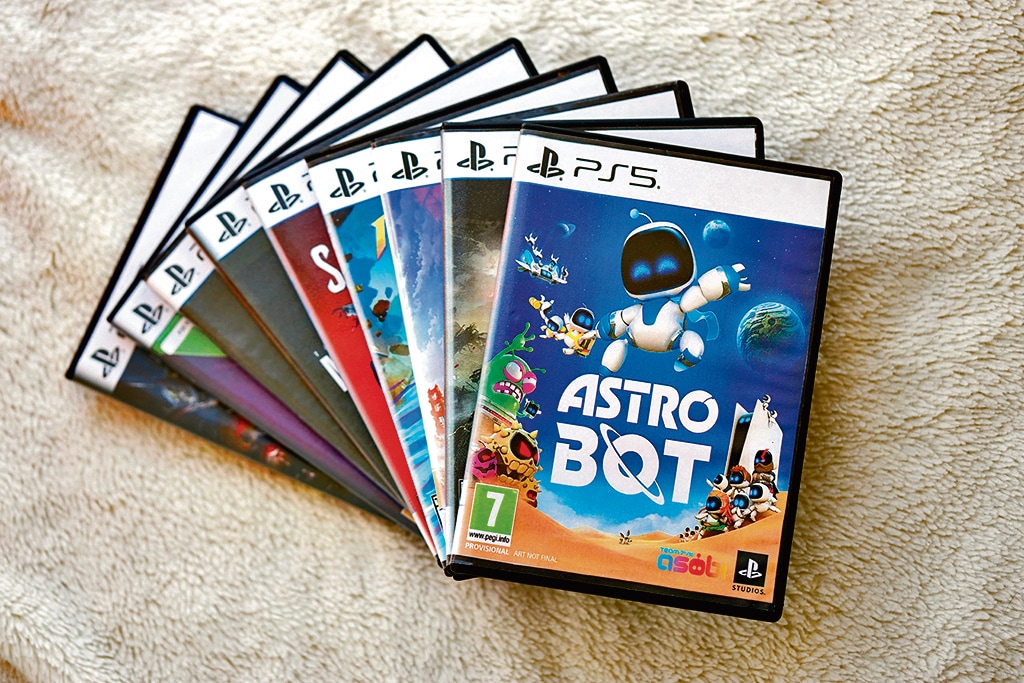
A movement has begun in Europe, against the perceived injustice of vanishing videogames. A citizens’ initiative, asking for games to remain reasonably functional when publishers withdraw support, has gathered nearly 1.3 million verified signatures.
However, the European Commission (the executive body of the EU) has declined, so far, to issue such a directive arguing that it could interfere with existing intellectual property rights and copyright laws, trade secrets and publishers’ business autonomy.
What does this mean for us all?
The more useful ownership right for the digital age may not be the right to have every company support its services indefinitely (which is clearly untenable), but the right to exit without leaving possessions, or parts of oneself, behind.
In place of immortality, a useful principle may be graceful degradation. A compromise in which items may be preserved, secured or transferred, before the terms change and they are taken away.
Sony’s Walkman made the personal library portable. All these years later, we need to make the personal library portable again.
THE PROBLEM IN A NUTSHELL
* Let’s start with videogames, since that’s where most “possessions” are currently going “missing”.
* In 2023, the non-profit Video Game History Foundation examined 1,500 games released in the US before 2010 and found that only 13% were still commercially available. That doesn’t mean the other 87% have ceased to exist. But games can depend simultaneously on old hardware, operating systems, authentication, servers and copyright permissions.
* The bottom line: Digital technology is superb at making perfect copies; our commercial systems can make those copies remarkably difficult to preserve.
* Licences between companies can lapse or change. As a result, PlayStation recently announced that some customers will lose access to hundreds of StudioCanal films and programmes bought in digital form. New licensing agreements between the two companies will see such purchases deleted even from personal video libraries within the platform.
* Elsewhere, software has started to lapse. When Microsoft closed its e-book business in 2019, books that customers had paid for became unreadable through its system. Microsoft refunded them, but users still lost the books (and their annotations).
* Hardware and ecosystems can be discontinued. Amazon stopped Kindle Store support this year to all devices released before 2013. Books on them remain readable, and accessible via the app. But the device can no longer download new titles directly.
* Servers can simply be shut. When gaming giant Ubisoft shut servers for the videogame The Crew in 2024, purchased copies became unusable because they had depended on those servers too.
* For a sense of what this could mean, think of all that Alphabet and Meta alone hold of your personal archive, across Gmail and Google Drive; and WhatsApp, Instagram and Facebook.
(Kashyap Kompella is a tech industry analyst and author of three books on AI)


