
 E-Paper



Which trees are our trees?: Shades of green in India


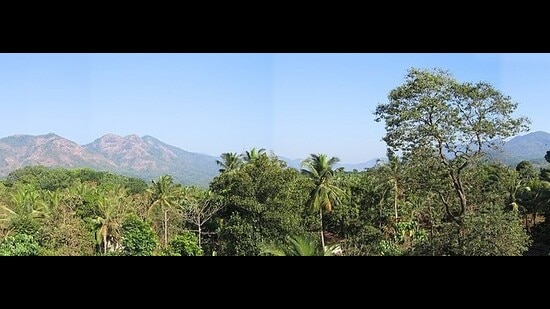
The tamarind isn’t Indian (though it’s blended in well). But the earliest grape, jackfruit and coconut fossils in the world come from India. Banana, mango, morning glory were here from the start too. Meanwhile, friendly and invasive aliens abound. How are they altering India’s landscape? Take a look
If trees could move, we’d see them grouping very differently. Natives would cluster with natives, looking askance at the invasive species, and friendly but a little distant with the ferns at their feet.
The truth is, trees have moved, by road and ship and air. They’ve arrived here as ornaments, gifts, investments, invasions. In some ways, they’ve always been moving. That path that the Indian subcontinent took after it split from the prehistoric supercontinent of Gondwanaland went a long way in determining what species would evolve here, and which ones would survive.
When the Indian plate crashed into the Eurasian plate at the astonishing rate of over 18cm a year, the Himalayas were born, and that kicked off sweeping change too. Oceans receded, land levels rose, deserts formed.
But let’s rewind to the beginning. The Earth’s earliest plant form was a microscopic red algae found across tropical latitudes. It first evolved 1.6 billion years ago, and fossils have even been found in present-day Madhya Pradesh. From the algae evolved vascular plants (with stems, leaves and roots); from there, gymnosperms (seed-producing plants like conifers) and ferns (which reproduce through spores).
These formed some of the world’s earliest forests, and these forests had such a dramatic impact on temperature and atmosphere that they altered the climate of the planet, making it more hospitable to life. So if trees could talk, they’d probably have some astonishing tales to tell.
But which trees are our trees? And what does “our” even mean, given that India was once part of a land mass that comprised all of this subcontinent as well as modern-day Africa, Antarctica, Australia, South America and Arabia?
Here’s a bit of a status check. The world has about three trillion trees, spread across over 58,000 species. India is home to over 2,600 native species, with a new native tree species discovered and described every few years. Of these, about 650 are endemic, which means they are found nowhere else on Earth.
India is also home to hundreds of species of exotic or alien trees, many of them brought over by traders, travellers and, later, colonial rulers. These include friendly foreigners that have integrated with the local landscape and don’t threaten native species, such as the magnificent raintree and the curious baobab.
These also include the aggressive invasives, alien species that tend to win any contest for space. A prime example is the lantana, brought over by the British as an ornamental shrub 200 years ago. It has evolved to attract a variety of pollinators, and once its seeds are dropped, it can spread across forest floors and climb all the way up to canopies, crowding out other plant species as it goes.
“The problem with many exotic species is that they don’t serve the function of a forest or a natural system that has developed over thousands of years and supports immense biodiversity,” said Bharath Sundaram, assistant professor of environmental sciences at the School of Interwoven Arts and Sciences at Krea University. But the threat of invasive species is much greater, because they don’t just take up space, they seek to colonise it.
“There are many mechanisms at play when it comes to invasive species, in the way they alter something about the ecosystem,” Sundaram said. “For instance, some of them change the chemical composition of the soil, while others have effects on interactions with vital elements such as pollinators.”
What on earth?
So, back to the earlier question, which trees are our trees, and how do we know?
One of Earth’s earliest-known tree species, the woody Archaeopteris, would have grown about 300 million years ago, when the subcontinent was still part of Gondwanaland. The Archaeopteris grew up to seven metres in height and looked much like today’s conifers. But, at this point, vegetation was roughly the same across the tropics.
One descendent from this period, incredibly, still survives in India. The Cycas circinalis (called madhana kama poo in Tamil and queen sago in English) is endemic to southern India and can trace its lineage to a plant group that grew in the region when it was still part of Gondwanaland. A fossil from this genus recovered in Odisha was dated to 150 million years ago. The Cycas circinalis has an unbranched cylindrical trunk topped with a crown of thorny leaves. It can grow up to 12 metres in height and is now found across peninsular India and the north-east.
Back to our prehistoric timeline, 120 million years ago, things started to change dramatically. The Indian plate broke away from Gondwanaland, changed hemispheres and latitudes, and crossed the equator. “These positions correlate with a changing intensity of sun rays, which had a direct effect on vegetation,” said Gaurav Shrivastava of the Birbal Sahni Institute of Palaeosciences (BSIP) in Lucknow, who researches the changing monsoon patterns of the Cenozoic period (from 66 million years ago to now).
“For about 60 million years, while India covered 9,000km at sea before it rammed into Asia, it was a floating laboratory where species evolved and became endemic.”
Then, 66 million years ago, the Chicxulub impactor hit Earth, wiped out most of the dinosaurs, and kicked off a series of explosions across the planet. Volcanoes that erupted across what are now parts of Madhya Pradesh, Maharashtra and Gujarat trapped life forms that would become the fossils that scientists now study to try and understand these times.
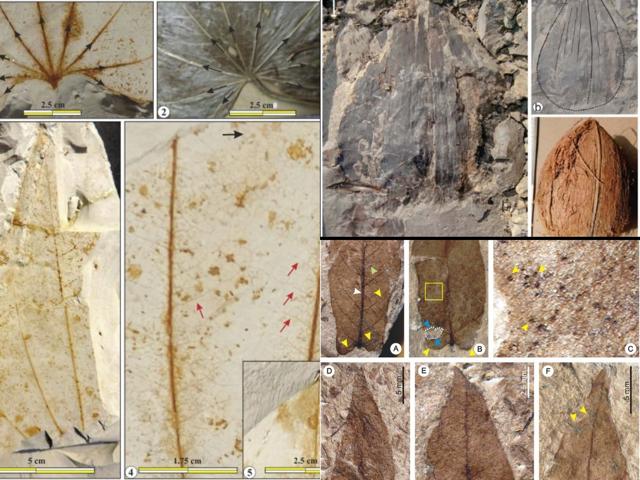
In the fossils from this time have been found the earliest known evidence of grape, jackfruit and coconut in the world. Banana, mango, fig, mangrove palms, Indian bay leaf and morning glory have also been found.
Homegrown
With a dry period of less than four months a year, the floating Indian subcontinent was lush, swampy and teeming with life. It not only ferried a number of species from Gondwanaland, new evidence suggests it also picked up plant species along the way.
“When the Indian subcontinent established land connections with Asia, it started receiving Southeast Asian taxa,” said Rakesh Mehrotra, a retired scientist with BSIP whose focus was plant fossils from this era.
Then came the big crash as the Indian plate collided with the Eurasian plate. The formation of the Himalayas drastically changed the climate on the Indian plate. The seasons settled into a cycle of wet and dry; parts became arid, and the seas receded.
“After 23 million years ago, then at 15 million, then at 11 and then seven, as the Himalayas gained height, it led to the modernisation of the Indian monsoon,” said Shrivastava. “This was also owing to the upliftment of the Iranian plateau and East African topography, both of which were taking shape simultaneously.”
Rainfall patterns birthed the tropical rainforests. The Western Ghats and the Indo-Burma Biodiversity Hotspot are now considered indications of what large parts of what is India today were like then.
The rest of the land settled into patterns of tropical deciduous forests, populated by trees with broad leaves that shed every year; thorny scrub forests, comprising spiny trees with short trunks and low-branching crowns; and the alpine forests of the Eastern and Western Himalayas.
And then it all changed again
Until a few thousand years ago, only natural systems were at play. Then, humans began exploring the world, leading to an exchange of goods and ideas, flora and fauna.
One of the earliest exotics, likely brought over to this region by Ethiopian traders, was the tamarind. It’s been in India for over 2,000 years, likely longer, and has proved to be a very friendly alien.
“We are closely linked to Africa and Asia. Any species that comes from these parts is not able to dominate to the same extent as those that come from Latin America. The Americas are more alien when it comes to the Asian context and most of our invasives come from there,” said botanist Navendu Page from the Wildlife Institute of India, in Dehradun, who specialises in plant ecology and taxonomony.
“Central and South America are the largest sources of invasive species in the world,” added Sundaram. “They were novelty items that were picked up and transported to Europe, the US and other places, including India.”
Aside from the lantana mentioned earlier, some of the most high-impact aliens include the Australian acacia and eucalyptus, which were once promoted as cheap firewood in government programmes but act as such massive drains on the water table that they have been banned in Karnataka.
Invasive species, even when they aren’t actively being promoted for firewood, are hard to cull, much less eradicate, for three reasons. The natural pollination by birds and bees is hard to prevent. They often don’t have natural predators and competitors that have evolved alongside them. But there is also a near-total lack of awareness among humans — India’s urban planners pay scant attention to fauna, and flora tends to be a distant second.
All this has contributed to the loss of unique, rare and native species.
How many have we lost? It’s hard to determine, says Page. Generally, in botany as in other branches of the natural sciences, if a species has not been spotted for a long time, it is presumed to be extinct. “There are a lot of species that we suspect to be extinct, but we simply can’t be sure.”
In 2020, scientists found a tree species, the Wendlandia angustifolia, in the Kalakad-Mundanthurai Tiger Reserve that had been thought to be extinct for 22 years. In 2020, another species, the Madhuca diplostemon, was rediscovered in the Kollam Grove of the Western Ghats after a gap of 180 years.
It’s also hard to say why a tree may have gone extinct. It could be that we had something to do with it — through habitat destruction, colonisation by invasives, and climate change. But species also go extinct from natural causes, Page says. They just quietly fade away. “That’s part of the natural dynamics of evolution. Species evolve and species go extinct.”
Could afforestation help? Not with the randomised “Plant a tree; any tree” approach.


