
 E-Paper



Drawing Room: Wahida Ahmed on Gopi Gajwani’s delicate abstracts

 Prefer HTon Google


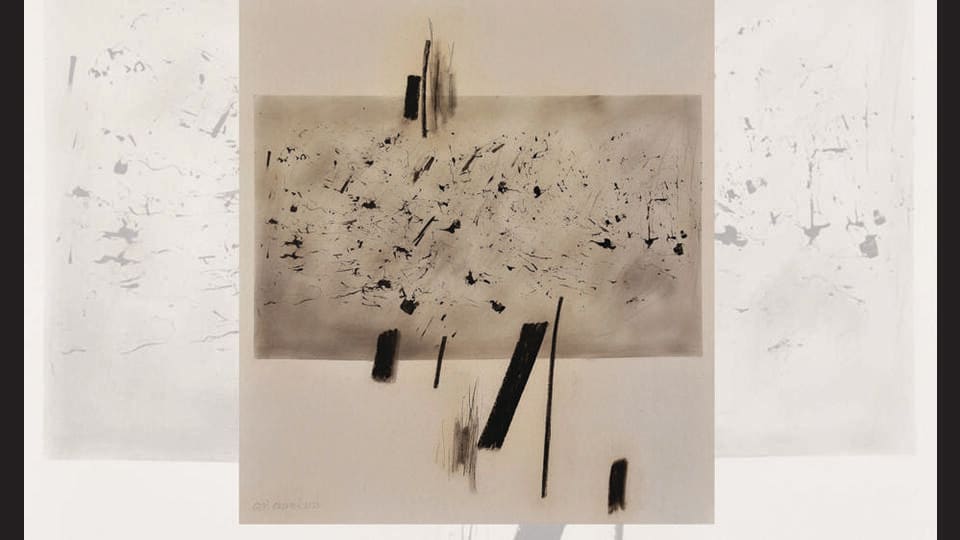
Gopi Gajwani’s work encompasses cheeky cartoons and graphic design. But it is his delicate abstracts that tell stories of loss and old wounds best
Since childhood, I have felt drawn to images, lines, forms and colours. They spoke to me in ways words never could. I remember the world through what I see – shapes before sounds, colours before language. Gopi Gajwani’s abstract works resonate with me for this very reason.
Gajwani’s compositions look restrained at first. But to those examining them closely, there’s vibrant buoyancy. Dots, strokes and negative spaces become instruments of rhythm and stillness. Gajwani, who was born in pre-Partition Sindh in 1938, never imagined that art would be his life’s calling.
He wasn’t studious, and enrolled himself in the Delhi College of Arts, from where he graduated with a degree in Applied Arts. He had a great sense of figuration, but chose to work with abstracts. So, even within his generation of artists, who took a determinedly academic approach to painting and created mostly figurative works, he stands apart.
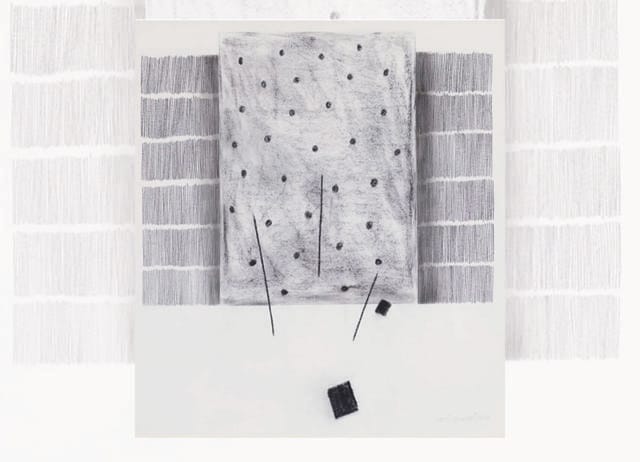
Give his 2020 untitled charcoal on paper work a considered look. He showed it at his solo show Into the Gathering Night. Distended floating lines form the backdrop to a large rectangular shape filled with randomly placed polka dots. Small squares and lines seem to be falling off the rectangular grid. The lines are delicate and thread-like, yet alive. Each mark seems to gently stir the quiet of the canvas, awakening dormant spaces.
Though he prefers not to accord meaning to his artworks, leaving them open to interpretation, Gajwani did highlight a message behind some of his meditative works in a conversation with curator Ranjit Hoskote. Referring to the loss of his homeland at Partition, he described his lines as ‘wounds’ that have lost their colour over time and remain buried. The high price that we paid for freedom echoes in the charcoal work, saying more with simple strokes than a wordy soliloquy.
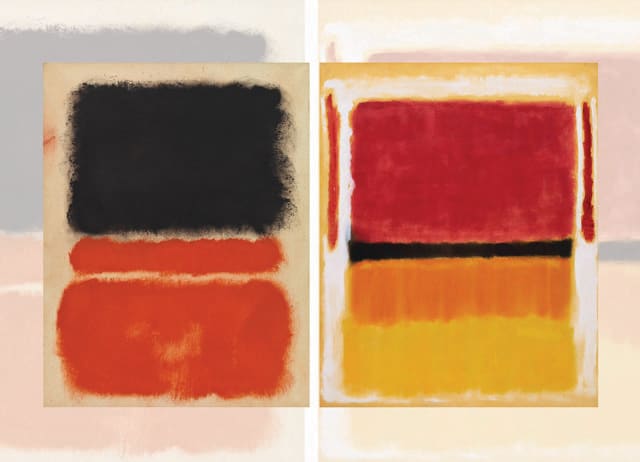
Gajwani worked as a designer at the American Center in Delhi as a designer for nearly three decades. He has also produced experimental short films and photo books, and drew tongue-in-cheek cartoons and caricatures for Span magazine. Much of this has shaped his art. Many viewers might compare his layered abstract works to the American painter Mark Rothko. But there’s a different kind of deliberate simplicity at play with Gajwani’s work – he gives it his own playful and layered style.
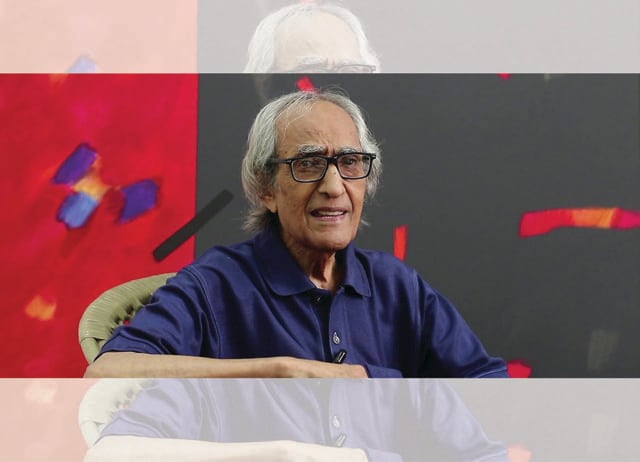
Gajwani often compares his art to music – a connection that becomes most evident when one examines his work at leisure. He composes visual scores that blur sound and sight, form and emptiness. “Every day is a new composition of colours,” he has said in various interviews. “You play within the forms, arrange them, like you arrange a musical score.” If a colour doesn’t quite fit right, it stands out just as a discordant note would in a beautiful musical composition. So when you’re confronted with one of his works next, take it in with your eyes and ears, and give yourself time to sync to the rhythm without the need for lyrics.


