
 E-Paper



Fad or fitness staple? How silent-disco yoga is stretching across India

 Prefer HTon Google


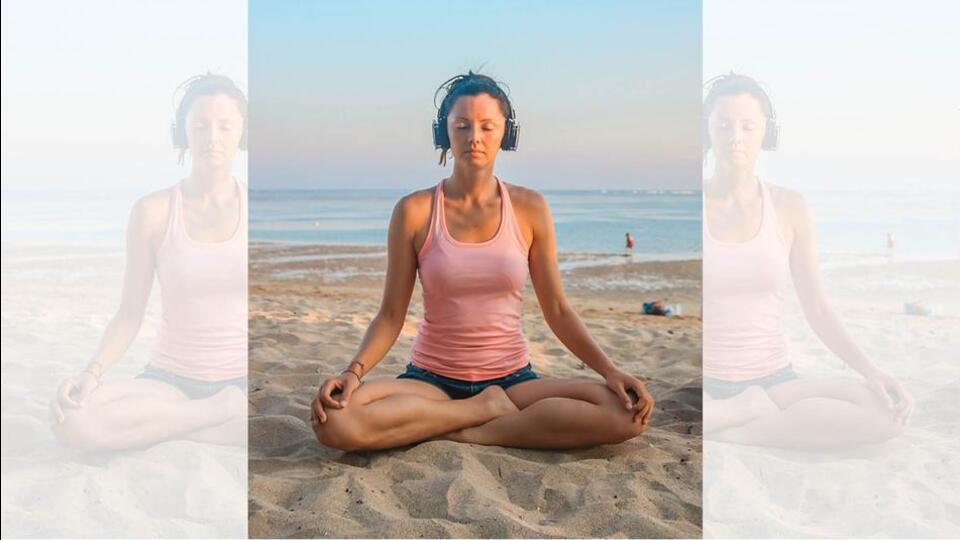
It involves more than exercising with headphones on. It needs focus, special playlists, fine-tuned audio. Can it make fans come back for more?
Remember Alia Bhatt in Dear Zindagi, dancing with headphones on, in the middle of a crowd, the world fading into nothing around her? Or that moment in Zindagi Na Milegi Dobara, when scuba-diving turns everything silent and the only sound left is your breath?
Silent-disco yoga is a little bit like that, minus the drama, but with groovier beats. The term was coined in the mid-2010s in London, by yoga teacher and holistic nutritionist Sarah Hunt, and Rosie Barker (aka DJ Darlo). They combined the seemingly disparate practices to create sessions that alternate fluid vinyasa moves with pumped-up choreography. Bring your bling — the vibe is glam. And be ready to bop — there’s usually a DJ spinning ’70s and ’80s hits. The idea is to loosen up and let go, but with a sense of fun. Think of a disco-yoga session as a hyper-focused, immersive flow that feels both intimate and communal.
It’s been a hot trend in NYC, San Francisco, Bali, London and Sydney for years, and an excellent way to keep nightclubs profitable during daytime. But in India, we’ve caught on only recently. Sessions are unfolding everywhere, from home studios and rooftops, to gardens and seaside decks. Can it take hold or is it just another East-West remix hoping to make it big?

Length and breath
For Akshata Kutnikar, founder of Sweat Social in Bengaluru, the idea started as a practical workaround. “We needed a way to keep music low for a venue,” she says. “Silent disco felt like an easy fit and people loved it.” Since then, her team has expanded headphone-led sessions into yoga, Pilates, and dance fitness, keeping the energy high while cutting the noise.
The magic doesn’t just happen; it’s engineered. “We rent the gear, sync the mic, and do several sound checks,” she says. “If the music and cues aren’t balanced, the experience falls flat.”
Anita Gadad, a regular at Sweat Social events, describes her first class as unexpectedly empowering. She walked into an open-air session with “zero expectations”, but the moment she put on her LED headphones, “everything else faded out. “The music and cues felt incredibly clear.”
A major reason the format has taken off is how well it plays on social media. The glowing headphones and synchronised moves photograph beautifully. “Social media made it look fun, interesting, aesthetic and community driven,” says Gadad. That’s how she discovered them too.
Sessions are not just plug and play. Pooja Kumawat, founder of Bengaluru’s Purple Pilates, picks soft, calming music, keeping the voice instructions clear so participants stay centred and connected to their breath. “Once people find their rhythm, they glide through,” she says. Bengaluru’s mild weather and natural spaces make it ideal for outdoor sessions. Terraces, parks, and café courtyards often transform into yoga spots. “Nature amplifies the grounding effect.”
By the sea
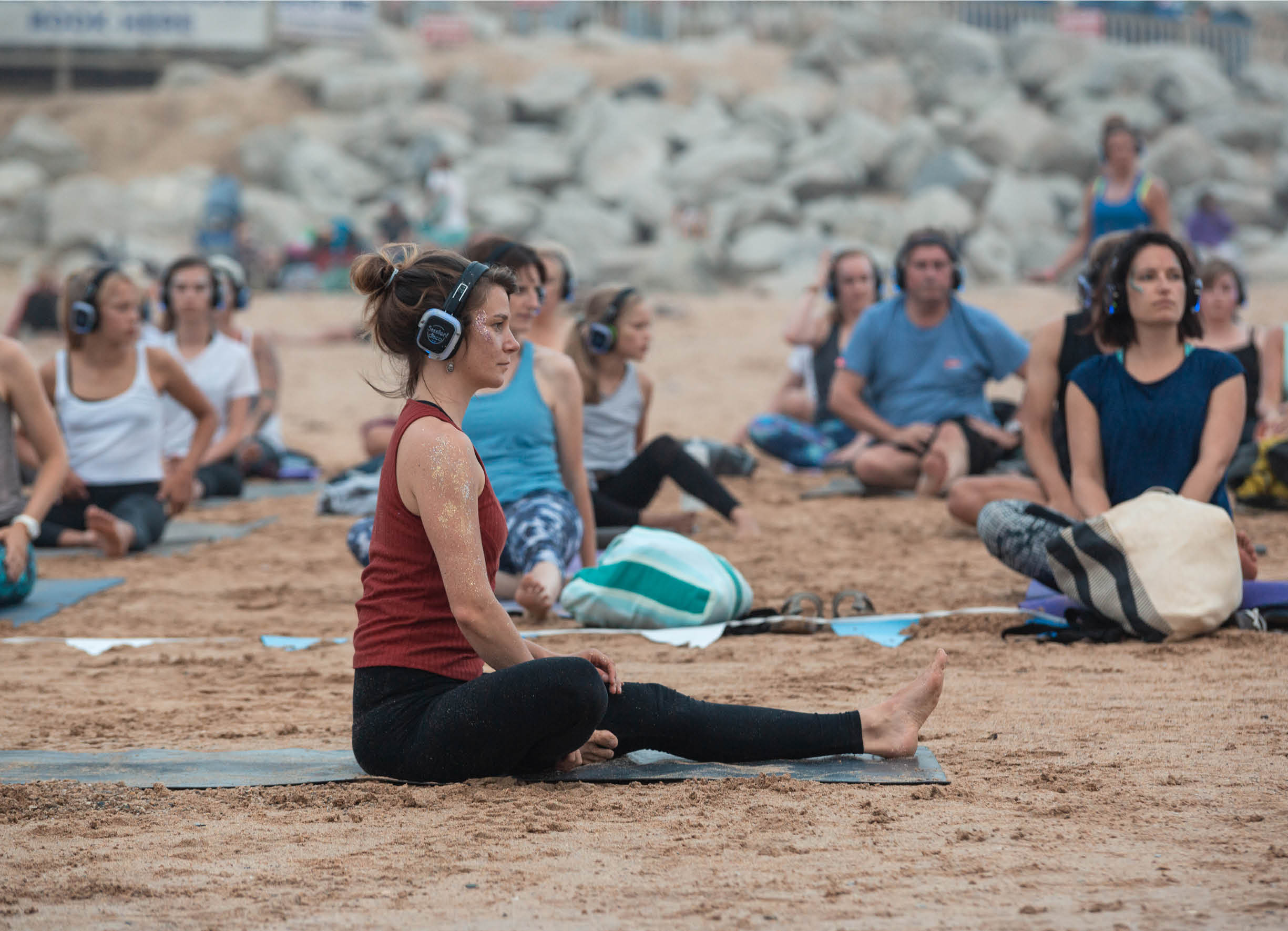
In Mumbai, disco yoga finds a good home on beaches and promenades. Anand Shrivastava of Glu Studio says that the city’s noise often delays the settling-in process during regular yoga classes. Headphones help create “immediate sensory isolation,” he says. First-timers typically struggle with the hardware. Over-ear headphones during Savasana or supine poses can feel awkward. “But once people settle in, it becomes second nature,” Shrivastava says.
Take your time. Some participants try to match poses to the music, rushing sequences; others need time to adjust to the mic clarity. Heightened internal focus makes people more aware of their own breath, imbalance, or fatigue. “It’s a different kind of vulnerability,” Shrivastava says. He builds his modules around the playlist’s tempo and emotional arc, starting with slow, grounding postures and building into dynamic sequences as the music lifts. “Certain poses that require deep stillness or long holds don’t always sync with high-tempo music, so those are placed within quieter sections,” he says.
Stretching apart
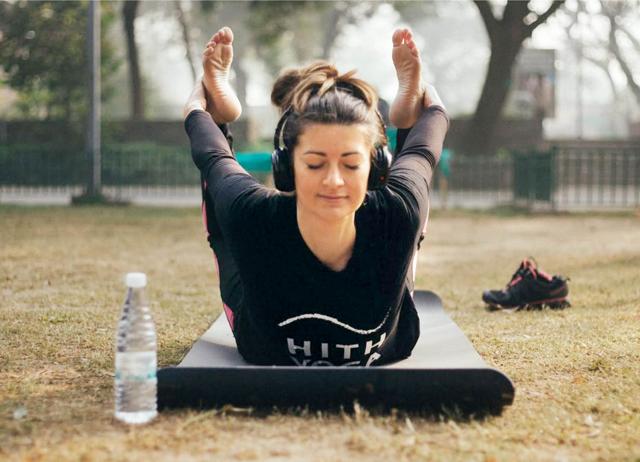
Delhi views silent-disco yoga as a niche trend. The first session in the capital took place in early 2020, but adoption remains sluggish. “It is still not mainstream,” Apurva Saxena, founder of Zelosity, admits. Pollution and extreme weather push most Delhi sessions indoors, where purifiers and controlled temperatures matter more than mood lighting. In better weather, sessions are held in Sunder Nursery and Lodhi Garden, but they remain infrequent.
The real challenge is keeping people engaged after the novelty fades. “Rotating locations and adding matcha pop-ups keeps the experience exciting while staying true to the mind-body connection,” says Kumawat. Shrivastava, however, believes the focus should be depth over constant reinvention. “It’s the breathwork, awareness, and correct alignment that sustain a practitioner’s journey.” Saxena recommends themed playlists and creative sequencing of traditional and cross-disciplinary formats to ease newcomers into the concept. “The variety keeps students curious and coming back.”
Silent disco entered India late, but it seems well suited to our wellness culture. We’re now setting fitness goals that align with our mental health. We want calm without boredom, community without pressure. “It was one of the most refreshing fitness experiences I’ve had,” says Gadad. And perhaps that is why the trend feels less like a gimmick and more like a gentle correction. As cities grow louder and attention becomes harder to hold, headphones-on yoga offers a kind of modern solitude. What began as an Instagram-ready workout is slowly evolving into a small but meaningful ritual, one urban India didn’t know it needed.


