
 E-Paper



HT Brunch Cover Story: If it makes you happy...

 Prefer HTon Google


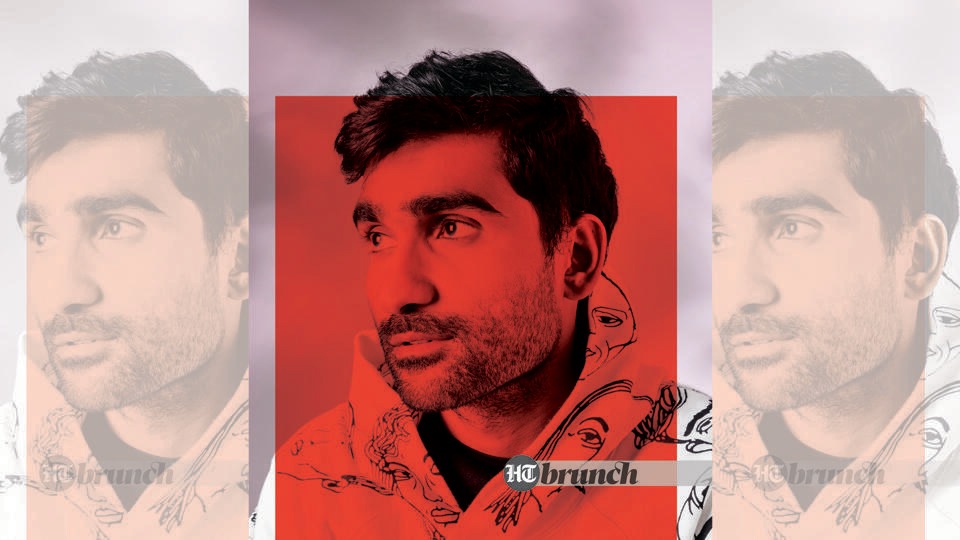
Success is not the end goal for singer-songwriter Prateek Kuhad, 32, one of India’s first indie musicians to go global. Balance is what he’s after.
You switch on the radio. A song comes on. You don’t recall the title or even if you’ve ever heard the song before. But you know who the musician is.
That’s a little game I used to play with my choir peers while in school in the 1990s. Back then, this list was restricted to Western pop artistes—shout-out to all the Backstreet Boys and Avril Lavigne fans out there!
But today, when a Prateek Kuhad song makes its way to your playlist, you know it’s him. The 32-year-old Jaipur boy has a distinct signature sound, something that was noted even as far back as nine years ago when he debuted in the indie scene before he went on to feature in multiple Bollywood films and tour the world. And his success has started a whole revolution of indie singers-songwriters. So much so that the world no longer believes that Indian music is only restricted to classical or ‘Bollywood’.
The ‘90s club
“I don’t think my sound is all that unique. And I don’t really care or think about my sound much. I focus on writing good songs and going with my instinct when it comes to how I want my music to be. I don’t like pigeonholing or putting a definition or a box around my sound,” states Prateek, revealing that his lyric-driven, melodic, singer-songwriter signature sound is a childhood influence based on the music he heard in his childhood, including Lucky Ali, Silk Route and Euphoria.
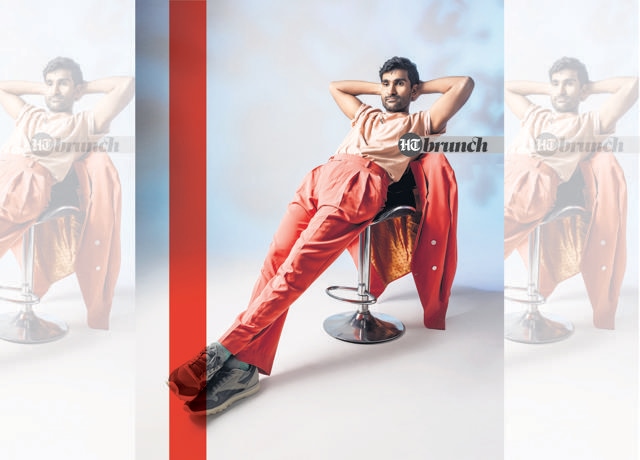
“It’s not about the genre,” explains the pioneer who introduced a new avatar of Indian music to the world with songs like Tum Jab Paas and cold/mess, after he made his debut with his EP Tokens and Charms in January 2015. “The reason a genre takes off is because the musicians or artistes spearheading the genre are really committed, passionate and good. People will see and connect to anything you do well.”
What’s it like being India’s first international musician? “I still have a way to go before I become truly international. But I am definitely on that path. I’m not there yet,” he smiles, adding that his biggest fanbase is in India, with a “much smaller” US following coming a close second.
Prioritise right
Perhaps Prateek’s success comes from dreaming big and having his priorities in place—he’s been clear about his goals since day one. “One of my missions since I started playing music professionally was not to make my music a different category, but to have people across the world not pigeonhole Indian music. If you go to the US and talk about Indian music, people either think it’s Ravi Shankar or SRK. That’s it. So, everything you attribute to Indian culture is either sitars and people wearing kurtas and marigold flowers, or really loud and flashy with Bollywood. There’s nothing wrong with that. But I want people to have a realistic picture of India. And there is this whole chunk of independent artistes in not only music but film, design, fashion etc, which is so rich, unique and so Indian, that people are unaware of,” he says.

As Uncle Ben put it in Spider-Man, “With great power comes great responsibility”. For artistes, this translates to breaking stereotypes as much as they can, says Prateek.
“The tendency of everybody in the business side of the industry is to portray Indians (and South Asians) only in the “traditional” way. So, anytime a new designer or musician comes in, businesses start telling them to “be more Indian”. But that’s just feeding the same bias over and over again and focussing on the stereotype.”
This is why it’s more important than ever for a musician to know what she or he wants with respect to both sound and career—which are two different things that need to sync seamlessly if professional success is the goal. Especially since it’s much easier today to go global than a decade ago, with everything being online: You can simply upload a song via a social media platform or music app.
“Playlists get made algorithmically, so if a song is popular and is listened to by a lot of people, you never know which playlist will pick it up, when it will pick up—anything can happen these days,” explains Prateek. Of course, he points out, some groundwork needs to be done.
“The reason I have done whatever little I have done outside of India is because I have actually gone there physically, done shows, attended conferences, met people and have a community of people there,” says the songwriter who has signed with a US-based label, and is heading for an album release tour across the US starting June 2, 2022.
But going global is not necessary as a benchmark of success, Prateek points out.
“We attribute too much emphasis to success. Not like you shouldn’t put any emphasis on it, but life is a balance and you’ve got to think of everything. If doing something makes you happy, then do it. You obviously need to pay the bills and think about that, but most people approach art with extremities. You always have this image of the artiste who is truly committed to his or her work and thinks of nothing else. Or they are the sell-outs, who pay no attention to their art and give in completely to commerce. We think of the world as very binary—it’s either this or that. But you can do both and choose where you want to be in the entire spectrum that exists in the middle,” he says.
Balance is key
Prateek sounds like a musician who has found the balance between commercial and non-commercial gigs and that’s where his career-mapping skills come into place.
“I want to make money because it’s important. Money gives you a lot of freedom—you can do whatever you want across the board in life, not just put money into your projects. It gives you the freedom to make choices for yourself and it gives you autonomy, which are crucial. But, at the same time, if I just started doing everything for money, and paid no heed to my own happiness, I wouldn’t be a happy person. Which is also stupid,” he shrugs.
So, he does a bit of both and pushes himself to the degree that works for him, while being clear about his boundaries.
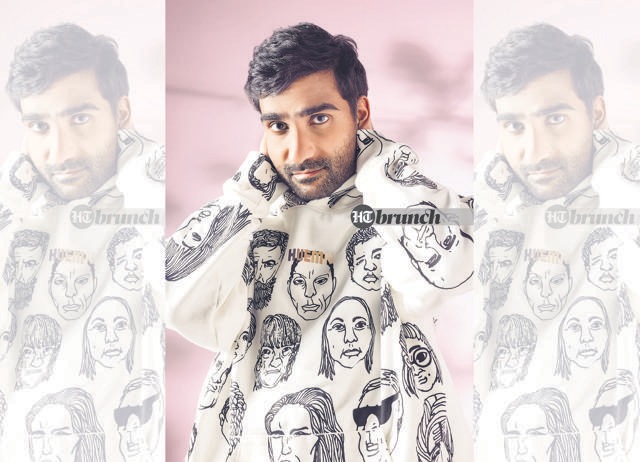
“I was always open to everything. When I say no to certain things, it’s from the perspective of my career. I do very few wedding gigs and private shows because, in India, that means playing covers. And I don’t play covers as a rule. If I do, it will be my decision and a song that I love, a song that truly means something to me. I don’t let anybody dictate my set list. We are very strict about that,” says Prateek, who’s equally particular about how the stage is set up. “I want to make sure that the stuff I am putting out is quality. I do that not because I am trying to be difficult but because I don’t want to hurt my own future. If I start doing stuff that I don’t represent, my fans are not going to respect me. And I’m not going to respect myself,” Prateek points out.
Commercial care
His near-clinical precision pays off because when Prateek Kuhad plays at a wedding, it’s exclusively for people who are super-fans and is an enjoyable affair for everyone.
“I’ve never done a wedding or private show I haven’t enjoyed because it’s a small group of people who are fans, singing along,” he says. “I’ve heard hate stories of artistes playing wedding shows. But you have to be firm and because of that, you will lose shows. So, you need to be patient.”
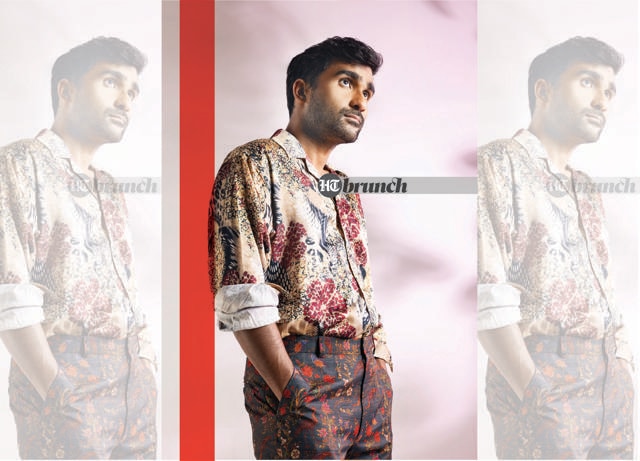
The cold/mess hit-maker is equally specific about his composition process. “When I am writing a song or working in the studio, I don’t think about how my music is going to be listened to and perceived,” he says. His rules are simple: First and foremost, only make music he likes. Writing something he likes gets him excited enough to produce a demo immediately. It’s then built upon during production in the studio. But, in the beginning, the song is just a minimal step in the direction he wants so that it has context right from the get go.
Being aware of one’s skills also has a lot to do with success, which Prateek is testament to. If he starts overthinking things and contemplating how his music will be judged by others, he usually stops writing.
“When you are in the midst of a creative process, you shouldn’t be judging it at all. You should just be doing it in the flow. The judgement comes later,” says the millennial, who only gives his new compositions a listen days, or even months, after he has made a rough draft of it. “That gives me better perspective on if that is something I want to release or not. How people will perceive it is not a primary thought and usually comes much later, if at all.”
Does he feel he’s too hard on himself, like his peers? “I am selective. If I don’t like it, I won’t use it. There was a time when I used to be really hard on myself. I had very black and white views on art and creativity. I would either hate something or love something. I have reached more of a middle ground or come more towards the centre from both ends. I don’t always hate or love. A lot of times I think, ‘yeah, it’s not bad’, and give myself some time to get a perspective on it,” he explains.
Does he still consider himself a songwriter first, and then a musician? “I am definitely feeling more and more like an artiste. And that’s everything. My first love is still songwriting, but, over the years, I have started to appreciate everything I get to do. Playing on stage to a bunch of fans is a privilege. The fact that I have put out music that people truly feel impacted by and feel something through... I appreciate all of it. I like to think myself as more of an artiste now than just a songwriter or composer or performer,” Prateek smiles.

Evolution of sound
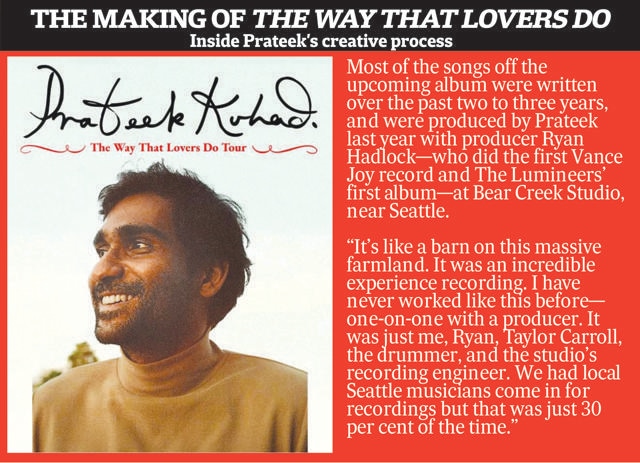
There’s been a lot of talk about Prateek moving away from his “signature sound” in his upcoming 11-track album, titled The Way That Lovers Do, a single from which, Just A Word, released late last month.
“I do everything with an intent except when I try to be creative. I try to keep that as free-flowing as possible. When I was younger, I was a lot more rigid about things. As I have grown as an artiste, I am open to new ideas. And so, the sound has evolved,” he says, denying the suggestion that he intentionally moved to a more pop vibe, and promising some songs reminiscent of his older sound on the new album.
Most artistes tend to gradually move away from their sound because they get bored easily and need to keep trying new things and break boundaries. “It happens naturally but I don’t think it needs to be forced. It’s not about whether what you are creating is working for you or not. It’s about whether you are happy with it,” Prateek adds.
With his new songs, Prateek wants people to think about something he’s been ruminating on lately—the idea of love, and not just the romantic type.
“What does love do to your mindset and attitude when you think of the world from the eyes of a lover? I think it makes you more passionate, kinder and emphatic,” says Prateek.
With his new work, has he given up the title of ‘King of Heartbreak’ in favour of ‘King of Love’? “I don’t want to be the king of anything! But if I have to, then the King of Love is definitely an upgrade. It’s a little less pigeonholing than before!” he laughs.
Follow @kkuenzang on Instagram and Twitter
From HT Brunch, April 16, 2022
Follow us on twitter.com/HTBrunch
Connect with us on facebook.com/hindustantimesbrunch


