
 E-Paper



Humour by Rehana Munir: Woman walks into a strip club…

 Prefer HTon Google


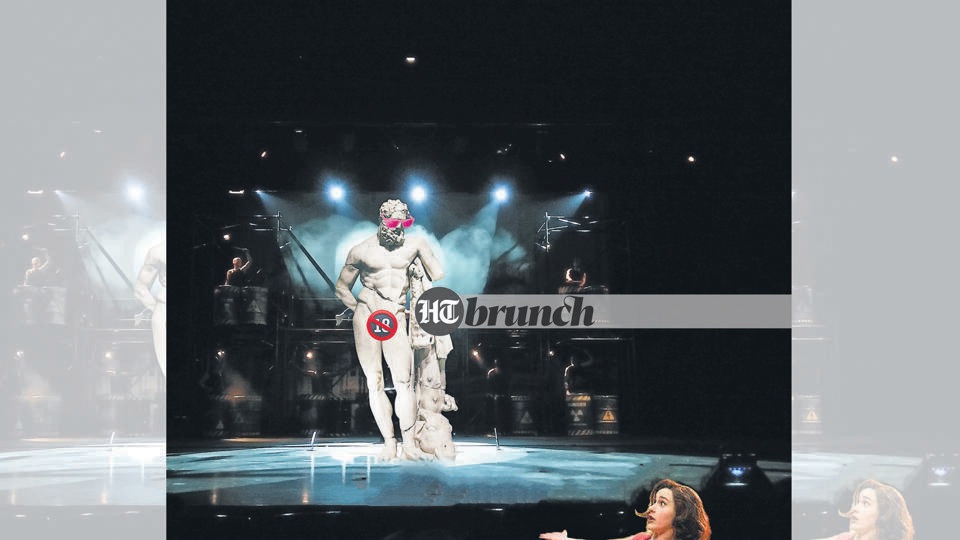
The Marvellous Mrs. Maisel’s new season reignites the conversation around funny women. Have you watched it yet?
A little over two years ago—that golden pre-pandemic milestone—I found myself at a panel discussion at a women writers’ fest. The theme: women writing humour. We briefly chatted about the fact that wit isn’t known to be a turn on for men when it comes to women, while women often say they’re attracted to men who make them laugh. Intentionally. (Women, on the other hand are turned on by funny women, I can gladly confirm.) Watching season four of The Marvelous Mrs. Maisel, the discussion came sniggering back to memory.
The lady is a tramp
It’s 1960 in Maisel’s New York, and our stand-up comic is grappling with a lost job and public humiliation, as well as a broken marriage and two kids to raise. One would take on any work under the circumstances, but Midge is done doing opening acts for big-ticket names. Instead, she ends up at a burlesque show in a seedy theatre. Because that’s where she can tell the jokes she wants to. And so, for most of the season, we see her introducing women strippers in various stages of undress, rolling out expletives to sink her genteel Jewish mother’s heart.
Six decades later, we’ve moved on from wife jokes and blonde jokes (but not really). And female comedians aren’t a curiosity, or worse, an affront anymore. In vintage Bollywood, for instance, women needed to be overweight to elicit a laugh and curves to elicit lust. The heroine, of course, needed to be ‘perfect’. For all those chiffon saris and dreamy eyes, it was Sridevi’s comic bent—starting with her Charlie Chaplin bit in Mr. India (1985)—that made her my favourite in those growing-up years. Who cares about romance and fashion when you’re four? A tramp misaiming darts in a dangerous bar; now that’s a heroine you can really root for.
Equal, not opposite
Women and laughter are a powerful combination. In 1982, novelist Margaret Atwood gave a lecture at the University of Waterloo called Writing the Male Character. An excerpt from the published version: “‘Why do men feel threatened by women?’ I asked a male friend of mine […] ‘They’re afraid women will laugh at them,’ he said […] I asked some women students in a quickie poetry seminar I was giving, ‘Why do women feel threatened by men?’ ‘They’re afraid of being killed.’”
Expect no less impact from the author of the devastating novel and TV series, The Handmaid’s Tale. The patriarchy is no laughing matter. And that’s where humour takes on a most critical function. All shades exist on the laughter spectrum, and women comics are using them hilariously to neutralise the black-and-white landscape of gender inequality. From Mallika Dua to Aiyyo Shraddha, Instagram handles amplify a range of funny women’s voices. Like Midge Maisel, they too are telling the jokes they want to. Until, of course, they’re gagged by the powers that be. In this, at least, there’s equality. You can’t tell a joke that upsets the status quo even if you’re a man.
Comic timing is a girl’s best friend
Diamonds are a girl’s best friend, Marilyn Monroe convinced the world in the musical comedy Gentlemen Prefer Blondes (1953), the title itself a goldmine for gender studies courses. In real life, she kept busy with books between film shoots, leaving behind several unpublished poems after her sudden demise. I begin every new year looking at Monroe’s iconic pictures by pioneering woman photojournalist Eve Arnold: Monroe in a bathing suit, reading a worn copy of James Joyce’s Ulysses on a playground in 1955. Then, I resolve to read intimidating literary classics with Monroesque nonchalance. Haven’t read any recently. But I have bought a new swimsuit, ashamed by the dowdiness of my previous one.
It’s inevitably a trio of British women novelists of Mrs. Maisel’s era that I turn to when I’m looking for a darkly funny time. The wicked Iris Murdoch, twisted Muriel Spark and weary Barbara Pym use humour to excite and incite, deflate and placate. For a quick fix of comic verse, there’s the trusty Wendy Cope. But for that knockout punch, it’s Dorothy Parker, the nihilistic American humourist. Sample this: “Heterosexuality is not normal, it’s just common.” Word.
Follow @rehana_munir on Twitter and Instagram
From HT Brunch, April 9, 2022
Follow us on twitter.com/HTBrunch
Connect with us on facebook.com/hindustantimesbrunch


