
 E-Paper



Rude Food by Vir Sanghvi: Bukhara’s hands-on success

 Prefer HTon Google


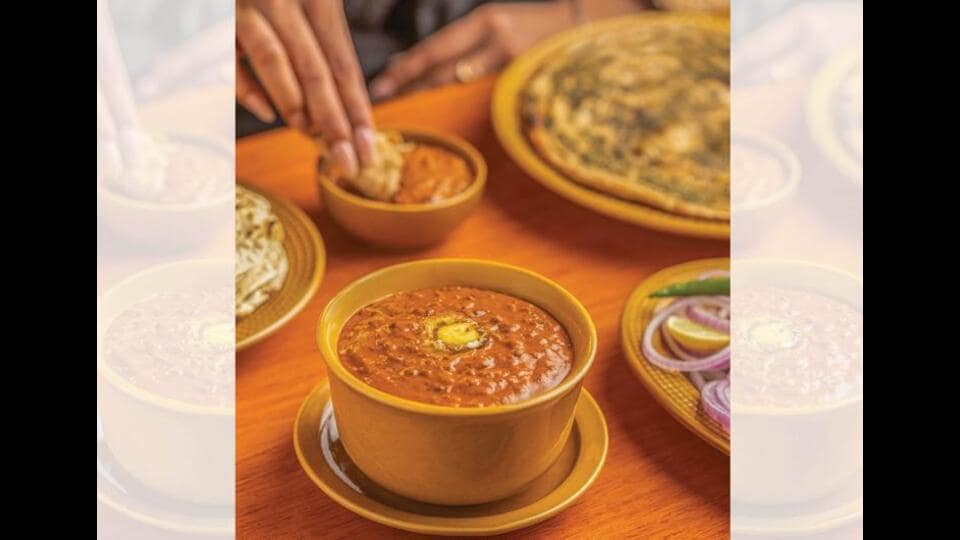
Bukhara, possibly the most famous Indian restaurant in the world, is 45 years old. No rice or cutlery, huge kababs and legendary dal. How do they pull it off?
Bukhara, which will begin celebrating its 45th anniversary this weekend, is now the most famous Indian restaurant in the world. Nearly every US President since Bill Clinton has eaten Bukhara’s food. Clinton called it “a meal of a lifetime” (He ate a lot.) So have many British Prime Ministers, including Tony Blair, who praised the kababs. Bukhara claims that even Prince Philip, hardly my idea of a global gourmet, liked the murg malai tikka.
The restaurant’s fans include such rock stars as Mick Jagger. And as far back as the late 1980s, when the Amnesty Human Rights Tour came to Delhi, the singers went out to dinner at Bukhara the night before the concert. If you were there, you would have seen Bruce Springsteen, Sting, Peter Gabriel and others huddled over a plate of seekh kababs and tandoori chicken.

Among the world’s greatest chefs, it is a legend. Massimo Bottura loved it. So did Mauro Colagreco. When I took Heston Blumenthal for dinner there, it turned out that not only had he been there before, he also knew JP Singh, the chef and the two men had a conversation about the right time to add the yogurt to a marinade. What Heston hadn’t eaten before was Bukhara’s giant naan — designed to overwhelm and engulf adventurous foodies like Blumenthal. (I still have the picture!)
There are thousands of restaurants selling kababs in Delhi. So what makes Bukhara so special? Why do the Clintons insist on eating there each time they are in India? Why did even Donald Trump, whose idea of haute cuisine is a fast food cheeseburger, ask to have Bukhara food sent to his suite? Why do so many foreigners who are not even great fans of most Indian dishes go into raptures when they talk about Dal Bukhara?
It is a hard question to answer. Certainly, no one had expected Bukhara to reach these heights when the restaurant opened in 1978. It was actually an afterthought. AN Haksar, the legendary former chairman of ITC, had long dreamt of opening a spectacular Delhi hotel. Though ITC had other projects (properties in Chennai and Agra) Haksar wanted Delhi’s Maurya to be known for the excellence of its food. He had already hired Imtiaz Qureshi and planned Mayur (the predecessor of Dum Pukht).

But even as the construction of the Maurya neared completion, Haksar felt that the hotel needed a restaurant that was somewhat rustic and not overly sophisticated. He settled on a basic kabab place, which he wanted to call Samarkand. There was no provision for such a restaurant in the original plan, so Haksar carved out a new restaurant from part of the coffee-shop kitchen and the space behind it.
As it turned out, there was a problem with the Samarkand name, so he settled on Bukhara. But he never deviated from his basic concept: He wanted wooden tables and stools and no cutlery on the tables. The food would be served in Flintstones-like sizes. (Even today, a piece of Bukhara’s murg malaikabab is double the size of a chicken tikka at most places and the raan is large enough to sink a battle ship.) The idea was for guests to leave their sophistication and manners at home and rip into the meat with their bare hands.
The mechanics of the food came next. Madan Jaiswal, who had worked at the President Hotel on Asaf Ali Road, was brought in to revise and rethink the traditional kabab menu. Jaiswal began making his chicken tikkas with a little processed cheese (murgh malai tikka); he chose different cuts for the goat kababs and, thanks to Haksar’s deep and abiding contempt for broilers, the Bukhara Tandoori Chicken was made with small free-range birds and without the red food colour that many of us consider integral to the dish.

The origins of Dal Bukhara remain controversial. I have always believed that it was a refined version of the Moti Mahal black dal, which had added tomatoes and dairy products to a traditional Punjabi dal. The great Manjit Gill who was part of the pre-opening team at the Maurya and eventually retired many years later as ITC’s top chef, insists that it was original and different. Jaiswal and the team spent a year getting it right, trying various cooking times and different dals to get the perfect texture. It remains the most copied restaurant dal in the world.
In a sense, Bukhara saved ITC’s bacon. The Maurya opened at roughly the same time as the Taj Mahal hotel on Man Singh Road and the Taj had the more glittering opening, becoming the toast of Delhi. But it had nothing like Bukhara. From the day it opened, Bukhara became Delhi’s top restaurant and was always jam-packed for dinner. It wouldn’t take reservations (it still doesn’t; not after 8pm) so there was always a line of people outside waiting for tables. That was back in 1978, but who would have thought that even today in 2024, the queues would be just as long?

In the early years, Haksar’s successors at ITC tried opening Bukharas abroad (in America and the Far East). None of them was particularly successful, so ITC worked out that whatever it was that made Bukhara special could not be reproduced anywhere else. So it created two new brands, the Royal Afghan and Peshawari. The Royal Afghan is the Bukhara menu served in a partly al fresco setting, and Peshawari is just Bukhara by another name.
Next month, the first global Peshawari will open at the new ITC hotel in Colombo. It will probably be a huge success. But it will not be a Bukhara: There will be only ever be one Bukhara in the world.
For all that, the Peshawaris can sometimes be better than the original. (Bukhara and all the Peshawaris are looked after by the same chef: JP Singh.) When Anil Chadha was general manager of the ITC Mughal, I had dinner with him at the Agra Peshawari and wrote that the food was actually better than Bukhara. So emotionally attached is ITC to Bukhara that its top management eyed Chadha with disapproval as a consequence of my remarks. Fortunately, Chadha, one of India’s top F&B professionals, even in those days, now runs the whole of ITC hotels and continues to be personally involved in all major F&B decisions. I had a brilliant dinner at the Mumbai Peshawari last month and a tandoori lobster at the Chennai Peshawari was exceptional.

But no Peshawari, no matter how good, has ever captured the spirit of its time as Bukhara did when it opened in 1978. That was when Delhi’s Punjabis had just begun making big money, many of them starting from scratch having come over from Western Punjab with nothing after Partition. They longed for a place where they could tear their naans apart, chew contentedly on their kababs and if they dropped dal on themselves, it did not matter because Bukhara provided bib-like aprons.
It’s the grandchildren of the original Bukhara customers who now occupy those seats and wear those bibs. They have all become so successful that they don’t mind that prices are many times what they were in their grandpa’s time.
They like the fact that the menu has remained mostly unchanged since 1978 and that the Maurya has kept the little rules that the restaurant opened with. Not one grain of rice has been served in Bukhara since 1978. No pickle is put on the table. (“You don’t need it”.) Cutlery is only provided if you ask for it. Naans and parathas are served whole; never cut into halves or thirds. (Nothing is cut at Bukhara. It has to be torn apart by hand.) They may offer extra butter but you won’t get a garlic naan. There are no gravy dishes, though if you are a regular, you can order the semi-wet Chicken- Khurchan which is off-menu. There was once (briefly) butter chicken on the menu, but it was suddenly removed.(I am still ambivalent about that. Why not try bringing it back?)
The Maurya has huge celebrations planned for the 45th anniversary. They won’t tell me what form these festivities will take. But no, they won’t be making any changes to the menu. Not to the left side of the menu which has remained largely unchanged since 1978. And sadly, not to the right side either which could do with a little celebratory discounting!


