
 E-Paper



Sunday Drive by Hormazd Sorabjee: Maha Mahabaleshwar test

 Prefer HTon Google


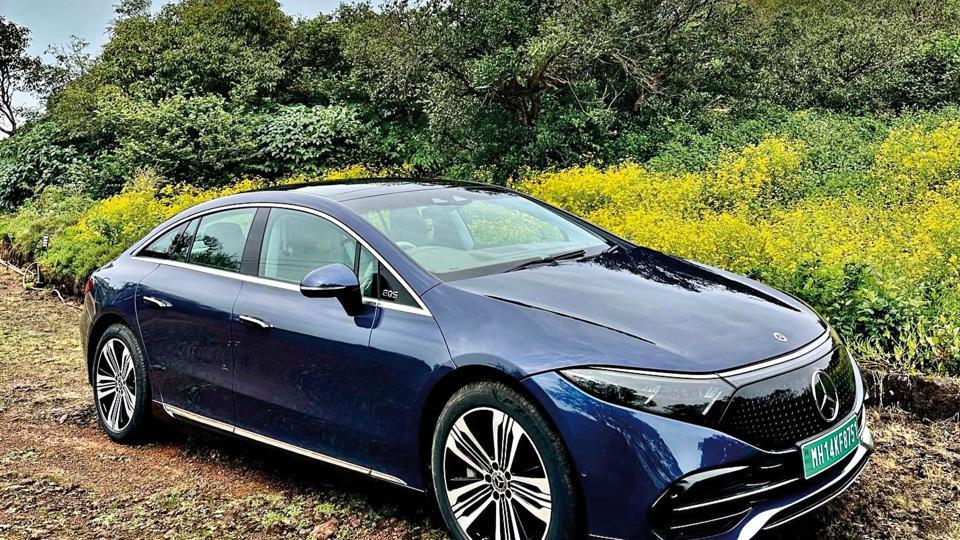
The last time I took an electric car to Mahabaleshwar, I almost never made it
The last time I took an electric car to Mahabaleshwar, I almost never made it. The car in question was the Mercedes EQC, which had a claimed range of 400 km, and hence should have been able to easily do the 280 km drive to the hill station on a single charge. As it turned out, that was wishful thinking. Some 20 km from my destination, I had to make an emergency stop in Panchgani and hunt for a 15 amp plug point to charge an almost empty battery.
Conversely, the return journey was without any drama and, after charging the battery to a 100 per cent, the EQC did the exact same distance back with over 20 per cent charge left. Why such a difference? In a word, gravity.
Sea change
Take a walk on some of the beautiful trails in Mahabaleshwar and you’ll know how much energy you expend going uphill. It’s the same with a car, which consumes more fuel or battery (if it’s an EV). It’s just that you don’t really care in a car with an engine, because a fuel pump is right around the corner if you need to tank up. But in an EV it’s not so simple. Charge points are far and few between and what is a two minute fill-up in a regular car could take half an hour at least with a plug.
It’s this altitude change from sea level to 4,500 feet above that makes the Mumbai-Mahabaleshwar a brutal real-world range test for any EV. The climb up to the hill station via three ghats is a real range killer and very difficult for mainstream EVs like the popular Nexon EV and MG ZS EV to do in one shot.
But if there is a car that can do the ‘maha’ Mahabaleshwar test, it’s the newly launched Mercedes EQS 580, which has a claimed range of 857 km—the highest of all EVs on sale in India.
Notes in the margin
That it would comfortably do the journey in one shot I had no doubt, but just how comfortably is what I wanted to find out. And comfort is a byword for the EQS. Sure, it’s no S-Class in the back seat, but up front it’s phenomenally comfortable, thanks to the softly sprung and adjustable air suspension and the whisper-quiet electric drive that puts the driver at ease like no other limo. For a 5.2-metre-long car, it’s surprisingly nimble, courtesy the rear wheel steering, which cuts the turning circle to make parking and driving on narrow roads less cumbersome.
Blasting up the Wai Ghat, the EQS darts from corner to corner and seems to shrink the faster you go. There’s no dearth of power and the humongous 855Nm of torque simply rockets you forward, making this a genuinely fun car to drive as well. And the best part is, I don’t have to worry about saving range by reducing my speed to a crawl.
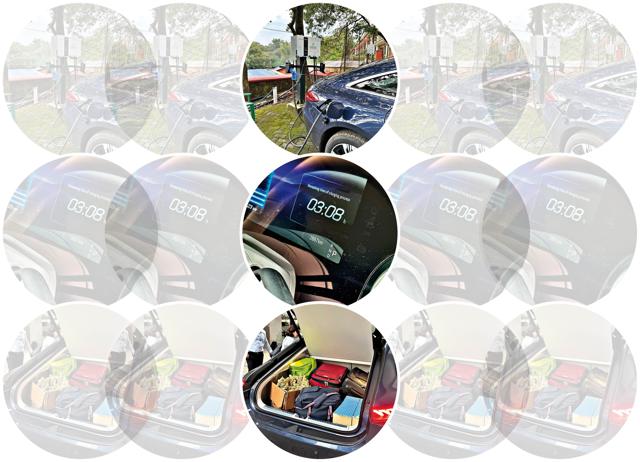
The last 30 km to Mahabaleshwar is all uphill and a real battery killer but the EQS’s 107.8 kWh battery is far from drained. I make it to Mahabaleshwar with a good 33 per cent of charge left, which is a fantastic margin.
Goodbye anxiety
The drive to Mahabaleshwar also addressed another concern—ground clearance. Large speed breakers need to be treated with respect in the low riding EQS and the suspension’s lift function, which raises the car by a vital few millimetres, is absolutely indispensable. With the car raised, the EQS managed to tiptoe over rocky roads without hitting the underbody, which is quite reassuring.
The Mahabaleshwar drive also drove home the reality of public charging. Close to where I was staying, there was just one Tata Power fast charger, which wasn’t actually fast. The 25kW charger, which is meant for mass EVs with smaller batteries, is too slow for the big EQS, and took a good three hours to charge from 33 to 100 per cent. Also, the sole charger near the Mahabaleshwar market was pretty busy and I had to queue behind a Nexon EV and wait my turn.
Charging takes time and requires proper planning, but that’s something you accept in these early days of the EV revolution. Every year, the charging network is getting better and so are the cars. The fabulous EQS, the best electric car in the market today, is proof that EVs can be used as long distance cruisers. For the record, the return downhill journey used up only 47 per cent of the battery. Range anxiety will soon be a thing of the past.
The views expressed by the columnist are personal
From HT Brunch, November 12, 2022
Follow us on twitter.com/HTBrunch
Connect with us on facebook.com/hindustantimesbrunch


