
 E-Paper



Glass vs ceramic vs non-stick air fryers: Which is actually safest for everyday cooking?

 Prefer HTon Google


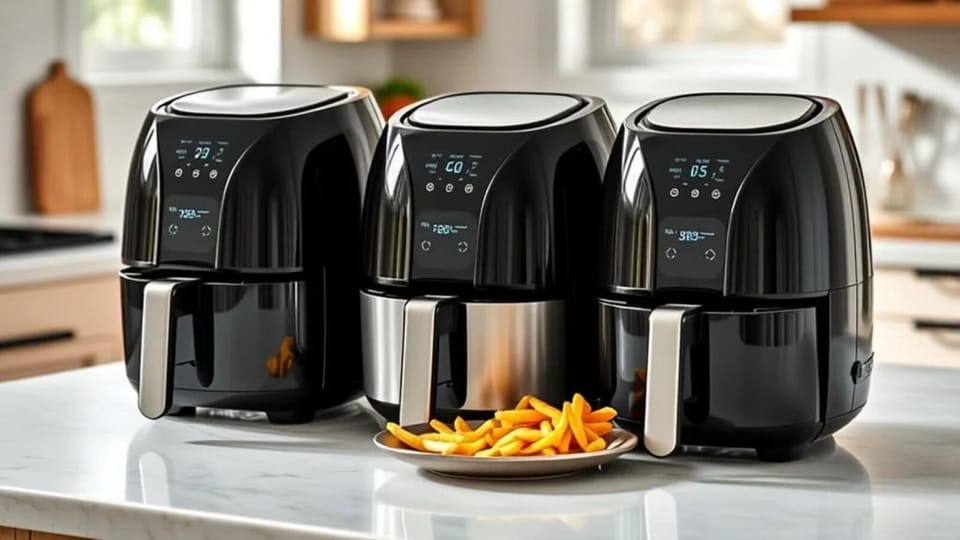
Glass, ceramic or non-stick air fryers? Understand the safety, heat resistance and coating differences to choose the right one for everyday cooking.
Air fryer shopping used to mean comparing capacity and wattage. Now it means picking a cooking surface material too, with glass, ceramic and traditional non-stick baskets all competing for the same counter space, each with a different pitch about why it is the better choice. Here is how they actually compare, beyond the marketing.
Quick Answers
| Questions | Short Answers |
|---|---|
| Which material has zero coating-related chemical concerns? | Uncoated glass or uncoated stainless steel, since there is no coating present at all. |
| Is ceramic coating PFAS-free? | Usually yes, ceramic coatings typically use a different, silica-based chemistry than PTFE, though this varies by manufacturer. |
| Which is easiest to clean? | Glass and stainless steel resist buildup better long-term; a fresh non-stick or ceramic coating is easiest when new. |
| Which is most durable long-term? | Glass and stainless steel, since there is no coating to wear off over years of use. |
| Which cooks food most evenly? | This depends more on the appliance's heating design than the surface material itself. |
| Which is heaviest? | Glass, generally, though this varies by specific product design. |
| Which is cheapest? | Traditional non-stick (PTFE-coated) baskets, by a meaningful margin in most markets. |
The Three Materials, Side by Side
| Non-Stick (PTFE) | Ceramic-Coated | Glass (Uncoated) | |
|---|---|---|---|
| Coating present | Yes, PTFE | Yes, typically silica-based | No coating, uncoated surface |
| PFAS/PTFE content | Yes, PTFE is a PFAS compound | Usually none, but varies by brand | None |
| Degrades with high heat | Yes, above ~260°C | Can lose non-stick properties over time with high heat | No coating to degrade |
| Scratch resistance | Poor, damaged easily by metal utensils | Moderate, better than PTFE but still coating-based | High, no coating to scratch off |
| Typical lifespan | 1 to 3 years with regular use | 1 to 3 years, similar wear pattern to PTFE | Long-term, limited mainly by impact damage |
| Sticking without oil | Best non-stick performance when new | Good when new, worsens with wear | Requires a light coat of oil for best results |
| Weight | Lightest | Light to moderate | Heaviest |
| Visibility during cooking | Usually none, opaque basket | Usually none, opaque basket | Full visibility through clear glass |
| Typical price | Lowest | Mid-Range | Highest |
Non-Stick (PTFE) Baskets
This is still the most common air fryer surface by a wide margin, and for good reason: it releases food easily even with little or no oil, it is inexpensive to manufacture, and it works well when new and properly cared for. The trade-offs are the ones covered in detail in are air fryer coatings safe: PFAS, PTFE and PFOA explained: the coating is a PFAS compound, it degrades with high heat or physical damage, and it has a finite lifespan before it needs replacing, typically one to three years of regular use.
If cost and convenience are your priorities and you are comfortable with proper care (no metal utensils, no empty preheating on high heat, replacing the basket when it visibly wears), a PTFE basket remains a perfectly functional choice for millions of kitchens.
Ceramic-Coated Baskets
Ceramic coatings are usually marketed as the "safer non-stick," and for most products, this is accurate: they typically use a silica-based coating chemistry rather than PTFE, meaning no PFAS compound in the coating itself. They offer good, though not identical, non-stick performance to PTFE when new.
The catch is durability and consistency across brands. Ceramic coatings tend to lose their non-stick effectiveness faster than PTFE with regular high-heat use, and because "ceramic-coated" is not a single standardised material the way PTFE is, actual formulation and quality vary meaningfully between manufacturers. If you choose this route, check the specific product's material disclosure rather than assuming every "ceramic" label means the same thing.
Glass (Uncoated)
An uncoated glass bowl, like the one used in EDT's LUMA (detailed in the LUMA air fryer guide), sidesteps the coating question entirely: there is no PTFE, no ceramic layer, nothing to scratch off or degrade under heat, because there is no coating to begin with. The bowl itself, typically borosilicate glass chosen specifically for its resistance to thermal shock, is the cooking surface.
The trade-offs are practical rather than chemical. Glass needs a light coat of oil for best results, since it lacks any non-stick surface treatment. It is heavier than a comparable metal basket, which matters for lifting and pouring hot food. And glass air fryers, being a newer category with fewer manufacturers, tend to sit at a higher price point than mass-produced coated alternatives.
The upside beyond the coating question: full visibility into the cooking chamber while it runs, no coating wear to worry about over years of ownership, and straightforward cleaning with standard dish soap or a dishwasher, without needing to protect a delicate coated surface from scratching.
Cooking Performance: Does Material Actually Change the Food?
This is worth being honest about: the cooking surface material has a smaller effect on how food actually turns out than the appliance's heating design, airflow, and temperature accuracy. A well-designed glass or ceramic air fryer and a well-designed non-stick one can produce comparably crispy results. Where material does matter directly is release (how easily food comes off the surface without sticking or tearing) and maintenance (how the surface holds up over months and years of use), not the fundamental crispness or doneness of the food itself.
How to Choose
Choose non-stick (PTFE) if: budget is the top priority, you are comfortable with proper care and periodic replacement, and coating chemistry is not a personal concern.
Choose ceramic if: you want a PFAS-free coating with strong non-stick performance and a lower price point than glass, and you are prepared to replace it on a similar timeline to a PTFE basket.
Choose glass if: avoiding coatings entirely is a genuine priority for you, you value being able to see food cook, and you are comfortable with a heavier bowl and a higher upfront price in exchange for a surface that will not wear out or need replacing due to coating degradation.
Frequently Asked Questions


