
 E-Paper



Ash from Ethiopia’s Hayli Gubbi volcanic eruption has reached Delhi skies. Here's what precautions you should take

 Prefer HTon Google


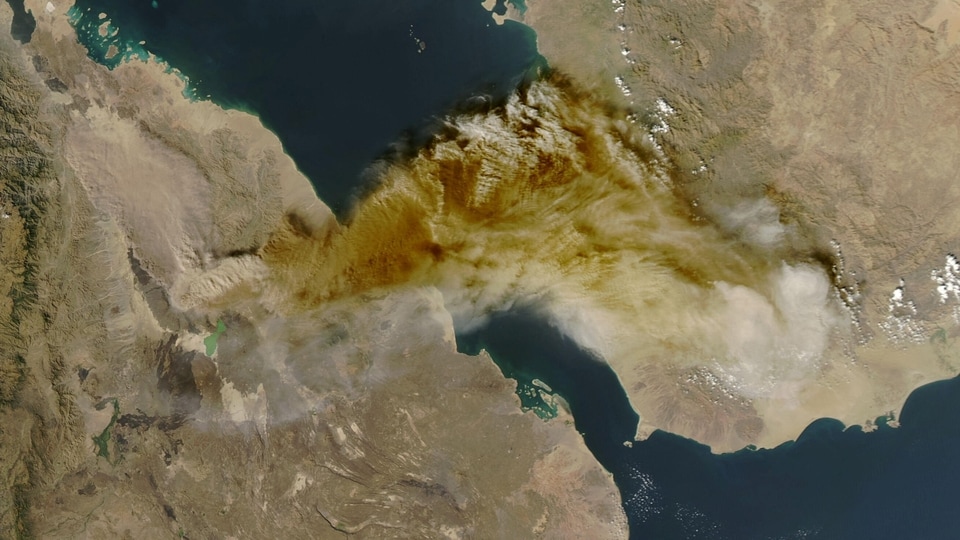
As the Hayli Gubbi volcano released a massive ash plume now drifting over northern India, meteorologists outline expected impact and safety steps.
A volcano in northern Ethiopia erupted for the first time in nearly 12,000 years, sending a high column of ash into the atmosphere and pushing meteorological agencies across regions into alert mode. Fast upper-level winds carried the debris thousands of kilometres, with the cloud briefly passing over parts of western and northern India.
How the ash moved across regions
The eruption came from the Hayli Gubbi volcano in Ethiopia’s Afar region on Sunday morning. The plume rose as high as 14 km. Winds at nearly 100-120 km/h moved the ash across the Red Sea, Yemen, Oman, and then over the Arabian Sea toward Gujarat, Rajasthan, Delhi, Haryana and Punjab, per indiametsky.
India’s IMD said the ash travelled only in the upper layers of the atmosphere. By late Monday, the cloud had drifted toward China and began dispersing.
IMD DG M. Mohapatra told Hindustan Times that the impact on Delhi’s air quality was expected to be minimal because the ash was not mixing with surface-level pollution. Residents would mainly notice a hazier sky for a few hours.
A final update from Indiametsky noted the plume has now moved away, leaving only fine dust lingering at high altitudes, with no threat to people on the ground. A faint trace of SO₂ (sulfur dioxide) remains around 40,000 feet but is expected to clear.
Also read: As Ethiopian volcanic ash reaches Delhi, will it impact air pollution? What experts said
Health effects linked to volcanic ash
The International Volcanic Health Hazard Network (IVHHN) says exposure to volcanic ash can trigger breathing issues, eye discomfort, skin irritation, and indirect problems like reduced visibility. Risks increase when ash is resuspended by movement or wind.
Protective steps for residents
IVHNN advises limiting driving. Staying indoors is recommended until conditions stabilise.
Homes should be sealed by keeping doors and windows shut. People conducting clean-ups are urged to use proper dust masks. A cloth mask is acceptable when nothing else is available. Those with asthma, chronic bronchitis, or emphysema should avoid exposure.
Goggles help protect your eyes. Lightly ash-tainted drinking water is usually safe after filtering, though rainwater systems should be covered. Vegetables from fields can be eaten after washing. Children should stay indoors and avoid strenuous activity if ash is present.
The event is unusual, but surface-level risk in India is low. Precaution is still recommended until the skies clear fully.
FAQs
Will volcanic ash affect Delhi’s air quality?
IMD says the ash remains in upper air levels, so a significant surface-level impact is unlikely.
Is the Ethiopian ash cloud dangerous to breathe?
At ground level, no immediate threat is expected; health risks mainly occur when ash settles closer to the surface.

Catch your daily dose of Fashion, Taylor Swift, Health, Festivals, Travel, Relationship, Recipe and all the other Latest Lifestyle News on Hindustan Times Website and APPs.


