
 E-Paper



Diagnosed with terminal cancer at 32, given 100 days to live: Arjun Sen is a 'cancer winner' who never gave up on life

 Prefer HTon Google


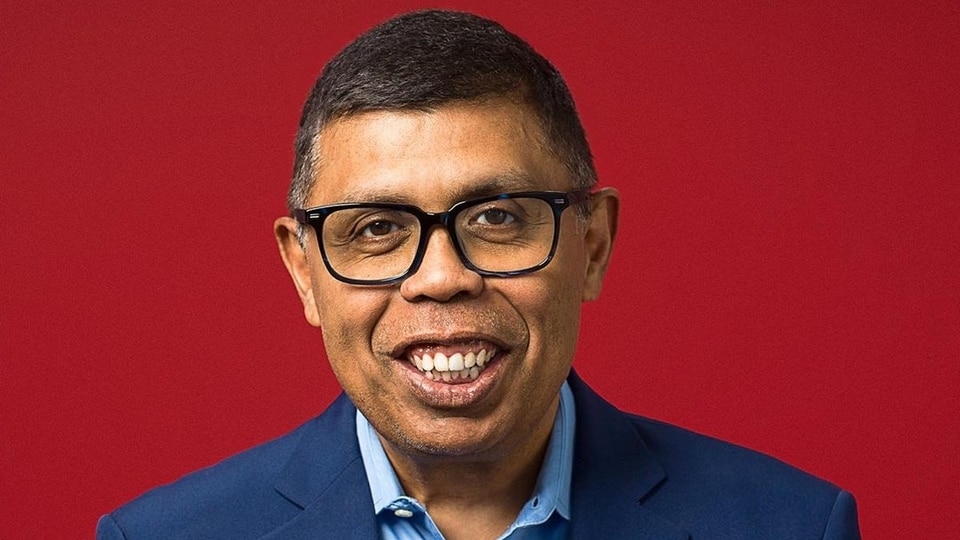
Surviving cancer: Insights from Arjun Sen, who inspired Shoojit Sircar’s film I Want To Talk, on having a healthy mindset during and after cancer treatment.
Health is a deeply personal topic, and sharing personal health experiences publicly can be a double-edged sword. On one hand, it can help people feel less alone, build community, and inspire others. On the other hand, it can also expose them to unwanted opinions, unsolicited advice, and harsh criticism. Arjun Sen, 61, believes in the former. Also read | Oncologists reveal who is more at risk of aggressive prostate cancer, explain why early detection is crucial
His story is truly remarkable and a testament to the human spirit's capacity for resilience and determination. Diagnosed with terminal cancer at 32 and given just 100 days to live, Arjun defied the odds and lived for over two decades after his diagnosis. What makes his story stand out is his mindset shift and the life he built after his diagnosis. Today, he prefers to call himself a 'cancer winner' rather than a survivor. He believes that winning is about thriving, not just staying afloat.
In an interview with HT Lifestyle, Arjun, who inspired Shoojit Sircar’s 2024 film, I Want To Talk, spoke about everything he has learnt since his cancer diagnosis. Here are the excerpts:
1. What would be your advice on a healthy mindset and belief during cancer treatment?
It's not easy to do, but it takes the same mindset before you or anybody in your family is going through cancer treatment. A very important fact, the mind is always cancer-free, and the mind can get us through. This is incredibly important if somebody in your family is going through cancer because when they talk to you, if they see fear in your eyes and if your care is coming across as empathy, sympathy, it weakens them. Live life cancer-free even during cancer treatment because the mind is always cancer-free.
2. Instead of 'cancer survivor', do you prefer being addressed as 'cancer winner'. If yes, why?
I don't prefer, I insist because I am. Because the fact is, there will be one day I will lose, but till that day, I will win. And that is the mindset which is very important. I think when India was playing champions trophy and I think it was either Hardik (Hardik Pandya) or Surya (Suryakumar Yadav) talked about it later when South Africa only needed 30 runs in 30 balls they felt there are teams that have come and won from there nearly impossible in today's IPL and cricket you know T20 format they believed that they are a winner and that's the reason they won otherwise they would have given up the same way I think it's very very important for us to see we can win because the game is over. The moment your shoulders droop and you give up. It's over. And this also makes me appreciate the winds. The winds are not just mine. It's every person around me. And together the fist pump comes out, and I look forward to that next fist bump every day.
3. As family and friends, what do you think is the best way to support someone with cancer?
This is tough, not because of what I go through, but because it’s harder to watch the people I love face challenges. In that situation, you carry a responsibility. First, don’t be in denial. Don’t pretend nothing is happening. Acknowledge reality. Second, don’t lie to yourself that tomorrow will automatically be better. It might not. Tomorrow could be worse. The day after, even harder. But your love, care, and support must stay constant, unconditional and strong through it all. Third, listen. Let the person speak. You’re not an expert, but you’re close to their heart. That’s powerful. Create a space for them to open up. Help them seek advice, get support, and take steps forward with your presence beside them. And fourth, celebrate the small things. I remember when I started losing my hair. It wasn’t about vanity. I've always hand-combed my hair, never used a brush or a comb. What bothered me was the loss of control. So one day, I got some friends together, turned on my favourite movie song, grabbed a buzzer, and we shaved it all off. 'Zindagi hasne gaane ke liye hai pal do pal ise khona nahi kho ke rona nahi'. We created a moment I still carry with me. Challenges like cancer shouldn't define your life or darken every day. Acknowledge them, but don’t hand over the reins. Take charge. Smile. Celebrate the time we have because the truth is, life offers no guarantees to anyone, with or without illness. This isn’t negativity. It's a deep appreciation for the present.
4. Have you learnt any cancer prevention tips? What do you think people can do daily to reduce cancer risk?
This is way beyond my comfort zone. I'm not a doctor or a medical expert. But I needed to ask this question because it’s about my daughter. I wanted to know: is she at risk? What are her chances? That’s when I started learning. Some risks are congenital. Others come from external factors like exposure to radiation or certain environments. I don’t fully understand all of it, but one thing became very clear: you have to do what you can. From what I’ve learned, even with limited knowledge, family history is crucial. If there’s a history of colon cancer, get a colonoscopy earlier. If there’s a history of breast cancer, take the necessary steps early on. It’s not about living in fear; it's about not living in denial. It’s about being prepared if something happens. That readiness matters. And beyond that, maintaining healthy habits, something I didn’t take seriously earlier in life, is absolutely essential.
5. Did your experience with cancer change the way you lead teams or approach your professional life?
Absolutely. Before I share anything, I want to be clear that this isn’t coming from a place of defeat or a negative mindset. I say this with deep appreciation for the present. I live every moment with the awareness that I’m fortunate to be here. Things could’ve turned out differently, but they didn’t, and because I am here, I want to make the most of it. Being present also means recognising that people are not disposable. You can be assertive. You can disagree. But disagree with an idea or an action never with the person. Always maintain care and love for the human being in front of you. That’s incredibly important, especially when you're going through difficult times. Another thing I’ve learned is the importance of self-love. The message was always there every time I got on a plane: Put your own oxygen mask on first before helping others. If I’m choking, I can’t help the person next to me. That’s not selfish, that's survival. That’s love in action. And here’s a small, goofy example: every day, I used to think what can I cook for my daughter? What can I make for my wife? Recently, I asked myself: What can I cook for Arjun today? That’s me. I’m 61, and I’d never even considered cooking for myself. Now, I do. So be present. Value every person, and that includes yourself.
6. You’ve worn many hats: author, keynote speaker, marketing leader. How has your personal journey influenced your professional storytelling?
Everything changed when I met one of the top professional golfers. I realised that from the age of five or six, he had been putting in nearly 15 hours a day, almost every day, just to maintain and improve his skills. That was an eye-opener. It made me realise that whatever we choose to do, we have to invest in it. That investment is something we owe ourselves because it’s rewarding to improve. And we owe it to others because what we give should be worthy of them. One area where this really struck me is storytelling. Earlier, I thought storytelling meant me sitting down and reliving my old memories and you, poor you, having to listen to Arjun ramble on. But that’s not storytelling. Storytelling is a gift. It has a purpose. Every story has three parts. What. So what. Now what. What is the story itself about what happened? It might not matter to everyone on its own. So what is the meaning of what I learned from it? Whether it was during cancer, corporate life, or personal challenges what did I take away? But then the power happens, is now what? Now what is I'm bringing to you now what is when I'm sharing to you by saying you know this is what I've learned is if I take it outside me in your life if you similar situations you may be able to do this now that is value to you storytelling is my gift to you and yours to others So there's a bridge, connection and the person can do something with the gift. That's better storytelling.
7. As a leader and mentor, how do you engage with Gen Z employees differently than previous generations?
I walk into conversations with Gen Z with a very different mindset. I assume I’m entering a room filled with people smarter than me, people about whom I’ve had misconceptions, mostly out of ignorance. And it’s important to admit: I’m the one who loses if I don’t challenge those stereotypes, if I don’t correct my lack of understanding. The power today lies with Gen Z. What I’ve learned is that they’re wired differently. But instead of trying to understand that, we often brand them with broad labels: lazy, detached, indifferent. These labels are convenient. They let us avoid doing the work: embracing, approaching, listening, and learning. Let me give you a simple example, and you decide who’s wiser. I’m 61 years old. My generation grew up believing retirement came at 60, 65, or 70, whenever corporations or governments told us we’d receive our benefits. That was the plan. That was the box we lived in. Most Gen-Zs I know? They’re planning to retire at 42, 45, maybe 50 — on their terms. They want to build a life where post-retirement is not the end, but a celebration. They want to live with intention, not wake up one day with no idea what to do next. So, who’s more evolved? You already know the answer. This is why I believe just walking in with an open mind and truly listening has enriched my world. I don’t have to agree. I don’t have to change. But I do need to be open. And when people in my generation fail to do that, it’s their loss, not Gen Z’s.
8. What’s your message to Gen Z on embracing the ‘unquit mindset' in a world of burnout and self-doubt?
Let me break it down. First, free yourself from two things. One: you are not responsible for what others do or what’s happening around you. If you were, you’d be God. But you're not. You're human. That means you can make mistakes and that’s okay. Two: detach from the past. Too often, we dwell on it, try to relive it, or worse, try to change it. Like a batsman who gets out and walks away replaying the shot in his head, thinking, ‘If I had moved the bat this way…’ it’s over. You’ll never get that ball again. Go back, practice, learn, and move forward. So, before you embrace the ‘unquit mindset’, let these two truths sink in: you’re not responsible for others’ actions which frees you. The past is only useful for two things: learning and celebration, nothing else. Now you're in the present. And here’s the reality: adversity is guaranteed. When it comes, there are three things you must build: Resilience, like a punching bag that pops back up each time it’s hit. That’s your comeback strength. Perseverance: resilience isn’t enough. You must also move forward. Get up, shake it off, and keep going. Positivity: sprinkle optimism in your journey. It fuels you and helps you recognise your progress. Together, resilience, perseverance, and positivity create momentum. Appreciate yourself along the way. Prepare. Celebrate even the small wins. Let me leave you with one simple rule: in any situation, act & never react. Reactions are instant and emotional. Acting means pausing, reflecting, and choosing your response. Even if it takes a day or two to wait. It’s worth it. When I first learned I had cancer, I didn’t react. I went quiet for two days. Sat in darkness. I waited not out of fear, but for clarity. And when I acted, it came from a place of strength. Lastly, remember this: you are never alone. Reaching out is not a weakness. Asking for help is strength. Vulnerability means you’ve accepted who you are, and that’s how you rise.
Note to readers: This article is for informational purposes only and not a substitute for professional medical advice. Always seek the advice of your doctor with any questions about a medical condition.


Catch your daily dose of Fashion, Taylor Swift, Health, Festivals, Travel, Relationship, Recipe and all the other Latest Lifestyle News on Hindustan Times Website and APPs.


