
 E-Paper



I Have Terminal Cancer. This Is How I Broke the News to My Children.
Young people usually know when something is wrong. Without parental guidance, they are left to worry and wonder on their own.


 Prefer HTon Google


After dinner one night recently, I told my 7-year-old son that I’m sick. He was in the middle of drawing a dinosaur. He looked up at me and announced confidently, “No, you’re not!”
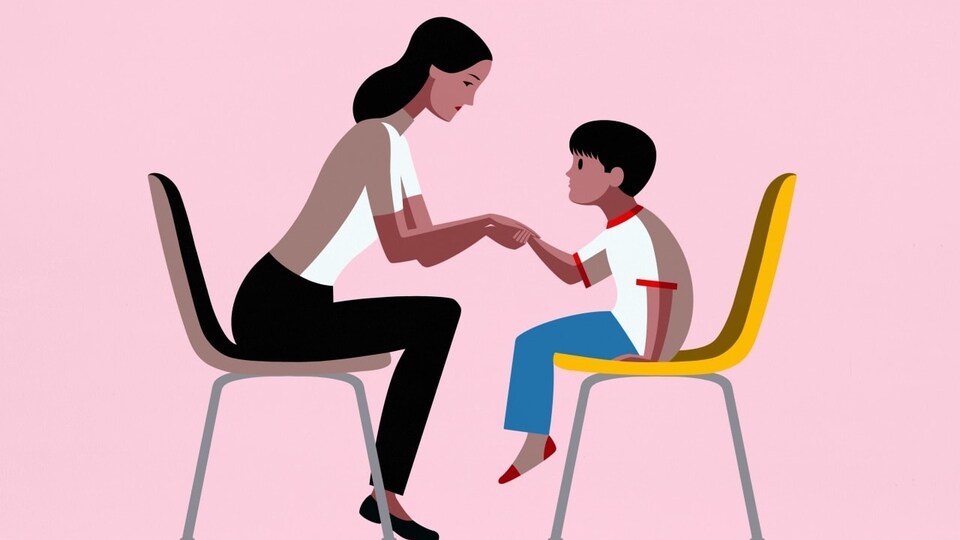
I don’t look sick, which makes it confusing. I explained that I’ve been living with a disease called cancer for five years, and it happens when some cells in the body grow faster than normal. “I know all about cells!” he declared triumphantly. I told him no one caused it, he can’t catch it and that, regardless of what happens, I’ll love him forever.
He listened intently, then went back to drawing. He didn’t seem upset—a huge relief. But a few hours later, he asked incredulously, “So you’ve been sick since I was two?!”
In early 2020, I was diagnosed with a grade 2 Oligodendroglioma, a slow-growing but terminal brain cancer, which has a median survival of 10 years. I was 37. The hardest part wasn’t the surgery, which left me weakened physically and cognitively, or the stressful quarterly scans. It was the idea of telling my children, who were 2 and 6. How do you tell your kids you won’t always be there for them? Was there any way to spare them the pain of losing a parent, or of knowing it would come too soon?
My parents never talked about my brother’s illness or his untimely death, when he was 18 and I was 15. Their silence left me anxious—and later, angry. Children are sensitive to changes in the atmosphere. They know when something is wrong, even if they don’t know what it is. Without parental guidance, they are left to worry and wonder on their own.
“If we don’t tell them, they have to cope with their anxieties by themselves,” said Dr. Alan Stein, a professor of child and adolescent psychiatry at the University of Oxford. It is usually better for parents to discuss hard things with their children, he added, so “they can get the kind of support they need.”
Just over 4% of children in the U.S. lose a parent before they are 18, according to census data. This can lead to mental health problems, including anxiety, depression and substance abuse. But research published in The Lancet in 2019 found that the children of parents who spoke honestly about their life-threatening diagnoses fared much better, with lower levels of anxiety and depression.
“Children who receive open communication regarding their parents’ illness seem less angry and more trusting of their parents than those who are kept in the dark,” said Meredith Cammarata, head of Memorial Sloan Kettering’s Talking With Children About Cancer Program. “Parents often come back relieved and say the conversation went far better than they had expected.”
Yet knowing you should talk to your children about your diagnosis and finding the courage to do so are very different things. I put off telling my son for five years, rationalizing that I didn’t want him to lose his innocence and sense of safety. That night at the dinner table was the first time I’d said the word “cancer” to him. It was a relief.
I told my 11-year-old daughter on a walk. She knows I have brain cancer, but I didn’t discuss the details until early this year. It was more challenging than the brief chat with my son. She’s older and bright and sensitive. She’s starting to develop a deeper understanding of life and is increasingly online, where information can be darker than reality. She also draws sinister and wholly inaccurate conclusions from the random snippets she catches from my phone conversations with my doctors.
I put my discomfort aside and explained my diagnosis, assuring her that I have a relatively slow brain cancer, which doctors are scanning regularly for changes. I was met with silence. Then, a question: “Are you going to die?”
“I don’t know,” I responded truthfully. But I explained that I trust my doctors to keep me alive for as long as possible, and added, “if you have any questions in the meantime, please come directly to me. I promise not to hide anything from you.”
Young children process difficult news differently from adults. Clinical experts at the Child Mind Institute, a pediatric mental health nonprofit, warn that grieving children “may go from crying to playing. That’s normal.” My son returning to his drawing was his way of coping with his feelings.
A child’s understanding of death and dying evolves with time. With very young children, Stein says parents may emphasize the seriousness of a condition and the importance of treatment without raising the matter of death unless asked.
Stein warns that children between the ages of 5 and 7 tend to feel guilty when bad things happen, so parents should emphasize their blamelessness. He recalls one 7-year-old boy who admitted he believed he had caused his mother’s death. Older children have a more nuanced understanding of cancer and the future, but they also worry more.
Regardless of age, “all children need honesty, routines, a reliable caregiver and unconditional love,” said Cammarata.
It is important to be upfront about any behavior or mood changes that come with treatment. When my son said, “mom takes a lot of naps,” I explained that the strong medication I’m taking makes me tired, not that I don’t want to spend time with him.
If I need to be in the hospital, I make sure to prepare my children for changes to our usual schedule, like if my husband will be picking them up from school or if they’ll be spending the weekend with grandma.
School is where a lot of life happens for kids, which makes these spaces critical for those with a sick parent. One of the first things I did upon learning of my diagnosis was to tell my children’s teachers what’s going on, to make sure the kids got extra support.
I wish I could always be there for them, but no parent can protect their children from heartache forever.
What I can do is carry on with ordinary acts of mothering—acts that feel increasingly sacred now. I cook their meals. I pack their snacks. I help them with their homework. I tell them bedtime stories and tuck them in bed. In the park, I feed turtles with my son and share his excitement as he chases fireflies. On weekends, I walk my daughter to Sephora and commiserate with her about the latest school drama.
I’ve come to see that the best gift I can leave my children is my love—a love vast enough to transcend time and space—which I’m making sure they will always know and feel even when I’m gone.
Sundas Hashmi is a writer who formerly worked in finance and public policy.
Catch your daily dose of Fashion, Health, Festivals, Travel, Relationship, Recipe and all the other Latest Lifestyle News on Hindustan Times Website and APPs.


