
 E-Paper



Here's how better-fitting face masks greatly improve Covid-19 protection
A recent study found that poorly fitting N95 masks can have substantial leaks around the face that reduce their effectiveness and increase the risk of infection.


Poorly fitting face masks greatly increase the risk of infection from airborne diseases like COVID-19, compared to custom-fitted masks, according to a study.
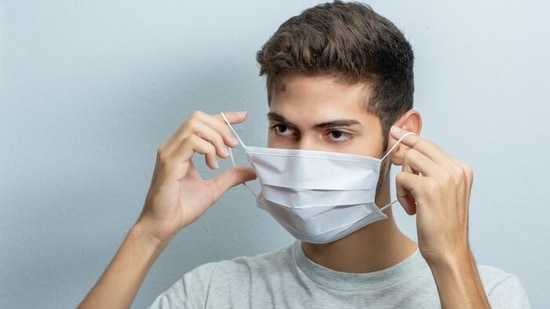
Researchers at the University of Cincinnati in the US used CT scans of three different-sized face masks attached to three different-sized dummy heads to measure the gaps between the face and the fabric.
They then calculated the leaks from these gaps to determine the infection risk.
The study, published in the journal Scientific Reports, found that poorly fitting N95 masks can have substantial leaks around the face that reduce their effectiveness and increase the risk of infection.
"Many people do not realise that the fit of face masks can vary. There are different face shapes and different sizes of masks," said Rupak Banerjee, a professor in UC's Department of Mechanical and Materials Engineering.
"If you do not match them well, you can lead to greater leaks and higher risks of infection," he said.
Banerjee collaborated on the study with his former students, including UC graduate Prasanna Hariharan, the study's lead author, who works for the U.S. Food and Drug Administration.
The researchers used three different sized N95 face masks along with three standard mannequin heads identified as small, medium and large.
From the CT scans, they could create a 3-D computer-aided design model that showed the gaps between the masks and the face on each subject.
They calculated the airflow rates through the gaps to identify the relative infection risk for each mask on each face.
The aerosol transport attributed to leaking out the sides of the masks varied from as little as 30 per cent to as much as 95 per cent for the worst-fitting masks.
Researchers found the leaks were most likely around the nose. They noticed that the gaps were often asymmetrical on the symmetrical dummy faces.
The study found that poorly fitted face masks can as much as double the infection risk to the wearers and people around them.
"A lot of people don't wear masks properly. They keep the nose exposed, which isn't helpful," Banerjee said.
However, understanding that masks can often leak around the nose could help people pay more attention to the fit when buying and wearing masks, the researchers said.
Catch your daily dose of Fashion, Taylor Swift, Health, Festivals, Travel, Relationship, Recipe and all the other Latest Lifestyle News on Hindustan Times Website and APPs.


