
 E-Paper



Immune cells found to boost cancer treatment in acute leukemia: Study

 Prefer HTon Google


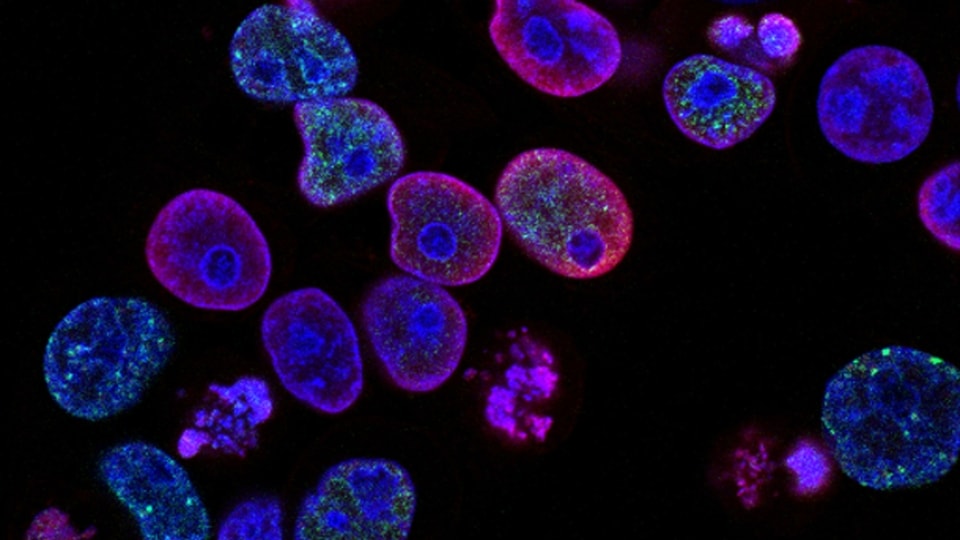
A research team from Columbia Engineering and the Irving Institute for Cancer Dynamics achieved a significant finding in cancer immunotherapy.
A research team from Columbia Engineering and the Irving Institute for Cancer Dynamics achieved a significant finding in cancer immunotherapy. The team discovered a unique population of immune cells that is important to the successful treatment of relapsed acute myeloid leukemia (AML). This investigation was done in partnership with the Dana Farber Cancer Institute (DFCI).
AML, which affects four out of 100,000 patients in the U.S. every year, according to the National Cancer Institute, is a type of cancer that first attacks the bone marrow before moving to infect the blood. The current treatment plan includes targeted chemotherapy followed by a stem cell transplant. Unfortunately, up to 40% of these patients relapse after transplant and have a median survival of six months. At that stage, the only hope for remission is through immunotherapy.
Role of immune cells in fighting cancer
Led by Elham Azizi, associate professor of biomedical engineering at Columbia Engineering, the research explores how coordinated immune networks in leukemia bone marrow microenvironments influence responses to cellular therapy, raising the question: why do some patients benefit from immunotherapy while others do not? The current treatment for relapsed AML, donor lymphocyte infusion (DLI)--a therapy involving donor immune cells--has a 5-year survival rate of only 24 per cent, according to research conducted by Pfizer.
This new study finds that a unique population of T cells found in patients who are responding to DLI might be the key. These cells fight leukemia by boosting the immune response. Additionally, the study shows that patients with a healthier, more active and diverse immune environment in the bone marrow are better able to support these cells and their cancer-fighting abilities.
Utilizing the team's proprietary computational DIISCO approach, the researchers discovered key interactions between the unique T cell population and other immune cells may lead to patient remission. They also traced these T cells back to the donor product. However, it was discovered that the donor's immune cell composition has little to no effect on the patient's success. In fact, the success of this treatment is determined by the patient's immune environment. DIISCO is a machine learning method used to analyze how cell interactions change over time with a focus on cancer and immune cells profiled in clinical specimens.
A step toward improved cancer immunotherapy
The study's findings can lead to new intervention options such as improving the immune environment before starting the standard DLI treatment and exploring combinations of immunotherapies. This will help patients who don't typically respond well to find a personalized option that works for them.
"This research exemplifies the power of combining computational and experimental methods through close collaboration to answer complex biological questions and uncover unexpected insights," said Azizi, who is a member of the Irving Institute for Cancer Dynamics, the Herbert Irving Comprehensive Cancer Center, and Columbia's Data Science Institute. "Our findings not only shed light on mechanisms underlying successful immunotherapy response in leukemia, but also provide a roadmap for developing effective treatments guided by innovative machine learning tools."
"Seeing our findings validated through functional experiments is incredibly exciting and offers real hope for improving cancer immunotherapy," said Cameron Park, a PhD student in the Azizi lab, who co-led this study with Katie Maurer at the Catherine Wu Lab at Dana Farber-Cancer Institute. Park was also a co-developer of the DIISCO algorithm.
In this particular research's future, the team plans to explore interventions that enhance the effectiveness of DLI while focusing on modulating the tumor microenvironment. Although exciting, much more work has to be done before the team can head to clinical trials with the hope of improving outcomes for patients with relapsed AML.


Catch your daily dose of Fashion, Taylor Swift, Health, Festivals, Travel, Relationship, Recipe and all the other Latest Lifestyle News on Hindustan Times Website and APPs.


