E-Paper



Anger simmers in Madhya Pradesh over Ken-Betwa linking project
The issue may play a key role in determining the voting patterns in Bundelkhand, where three seats will go to the polls in the fifth phase of national elections on May 6. The Bharatiya Janata Party (BJP) won all the three in 2014.

 Prefer HTon Google


On a hot late April afternoon, Geeta Koundar, 24, was fetching water from a well in Madhya Pradesh’s Daudhan when the mercury was hovering around 44 degree Celsius. Around the same time, another woman from the village, Beti Koundar, was collecting wood from a nearby jungle to fuel her earthen cooking stove.
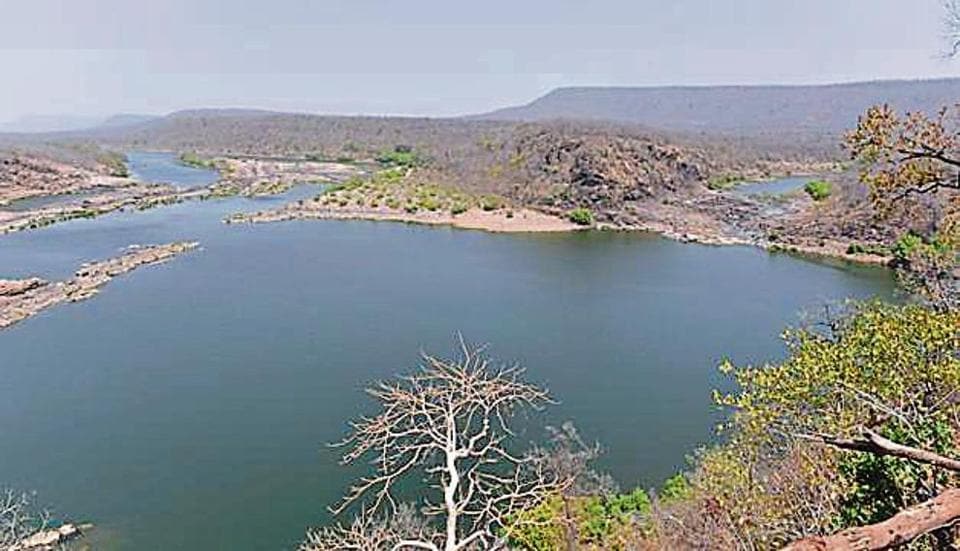
It’s a part of life in Bundelkhand. Residents of half-a-dozen villages like Daudhan in Chhatarpur district have to toil similarly in the absence of basic facilities like electricity and water. When they fall sick, they have to travel 40 km to get to the nearest hospital in Bamitha. There are no roads either in the region.
Residents say the local authorities have stopped visiting their villages to solve their problems or to extend the benefits of the Centre’s welfare schemes. They allege that they are being punished because of local opposition to the Ken-Betwa River Linking Project, which aims to transfer surplus water from the Ken river in MP to Betwa in Uttar Pradesh to irrigate the drought-prone Bundelkhand region sprawled across the two states.
The issue may play a key role in determining the voting patterns in Bundelkhand, where three seats will go to the polls in the fifth phase of national elections on May 6. The Bharatiya Janata Party (BJP) won all the three in 2014.
Residents say the project has put at stake the future of over 4,000 villagers directly and hundreds of people indirectly as it will submerge the Panna National Tiger Reserve’s 100 square km tiger habitat, which is a major source of their livelihood.
Ramdas Adiwasi, a resident, said he does not know about the politics of it, but “certain politicians” have promised the villagers “huge money” and an end to their problems -- lack of roads, electricity and water – in return for their support to the project. “We understand that they have deliberately deprived us of basic amenities so that we are compelled to move out,” Adiwasi said.
This election will not be easy for the BJP, whose government at the Centre laid the foundation for the project in 2015, said Manoj Adiwasi, a first-time voter. The BJP is more focused on neighbouring UP, which it rules, than on MP, which it lost to the Congress in December, he said. People in neighbouring Panna district, too, are worried about the project. KP Omhre, a resident of Panna’s Madla, said their village is downstream. “If they construct a dam, we would not get enough water for fishing, which is the only source of our livelihood…”
The Congress is hoping the simmering anger will help it electorally. Kavita Singh, the Congress candidate from one of the three seats, Khajuraho, said the project has become a prestige issue for the BJP government at the Centre. “Union ministers Nitin Gadkari and Uma Bharti are giving statements that it [the project] would prove a boon for Bundelkhand but we know the reality. If I win the election, I will not allow this project.”
VD Sharma, BJP’s nominee from Khajuraho, insisted the project would be beneficial for the residents because it will increase irrigated land and resolve the drinking water issue. “…we will hear the voice of people before moving ahead.”
Chhatarpur district collector Mohit Bundas said he was unaware of the condition of these villages but would check.
Mehrun Siddiqui, a Panna-based activist, said authorities studied the conditions in only two seasons, when there was a flood, before preparing a draft for the project. He added they did not study drought in Bundelkhand.
“There is no excess water. This is the biggest irony that Ken passes through it but Panna faces water scarcity and the same condition is in Chhatarpur too. The irrigated land is not over 20% in Panna and Chhatarpur district but they hardly did anything to increase it,” Siddiqui said.
The previous BJP-led NDA government first proposed the project of river interlinking in 2003. Then Uttar Pradesh chief minister Mulayam Singh Yadav and his Madhya Pradesh counterpart, Babulal Gaur, signed a memorandum of understanding on the project in 2005.
Environmentalist Himanshu Thakkar moved National Green Tribunal against the project in October 2017 ,calling it dangerous for the environment, especially the Panna Tiger Reserve. NGT admitted the petition and stayed the work. The hearing is going on.
A Supreme Court-appointed panel visited the project in March 2019 after retired Indian Forest Service officer Manoj Mishra challenged the National Wildlife Board’s approval for the dam in December 2017. The panel is due to submit its report.