
 E-Paper



Lok Sabha elections 2019: In polarised Kannur, a caste angle to the fight of red and saffron cadre
Kannur has been the heart and soul of the communists, notably the Communist Party of India (Marxist) for decades. Padmanabhan’s own parents were “comrades”, he says.

 Prefer HTon Google


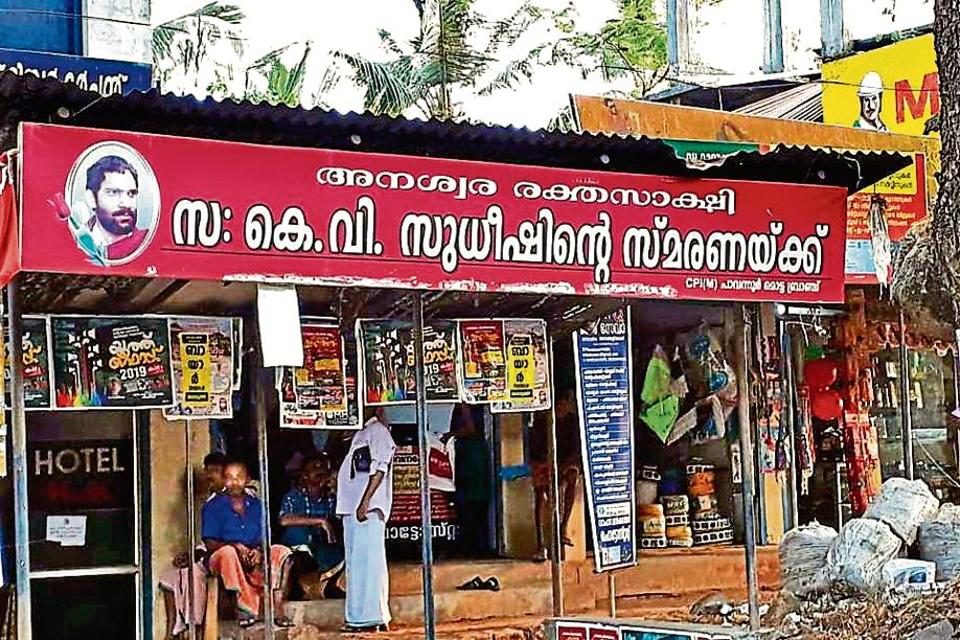
As CK Padmanabhan, 70, the BJP’s candidate in North Kerala’s Kannur, sees it, the differences between the communists and the combine of the Bharatiya Janata Party (BJP) and its ideological parent, the Rashtriya Swayamsevak Sangh, is “very narrow”. Both are cadre-based organisations, both believe strongly in the ideologies they stand for. Never mind that those ideas are exactly the opposite of each other. “We used to say in Red Fort the red flag will flutter, that was our dream,” says the RSS man, smiling, as the Bhagwa Dhwaja or RSS saffron flag flutters above. At the bus stop in Kannur where he is speaking, there is a poster overhead of a communist “martyr,” killed, allegedly by members of the RSS. Now, in an election season, the killings are the single-most important election issue. Especially in villages controlled by either side.
Kannur has been the heart and soul of the communists, notably the Communist Party of India (Marxist) for decades. Padmanabhan’s own parents were “comrades”, he says. Since the 1960s, the CPI(M) and the RSS have clashed intermittently here, a feud that’s left around 250 people dead. In Kannur, it is the children of staunch communists that have often crossed over to being staunchly right wing, as Padmanabhan did in 1968.
In campaign mode, he makes a long and fiery speech about the fact that the BJP is a truly nationalistic party unlike the communists or the Congress party that is in an alliance with the Muslim League,“the party associated with the partition of India”, Padmanabhan says, refusing to accept that this is a gross distortion of history and facts.
In the pretty sea-side municipality of Thalassery, an hour’s drive away from the town, are villages where only posters of the CPI(M) candidate PK Sreemathi are visible. In a square of one such village stands a tall memorial plaque and the hammer and sickle party symbol – it is silver and gleaming in the sun. It is the memorial of VK Mohanan, CPI(M) secretary for the Valaankichal branch and toddy shop owner, killed in October 2016, a crime for which three RSS workers were arrested soon after.
Watch| Lok Sabha Elections 2019: Big fights to watch out for in Phase 3 of voting
In the house behind the plaque, two of Mohanan’s comrades and friends are sitting with his 22- year old daughter Sneha, who bursts into tears at the mention of her father. “The RSS knows that the main problem here is the work of Mohanan, so they targeted him,” says VK Rajan. His colleague, Vatsala, currently the block president of the local council or panchayat, adds that in this election, Mohanan’s death will be upper-most in voters’ minds.
But Mohanan’s story is incomplete without the postscript that it led to what the BJP and the RSS describe as retaliatory killings. In the same month, the son of a BJP leader, a 27-year-old vegetable seller, CK Remid, was killed and a case was filed, accusing CPI(M) workers and their affiliates of the crime. Remid’s mother breaks down completely as she speaks of her son. The frail and distraught CK Narayani, sitting in an almost empty living room, lost her husband C Uthaman to clashes with the CPI(M) in the year 2002. And then her son in 2016. “My husband was killed for being a BJP worker,” she says, but “I don’t know still why my son was killed. He was not an active worker in the BJP. All his friends were in the CPI(M).”
“I am completely orphaned. And the CPI(M) didn’t even send a ward member to offer condolences,” she adds.
And then underlines the abominable nature of her predicament by explaining that her village, Pinarayi, is the same village the state chief minister and communist leader Pinarayi Vijayan comes from. It is a “CPI(M) village,” so the party goes door to door asking for donations of fifty or hundred rupees. Despite losing her husband and son allegedly to the party, she has to make a donation. And does.
In such a sharply polarised place, the only way to make sense of the violence is to look under the surface of what each side says. Past the immediate electoral politics. Past ideology. To caste: 75% of all those killed on either side are from one caste, the Ezhavas, known in Kannur as Theeyas. This is a caste that has a high concentration in Kannur and forms part of the working class as well as the rising middle class.
Professor T Sasidharan is a political scientist and a resident of Kannur who authored ‘Radical Politics of Kannur’. He says the Theeya community has over time been a martial community. They have historically been practitioners of the Kalaripayattu martial art and of the very physically demanding ritual worship of Theyyam. “These were ways to externalize aggression,” Professor Sasidharan explained. And added crucially that “it was the main reason that political parties were interested in this category from the 1930s. They have used this culture to build cadres.”
In the 1960s, the party that was the precursor of the BJP — the Jana Sangh — started to build a base in Kannur by backing a large beedi company called Ganesh Beedi Works.
Around that time, the CPI(M) started a beedi co-operative movement called the Kerala Dinesh Beedi Workers’ Central Co-operative Society. Worker versus worker very quickly turned into political cadre versus cadre and the origin of Kannur’s recent history of violence.
Senior RSS leader KK Balaram claimed that the violence has been an issue in Kannur in the run-up to the election because of what he terms a spurt in violence after the CPI(M)-led left front, or the LDF, came to power in 2016.
Three peace committee meetings have taken place between the chief minister and members of the RSS and he was a part of these. Each side submitted a list of people at the district and block level who can negotiate with the other side in case of a clash. At stake is not just the one parliamentary seat that Kannur represents in this election but its role as the fulcrum of a much larger ideological and caste battle with big national questions at its heart.
The question of whether the need for political space and identity in these parts will always lead to rigidly defined and polarised politics will remain, but regardless of the answer, it’s interesting how caste has shaped politics even in India’s most literate state.


