Indian politicians contesting from two constituencies in parliamentary and assembly election is not an oddity. It’s a legally permissible, yet oft-debated reality!
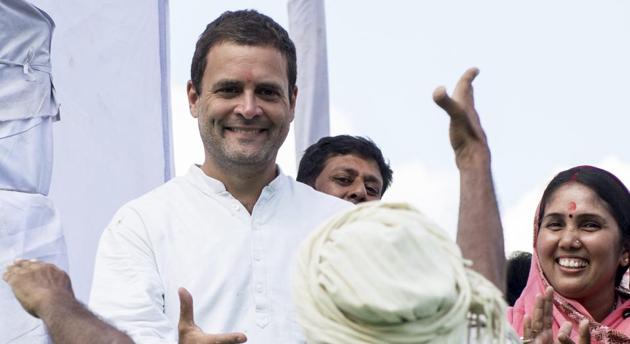
In that sense, the hullabaloo over the possibility of Narendra Modi or Rahul Gandhi fighting from two seats is nothing but a tactic tailored to paint the rival side as lacking in confidence. At stake is ascendancy in public perception.
Double-candidature is an indulgence and insurance the weightiest and venerated leaders across parties have bought over the years. The list includes such names as Indira Gandhi (Medak, Rae Bareli in 1980), Atal Bihari Vajpayee (Balrampur, Mathura, Lucknow, 1957), Narendra Modi (Varanasi, Vadodara, 2014), Sonia Gandhi (Bellary, Amethi, 1999), LK Advani (New Delhi, Gandhinagar, 1991), Mulayam Singh Yadav (Azamgarh, Mainpuri, 2014), Akhilesh Yadav (Ferozabad, Kannauj, 2009), Lalu Prasad Yadav (Saran, Pataliputra, 2009).
In 1971, Odisa strongman Biju Patnaik fielded himself from four assembly seats and one Lok Sabha constituency. In the 1980s, the Telugu matinee idol NT Rama Rao made it a habit of contesting and winning from multiple Andhra assembly constituencies.
The Telugu Desam Party founder won both the seats he contested on his political debut in 1983. Two years later he returned elected from three.
Three prominent parliamentarians whose mass following was never in doubt —Vajpayee, Mulayam and Lalu — twice contested for the Lok Sabha from more than one seat, according to data shared with HT by PRS Legislative Research. They didn’t always win the extra seat. For instance, Vajpayee won just Balrampur out of the three constituencies from where he fought in 1957. The BJP veteran’s nomination (as a Jana Sangh candidate) from multiple seats, as also of Patnaik and NTR, was possible as there was no bar earlier on candidatures for more than two seats. The option was restricted to one extra seat in 1996 with the introduction of Section 33(7) in the Representation of People’s Act (RPA). The amended law applied to all manner of elections: parliamentary, assembly, biennial (legislative) council and by-elections. The downsides of the existing legislation have been discussed time and again, the proposed one-candidate-one seat reform not finding favour with the political class. The status quo hasn’t changed despite the Law Commission’s 2015 report backing the Election Commission’s 2004 proposal to abrogate the second seat provision.
{{/usCountry}}Three prominent parliamentarians whose mass following was never in doubt —Vajpayee, Mulayam and Lalu — twice contested for the Lok Sabha from more than one seat, according to data shared with HT by PRS Legislative Research. They didn’t always win the extra seat. For instance, Vajpayee won just Balrampur out of the three constituencies from where he fought in 1957. The BJP veteran’s nomination (as a Jana Sangh candidate) from multiple seats, as also of Patnaik and NTR, was possible as there was no bar earlier on candidatures for more than two seats. The option was restricted to one extra seat in 1996 with the introduction of Section 33(7) in the Representation of People’s Act (RPA). The amended law applied to all manner of elections: parliamentary, assembly, biennial (legislative) council and by-elections. The downsides of the existing legislation have been discussed time and again, the proposed one-candidate-one seat reform not finding favour with the political class. The status quo hasn’t changed despite the Law Commission’s 2015 report backing the Election Commission’s 2004 proposal to abrogate the second seat provision.
{{/usCountry}}The law panel based its suggestion on prohibitive costs of by-elections and voters’ fatigue. The elected candidates are legally bound to vacate the additional seat within ten days to enable by-elections in constituencies they decide against retaining. Examples: Narendra Modi vacated Vadodara, retained Varanasi in 2014; Sonia Gandhi gave up Bellary, kept Amethi in 1999.
On being asked for his views, former chief election commissioner M S Gill told me: “The EC doesn’t legislate; the law made by Parliament allows it.” One cannot quarrel with his argument. Yet, depending on the size of the constituency, by-elections could cost Rs 3-5 crore to the exchequer without making democracy more representative.
On the flip side, it has been argued that the legally afforded elbow room has helped ensure entry to parliament of members who enhanced parliamentary discourse. A case in point is that of former Premier Chandrashekhar whose presence added value to the House debate. He never contested from two constituencies—but his election at times was ensured through token contests by other parties in his traditional Ballia seat in UP.
Realpoliltik explains better the political class’s reluctance to accept one-person-one-contest on the line of one-person-one-vote. For them the extra-seat cushion comes handy to help their leaders campaign nationally without getting pinned-down to their constituencies.
So when political parties point fingers at one another over their poll mascots seeking safe seats, they have three pointing at themselves.