
 E-Paper



Boys Anglo Bengali Inter College: Singers Sagnik Sen, Anubha Banerjee donate for renovation of 118-yr-old building
Noted Bengali singer Sagnik Sen and Anubha Banerjee have extended their support to Boys Anglo Bengali Inter College in Sunderbagh, Lucknow for raising funds to renovate its 118-year-old school building.

 Prefer HTon Google


Noted Bengali singer Sagnik Sen and Anubha Banerjee have extended their support to Boys Anglo Bengali Inter College in Sunderbagh, Lucknow for raising funds to renovate its 118-year-old school building.
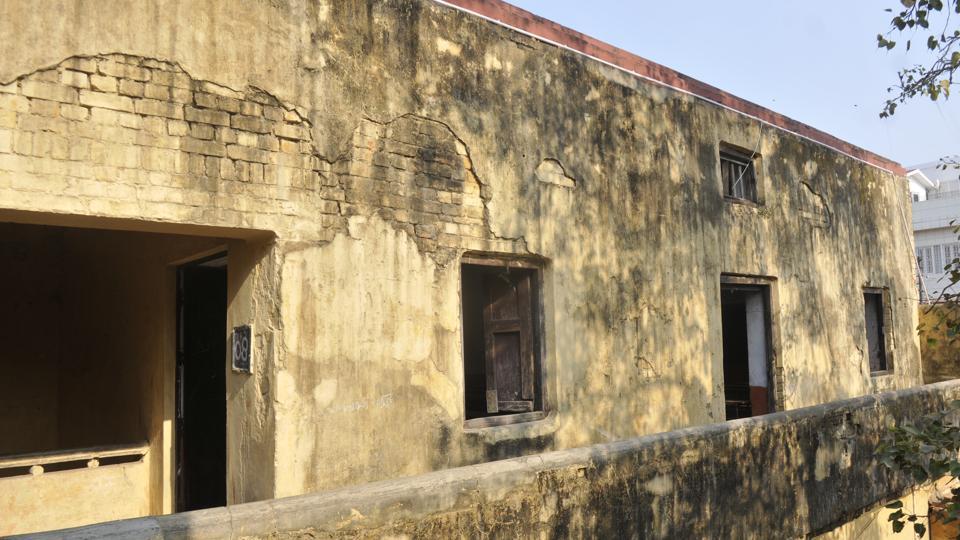
The building is in a very dilapidated condition. Both the singers would be in Lucknow to perform at a charity event ‘A tribute to legendary singer Hemant Kumar’ organized by the school authorities in Ravindralaya on November 24.
Sagnik Sen has been honoured with prestigious ‘Academica Music Award of Hollywood’, while Anubha Banerji is an exponent of Rabindra Sangeet and an alumnus of Visva-Bharati University in Santiniketan in West Bengal.
The management and teachers of school are excited with the positive response of Sen. They feel that his gesture would help them renovate the 118-year-old school building which is falling apart now.
They have also alleged that except salaries, the government was not giving them any money to repair the school building where around 700 students from lower middle class families were enrolled.
Manager of the school, Ashish Bhattacharya said, “The government allocates only 10 paise as electricity fee, 15 paise as lab charges. In such a condition, how can the school survive? The school cannot take money from students who are mostly from lower middle class background and some of them even struggle for two square meals.”
He said, “The school is battling for survival. So, we have decided to organise a cultural programme to raise funds and draw attention of authorities and school’s alumni towards the problems. The entry in the programme would be possible through passes only.”
Bhattacharya said, “In the past, some of our teachers have spent on renovation of some parts of the school building from their pocket but this time we need a bigger amount. So, we decided to plan something which can draw attention of Lucknowites towards the school’s problems.”
Chemistry teacher at the school, Nivedita Singh has donated ₹3.5 lakh for repairing the chemistry lab. Similarly, the biology lab was repaired with the contribution of biology teachers.
The school is also battling the shortage of staff as the government is not allowing further appointments for class IV staff and peons.
Singh said, “At times, we have to pick up broom and clean the classes and lab. Students also help us, but this is shameful for the system. Despite all odds, the school is producing more than 90% result every year. It is because of the staff’s dedication and love for their job.”


